








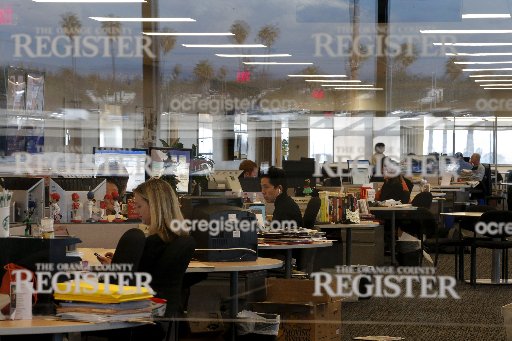
Employees of The McClatchy Company, which operates The Miami Herald and dozens of other newspapers, will not receive 401(k) matching funds for 2012—a repeat of what happened to them in 2011.
“We often get asked when the 401(k) match will be reinstated,” said a Monday email to the company’s staff obtained by Romenesko. “Although reinstating a company match is a priority, the company’s financial performance must improve before we can start making matching contributions once again. For now, we will continue to closely monitor the company’s profitability to determine when we can reinstate the 401(k) match.”
McClatchy made the decision to withhold 401(k) benefits in response to falling earnings, an epidemic across the traditional newspaper media. But while much has been said and written about the difficulty of turning a profit in today’s journalism world, the labor side of things has been largely ignored. The news media’s current economic climate doesn’t just shrink newsrooms and kill magazines: it also reifies professional class barriers, making it tougher for aspiring journalists from working-class backgrounds to obtain steady jobs or big soapboxes.
McClatchy’s benefit cuts are a good example of how this dynamic plays out. By eliminating 401(k) matching payments indefinitely, the publishing company effectively raises the cost of being an employee, placing the burden on those workers whose retirement funds are not already secured. But most journalists face much more overt weeding out mechanisms well before they have a full-time job—in college, for example. Future success in journalism, as in so many professions, can depend heavily on attending the right school and making the right connections. As Dana Goldstein wrote in 2009, “In some fields, like political ‘think’ journalism, the Ivy League schools are grossly overrepresented. (Yep, that includes me. I went to Brown.)”
The news media is also one of the industries that has come to rely most heavily on unpaid intern labor—both to perform roles previously delegated to full-time staff, and to serve as a potential hiring pool for the occasional full-time job. Oftentimes, one unpaid internship isn’t sufficient; college students and recent grads are instead locked into a perpetual arms race to amass more credentials in the vain hope that they may one day be adequately compensated for their labor. The advantage, of course, goes to those young adults who are privileged enough to be able to eat and pay rent while working for free as serial interns.
If they’re lucky, young journalists might graduate from unpaid internships into careers as “permalancers“: precarious contract workers who, because they are denied full-time status, lack a full-timer’s pay or security. Sometimes even reporters with steady jobs will suddenly find themselves relegated to the permalancers pool: that’s the position which the editorial staff of Out magazine found themselves in after their editor-in-chief fired all of them and offered to hire “most” of them back as contractors. New media journalism is not exempt from this process of class stratification. Though the blogosphere may have once been a relatively meritocratic Wild West back in the early aughts, it has since gained respectability. And as bloggers have become professionalized and institutionalized, online journalism positions have become just as coveted as their traditional media counterparts—in some cases, even more so. Few print publications, for example, would have the chutzpah to auction off an unpaid internship for $13,000, as the Huffington Post did in 2009. In same ways, these are the same competitive pressures faced by many white collar professions. However, when applied to journalism, they can have unique and troubling consequences. Reporters, after all, have the job of informing the nation. The more economically homogeneous the industry becomes, the fewer reporters will be left who understand or relate to working class and lower-income needs and concerns. The press will instead become an outlet for the interests and attitudes of the privileged, with little in the way of dissent.
Ned Resnikoff is an urban policy analyst, researcher, writer, and editor. His byline has appeared in a variety of publications, including the New York Times, San Francisco Chronicle, Dissent, and The Nation. He writes the newsletter Public Comment, which can be found at publiccomment.blog. Recommended


