The Rachel Maddow Show WEEKNIGHTS 9PM ETMorning Joe WEEKDAYS 6AM ETDeadline: White House with Nicolle Wallace Weekdays 4PM ETThe Beat with Ari Melber Weeknights 6PM ETThe Weeknight Weeknights 7PM ETAll in with Chris Hayes TUESDAY-FRIDAY 8PM ETThe Briefing with Jen Psaki TUESDAYS – FRIDAYS 9PM ETThe Last Word with Lawrence O’Donnel Weeknights 10PM ETThe 11th Hour with Stephanie Ruhle Weeknights 11PM ET
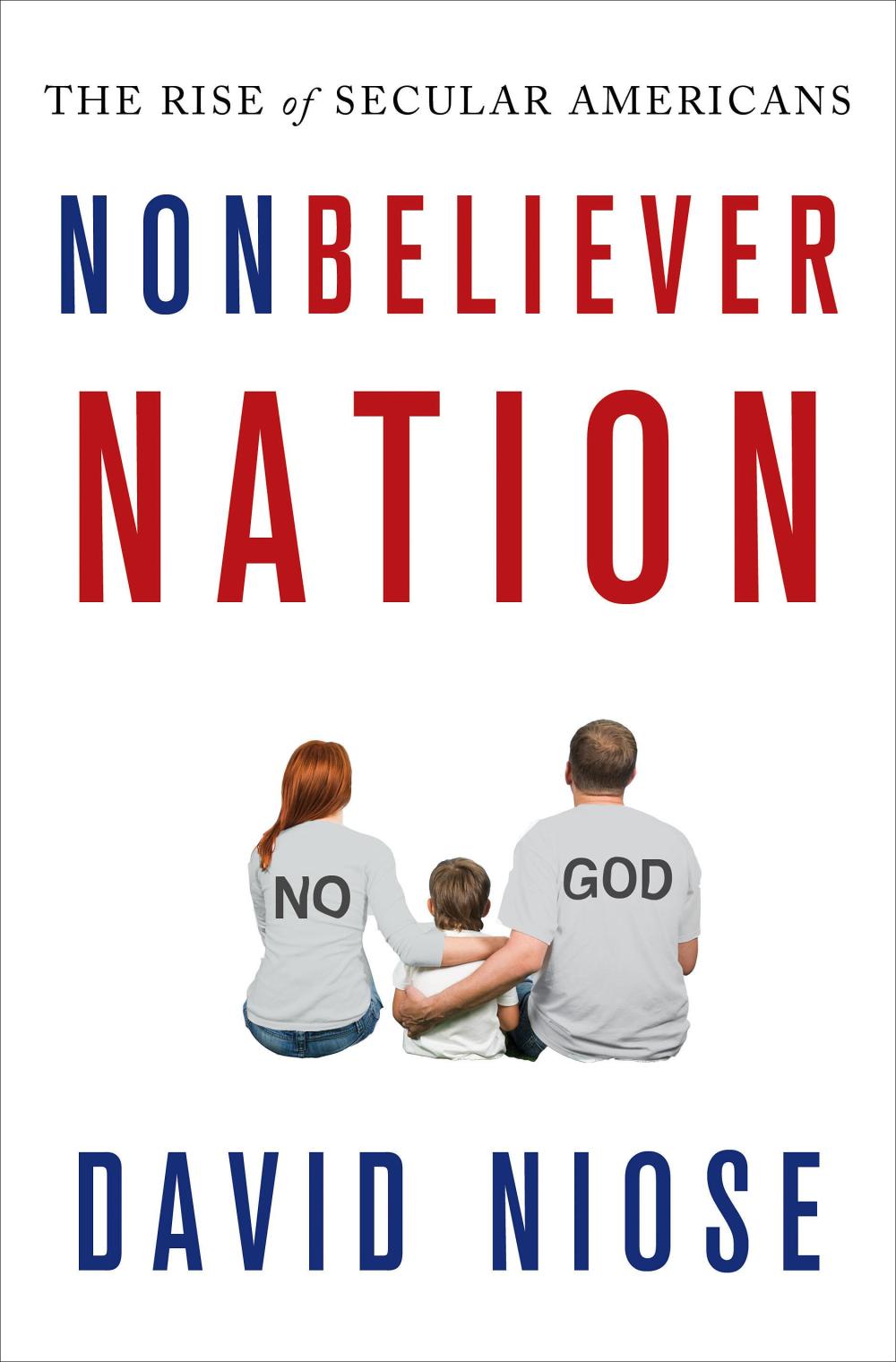
During today's guest spot The Cycle hosts will be talking to David Niose about his book Nonbeliever Nation The Rise of Secular Americans.
Today's guest spot: David Niose
By
The Cycle Staff
During today’s guest spot The Cycle hosts will be talking to David Niose about his book Nonbeliever Nation The Rise of Secular Americans. The book is about the so-called “nonreligious miniority” in minority in America. David argues that America was never a Christian nation and shows how the Religious Right successfully took control of the social and political narrative.]
Below is an excerpt from his book and tune in at 3pm for the full conversation.
A century ago, in the historic presidential campaign of 1912, American voters saw a rare contest of four relevant candidates: the unpopular Republican incumbent, William Howard Taft; Democratic challenger Woodrow Wilson; former president Theodore Roosevelt, running on the Progressive (or “Bull Moose”) ticket; and Socialist Party candidate Eugene Debs. The abundance of candidates was just one of many remarkable aspects of the campaign, for few American presidential elections have seen such dramatic twists and intrigue.
Roosevelt, who just four years earlier had selected Taft as his successor, now returned to presidential politics to challenge the incumbent for the Republican nomination, polarizing the party between two men who were a study in contrasts. Energetic and full of gusto, having embarked on an African safari after leaving the presidency in 1909, Roosevelt campaigned with zeal and progressive rhetoric. He was popular among Republican voters and won the vast majority of state primaries, including even Taft’s home state of Ohio. Taft, meanwhile, the heaviest man to ever occupy the White House, conveyed none of Roosevelt’s vigor and charisma nor his populist spirit. He carried only one primary state.
In 1912, however, primary elections were not as critical as they are today. Only about a dozen states had presidential primaries back then, so most of the delegates needed for the nomination were instead selected by party insiders. Unlike today, when the national convention is usually just a coronation ceremony where the only suspense might be the selection of the nominee’s running mate, a century ago the conventions were frequently an arena for heavyweight politicking and backroom deals, where multiple ballots would often be needed to finally decide the ticket. Thus, having been beaten badly in the primaries, Taft was nevertheless able to use his influence with party regulars at the GOP convention in Chicago to secure the nomination. This was much to the chagrin of Roosevelt who, not a gracious loser, alleged improprieties and stormed out of the hall with his delegates, subsequently forming the Progressive Party with himself at the top of the ticket.
The scene was nearly as wild at the Democratic convention in Baltimore, where the party took a grueling 46 ballots before finally selecting its nominee. House Speaker Champ Clark appeared to be the early favorite, but his ties to the corrupt Tammany Hall political machine eventually led party stalwart William Jennings Bryan—who himself had been the Democratic presidential nominee three times previously (losing the general election each time)—to throw his support to Wilson, thereby leading others to do the same. Wilson, the erudite, moralistic former president of Princeton University and governor of New Jersey, was perceived as a moderate reformer with integrity.
Adding a unique new angle to the campaign would be Eugene Debs, the passionate socialist who argued that he was the only true progressive in the race, accusing Roosevelt of demagoguery and calling all three of his opponents pawns of large business interests. Debs received almost a million votes in the general election, an impressive 6 percent of the total, representing an all-time high-water mark for any Socialist Party candidate.
The raucous nomination battles of 1912 were just a prelude to the general campaign. A few weeks before the November election, Roosevelt was shot in the chest by a deranged saloonkeeper before giving a speech in Milwaukee. Consistent with his tough-guy image, Roosevelt denied immediate medical care and went on to deliver a lengthy speech despite the bullet lodged inside him. The Taft campaign, meanwhile, would suffer a blow of its own when Taft’s running mate, the sitting vice president James Sherman, died of natural causes just a week before the election, a fatality that was ominously foretelling of the Taft administration’s own impending demise.
With the Republicans split, Wilson was able to coast to an easy victory despite a modest vote total. Receiving just over 42 percent of the popular vote, Wilson nevertheless carried the vast majority of states and received 435 electoral votes to just 88 for Roosevelt and 8 for Taft. With only 3.4 million votes, Taft’s total was well under Roosevelt’s 4.1 million and closer to that of the Socialist candidate Debs than to Wilson.
Looking back at the presidential candidates of a century ago, we discover unsettling truths about today’s America. Wilson, probably the most religious of the four, had this to say when asked about Charles Darwin’s theory of evolution by natural selection: “Of course, like every other man of intelligence and education I do believe in organic evolution. It surprises me that at this late date such questions should be raised.”2 Roosevelt was also a vocal admirer of Darwin’s work, calling the British naturalist “the great Darwin.”3 In a later memoir, referring to his love of nature, Roosevelt said, “Thank Heaven I sat at the feet of Darwin and Huxley.”4 (Thomas Huxley was known as “Darwin’s bulldog” for his aggressive defense of the theory of evolution.) While Roosevelt expressed sentiments that would make him a lonely man in the modern GOP, Taft was a genuine religious skeptic. “I do not believe in the divinity of Christ,” he wrote in an 1899 letter, “and there are many other of the postulates of the orthodox creed to which I cannot subscribe.”5 And finally, Debs, the socialist, was decidedly secular, highly critical of organized religion and the use of religion as a political tool, saying, “I don’t know of any crime that the oppressors and their hirelings have not proven by the Bible.”
When compared to today, these statements of long-dead public figures reveal the travesty of contemporary American politics and public dialogue. Typically, when we examine history from the vantage point of a hundred years, many of the predominant attitudes from that earlier time will seem antiquated; we may see beliefs that reflected a lack of knowledge that has since been gained, or perhaps prejudices that we now know to be plainly wrong. When we take a closer look at the candidates of 1912, however, we find that in important ways the process of antiquation seems.