The Rachel Maddow Show WEEKNIGHTS 9PM ETMorning Joe WEEKDAYS 6AM ETDeadline: White House with Nicolle Wallace Weekdays 4PM ETThe Beat with Ari Melber Weeknights 6PM ETThe Weeknight Weeknights 7PM ETAll in with Chris Hayes TUESDAY-FRIDAY 8PM ETThe Briefing with Jen Psaki TUESDAYS – FRIDAYS 9PM ETThe Last Word with Lawrence O’Donnel Weeknights 10PM ETThe 11th Hour with Stephanie Ruhle Weeknights 11PM ET
When you turn on the TV, flip through a magazine, or just scroll through your twitter feed you will most likely come across either a picture, a quote, or a sayi
Adobe Photoshop PDF
By
Abby Borovitz
When you turn on the TV, flip through a magazine, or just scroll through your twitter feed you will most likely come across either a picture, a quote, or a saying by a famous person. Whether it is a Major League Baseball player, to bestselling author, or just an amazing actor what exactly measures the level of success that someone has?
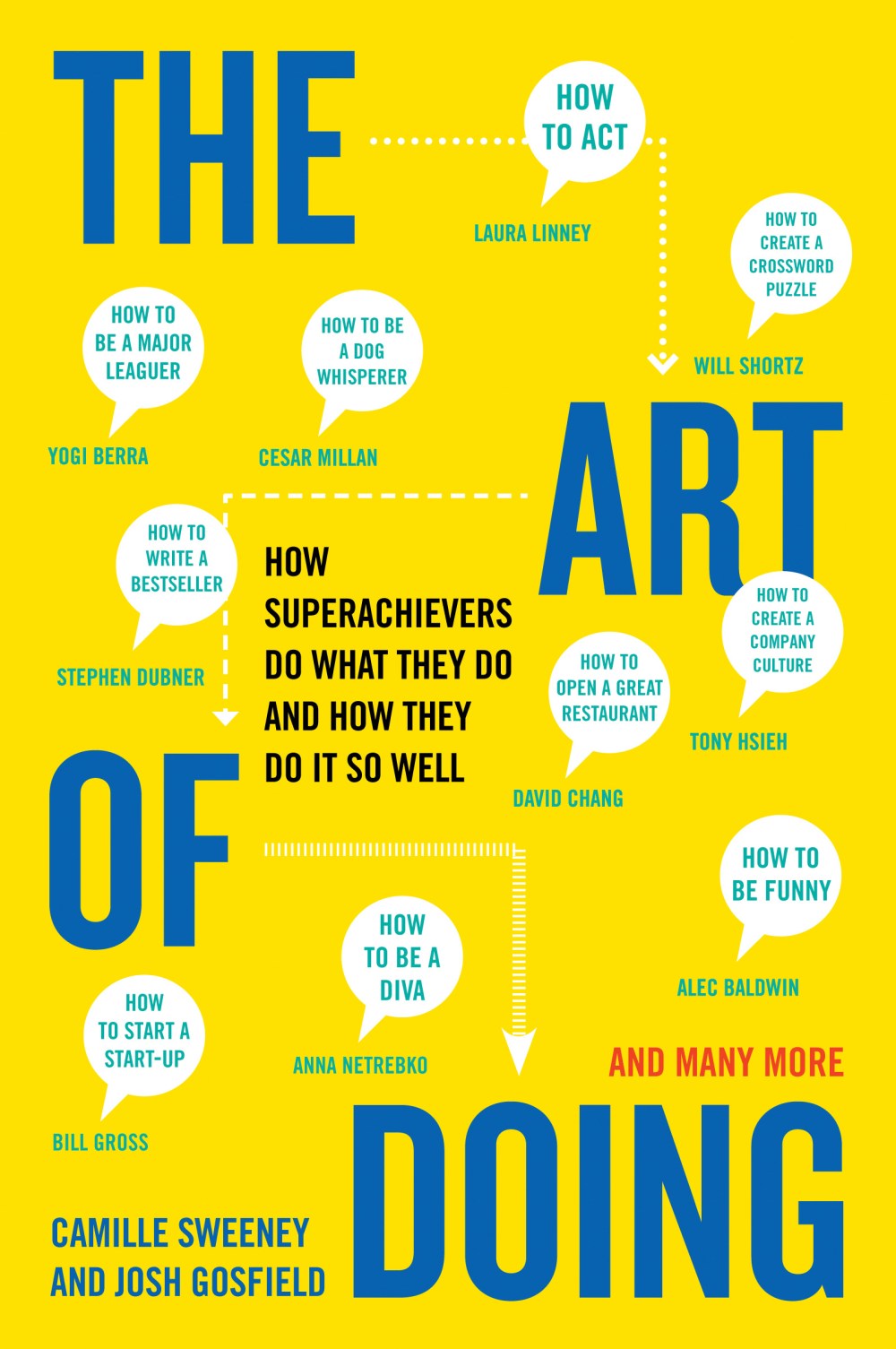
From art and media to business what is the common feature some of the most successful people have in common? Camille Sweeney and Josh Gosfield Co-Authors of The Art of Doing: How Superachievers Do What They Do and How They Do it So Well join today’s show to help the Cyclists answer these questions and more. Be sure to tune in at 3:40 p.m. for the full conversation and check out an excerpt from the book below.
What Superachievers Have in Common
In the beginning, our goal was to uncover what was unique about each one of the dozens of superachievers we interviewed for this book—what were the particular qualities or approaches that vaulted them above others in their fields? But after months of research and over 100 hours of conversations, we were often surprised to discover how much a tennis champion, for instance, and a rock band think alike, or how a race car driver and an extraterrestrial hunter share similar traits. Our participants’ vocations, goals, philosophical perspectives and personalities could not have been more different, but as their responses to our questions accumulated, we began to see patterns. We came to realize that these extraordinary people shared many core principles and practices that had led to their great successes.
Here you will read about the 10 most important strategies we discovered. Perhaps learning about what our superachievers have in common will inspire you to reflect on your own work habits and approaches—it certainly did with us.
1. Dedication
What does a young Frenchman leafing through a magazine in his dentist’s office have in common with an African-American teen, ironing her family’s clothes as she watches the Watergate Hearings on TV in the basement of her home?
The Frenchman and the African-American teen told us of experiences in which they’d had visions of their vocational futures. Philippe Petit (Chapter 22), reading the magazine, came across a rendering of the not-yet-constructed World Trade Center that inspired him to embark on his six-year odyssey to walk on a wire 110 stories high across the void between the towers. Constance Rice (Chapter 14), the teen at the ironing board watching the Watergate Hearings, was transfixed by the black congresswoman Barbara Jordan who rose up and in a booming voice addressed the Senate Committee and the nation. At that moment Rice not only burned a hole through her father’s shirt, but she knew what she was meant to do—fight for justice.
In the aftermath of their visions, Petite and Rice could not have imagined all that would be required of them. Neither Petit’s dream of crossing the towers nor Rice’s of fighting for justice came with an instruction manual. To accomplish their feats they’d have to overcome fear, test their plans against reality and maintain an unwavering focus on what their visions had revealed to them about their future selves.
Others that we spoke with were similarly inspired by visions, as varied as the individuals themselves. They received messages about their future selves encoded in natural phenomena, great societal events, chance encounters, books, movies, inner voices—one was even inspired by a humble bowl of soup. Some of their inspirations were instantaneous flashes, others occurred in phases or as a series of ephemeral nudges. They came at different stages of life—from childhood to middle age.
By their very nature, these visions are so mercurial and mysterious that there may be no satisfactory way to define them. But what we wanted to know was, what does one do when called to fight for justice or to walk a wire 110 stories in the sky? Once you’ve devoted yourself to a calling, can anything else matter? Accumulation of wealth, material goods or fame? Even daily life? What we found in our conversations with these superachievers was that success did not come to them in the thunderclap of their Eureka! moments. Their talent was just the beginning. Their sustained success depended on many factors—some in their control, and some not, but their first steps were to know themselves and to assess what they had to work with. And then, their progress toward their goals was furthered by their fierce dedication to the day-to-day struggle for achievement.
Beyond venturing into the desert for forty days and nights, popping peyote or donning a “God Helmet” (designed by a neuroscientist in Ontario to induce mystical experiences), there is no sure fire way to call for a calling.
But, when we do have glimmerings of something that we might like to do one day—if we only had more time on our hands or more money, or were in the right place at the right time—we can take heart from the people you will read about in this book. Just like any one of us, they started with no roadmap or guarantee of success. But they went out and picked up the ball, or the pen, the guitar or the kitchen knife, and took the first step. And then, the next.
This article has been adapted by arrangement with Plume, a member of Penguin Group (USA) Inc., from THE ART OF DOING by Camille Sweeney and Josh Gosfield. Copyright 2013 by Camille Sweeney and Josh Gosfield