








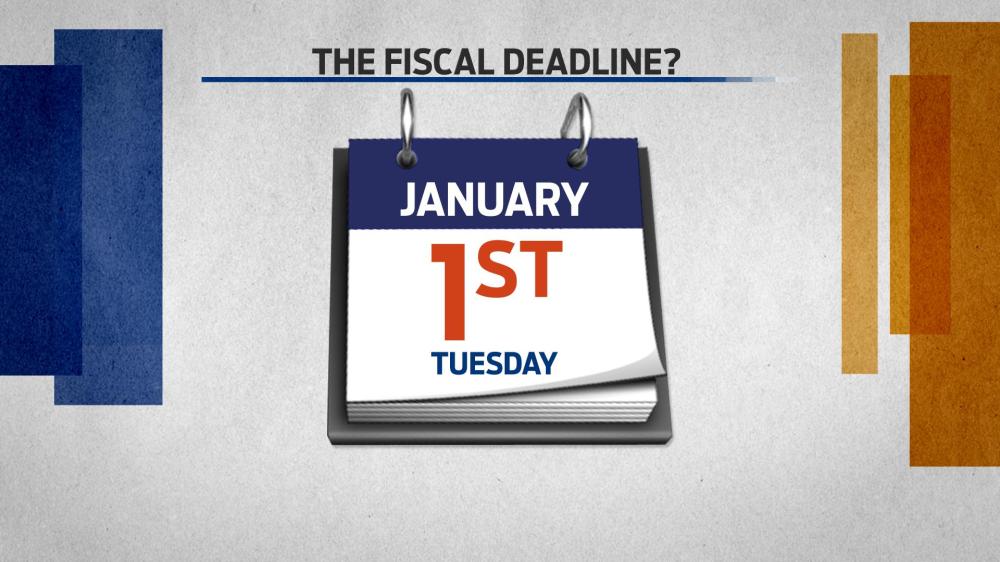
I know it has a catchy ring to it, and I’ve used it myself, and I know I’ll probably use it again, but I really don’t like term “fiscal cliff.”
It’s misleading.
The idea, which you’ve already heard hundreds of times this year, is that the country will face a sudden, traumatic crisis on January 1, unless Democrats and Republicans in Washington come together and strike some kind of grand bargain on taxes, spending and the deficit.
That’s not a good way to understand what we’re facing. The reality is that the “cliff” is really more of a slope. A gradual slope. It works like this:
If nothing happens between now and the end of the year, then on January 1, the Bush tax cuts will expire, the alternative minimum tax will reach further down the income ladder, and payroll tax rates will revert to 6.2 percent. (They’re 4.2 percent now — that was part of the big Obama tax cut that no one ever seemed to notice or give him credit for.)
But — and this is the critical point — this won’t all happen at once.
It’s not like John and Jane Taxpayer will wake up on January 1 and be socked with a bill for $3,000. Only the payroll hike would go into effect right away.
It would be months before most taxpayers were actually hit with higher income tax rates or the AMT.
Ditto for the big, scary spending cuts you’re hearing about, which will be phased in over the year, and even into future years.
Why is the gradual nature of the fiscal slope important? Because it means there’s time after January 1 for Congress and the White House to reach a deal — lots of time.
And in one hugely important area, President Obama and Democrats can get a much, much better deal if they wait until after January 1. This has to do with the Bush tax cuts — actually, just part of the Bush tax cuts, those that affect the top 2 percent of income-earners. Obama was just reelected on a platform of ending them on income over $250,000. He campaigned on this and he won.
But already Republicans like House Speaker John Boehner are saying what every single Republican in Congress has said for 22 years now: Absolutely, under no circumstance will we vote for any deal that raises income tax rates on the wealthy.
This is not an exaggeration. There was a Republican civil war over this issue in 1990 — back when George Bush Sr. broke his dumb “read my lips” pledge — and since then, the party’s position on this subject has been unanimous, absolute and politically impossible to break. The gradual fiscal slope gives Obama and Democrats something they haven’t had that often: Leverage. All they have to do to get rid of the Bush tax cuts on the rich is…nothing. Sit on their hands between now and January 1, and they’ll go away. And then there will be time — plenty of time — for Obama and the new, more liberal Senate to set the terms for a truly balanced deal with Republicans, one that extends the Bush rates for the middle class, spares millions of Americans from the AMT, averts the worst of the spending cuts, and actually includes a modest tax hike on income over a quarter-of-a-million dollars. And for all of my Republican friends (and you know who you are), we can take on some entitlements too. If the Bush tax cuts for the rich are ever going to disappear, this is how it has to happen. I don’t know if Obama and Democrats will have the will and the courage to see this through. The pressure to fold will be enormous. But we can lessen that pressure a bit if we stop cranking up the fear about a fiscal cliff that isn’t a cliff at all.
Steve Kornacki
Steve Kornacki, author of "The Red and the Blue: 1990s and the Birth of Political Tribalism," is a national political correspondent for NBC News and MSNBC. Recommended


