








Millennials have been called apathetic, entitled, self-centered, and dumb. But at 80 million strong, 18-32 year olds are the largest generation in American history –which means, like it or not, the world has to deal with us.
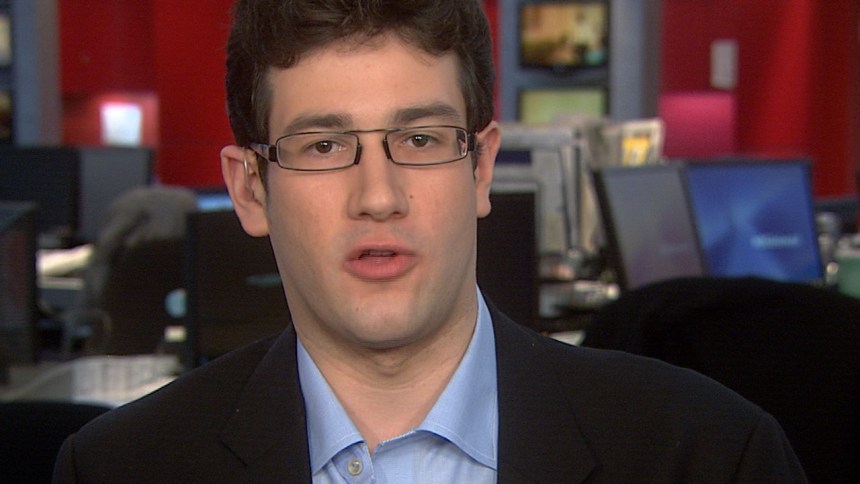
David Burstein, author of “Fast Future: How the Millennial Generation is Shaping Our World,” told The Cycle hosts that our generation is responsible for the “disruptive changes” now running our world. We are “the people creating the tools that are powering our entire world,” Burstein said, citing Facebook and Twitter as revolutionary forces making waves across generations.
But more than Millennial contributions to social media is their contribution (or accused lack thereof) to politics, particularly voting. 2008 was one of the first times that America saw its youth come out in massive numbers to vote, and to vote overwhelmingly for one candidate. But according to Burstein, future Democrats can’t rely on automatic support from 18-30 year olds. “Politicians of both parties have to actually fight for this generation’s vote every time because even though Millennials are more Democratically leaning than Republican leaning, they are not big identifiers in political party membership.” Steve Kornacki points out that political science shows early voting habits do generally lock voters in with one party or another. But with Pew Research showing that 2008 Obama-backers didn’t register as Democrats, a trend of voters not explicitly identifying as Democrat or Republican could be emerging. Burstein attributes this lack of party loyalty to a Millennial belief in civic responsibility, which leads them to vote, but not necessarily blindly commit to one party or another. Their belief in “civic involvement” also takes away from a political focus and diverts their attention towards social and business entrepreneurship.
As a member of this generation, I can’t help finding some hypocrisy in this. A generation that prides itself on civic responsibility and action should also be a generation of political action–especially with all the social media of its own creation right there at its fingertips. Social media is, as Burstein says, a launching pad for Millennial activism. But this springboard for action is more often used for the menial and mundane instead of the larger good. “For the first time, an average person sitting at home can share a message with the entire world” –that’s true. But he doesn’t seem to have noticed that all too often these messages are not ones of change or calls to civic action, they’re useless tweets and hashtags piled on to an already saturated world wide web. Burstein singles out Sandra Fluke as an activist given the chance at a far-reaching message because of the Internet, but she seems more the exception than the rule for Generation Millennial. We are a generation that seeks to change the world. But that doesn’t mean we aren’t also self-involved, materialistic, and over-saturated with useless information. We know more about Snooki and Jionni’s baby than we do about who’s running for Kerry’s Senate seat in Massachusetts. So while we don’t deserve the stereotype of the most apathetic generation, or the worst generation, it’s unclear that we deserve the title of the “civic involvement” generation either. Sure, we have the tools at our disposal. But I’m not sure we’ve decided to use them to their full potential just yet.
Ali Vitali is MS NOW's senior congressional correspondent and the host of "Way Too Early." She is the author of "Electable: Why America Hasn’t Put a Woman in the White House … Yet." Recommended


