








It’s been three months since the election, and I keep hearing the same lament from Democrats: We would have won a clean sweep last November–the presidency, the Senate and the House–if only it weren’t for gerrymandering.
There’s some logic to this. Democrats won about one-and-a-half million more votes in House races last fall than Republicans, and yet the GOP ended up with a 17-seat majority. This came just two years after Republicans used their 2010 midterm landslide to grab control of governorships and state legislatures in a host of big states, meaning that when it came time to draw new district lines for the 2012 elections–which the Constitution says has to be done every 10 years–the GOP was positioned to win a whole bunch of seats they’d have no business winning under a fair map. And isn’t that the essence of gerrymandering?
Well yes, it is. But no, it doesn’t actually explain why Republicans still run Congress–and why they’re likely to well into the future.
The real explanation has to do with how Americans have chosen to sort themselves out geographically. Democrats have traditionally been the party of urban America and Republicans the party of rural America, but the there’s never been as dramatic a relationship between where a person lives and how a person votes than there is today.
Start with the Democrats. President Obama’s victory was keyed by overwhelming majorities from (and overwhelming turnout by) a rising bloc of voters: Latinos, African-Americans, women (particularly single women), professionals with multiple degrees, milennials. A coalition of the ascendant, one pundit calls it. These voters helped deliver Obama a winning margin of nearly 5 million votes, but they’re overwhelmingly clustered in cities and metro areas. This was enough to give Obama win after win in key battleground states and to lift his party’s Senate candidates in the same states. But the House is a different story.
When it comes to the lower chamber, as you know, states are split into districts. What that means in the average big state is that the Democratic vote–packed into metro areas–is concentrated in a handful of districts, where Obama and his fellow Democrats won with massive majorities of 70%, 80%. But in the exurban and rural areas that make up the rest of these states, the GOP had the advantage. Not as dramatically, but enough to win district after district with 55 or 60% of the vote. Thus did we see results like this, in Ohio, where Obama won the state and Democratic Senator Sherrod Brown was reelected–but Republicans gobbled up 12 of the 16 available House seats. When Jimmy Carter was drummed out of office in a 44-state landslide in 1980, he managed to carry 900 counties nationally. When Michael Dukakis ran for president in 1988, he suffered a 40-state landslide, but still claimed 819 counties. Four years after that, Bill Clinton won the presidency with 1,524 counties. Do you know how many counties Obama won last year? 690. That’s it. 690. Even though he won a convincing popular vote majority. Gerrymandering wasn’t a complete non-factor in ’12. The GOP probably grabbed a few extra seats because of it. But the real problem for Democrats is that their base of support is less spread out geographically than ever. Which means they can win presidential races and even control of the Senate. But when it comes to the House, their best–and only–chance for the foreseeable future is a massive anti-GOP tide, like the ones we saw in 2006 and 2008. Short of that, the era of Republican Speakers could last for a while.
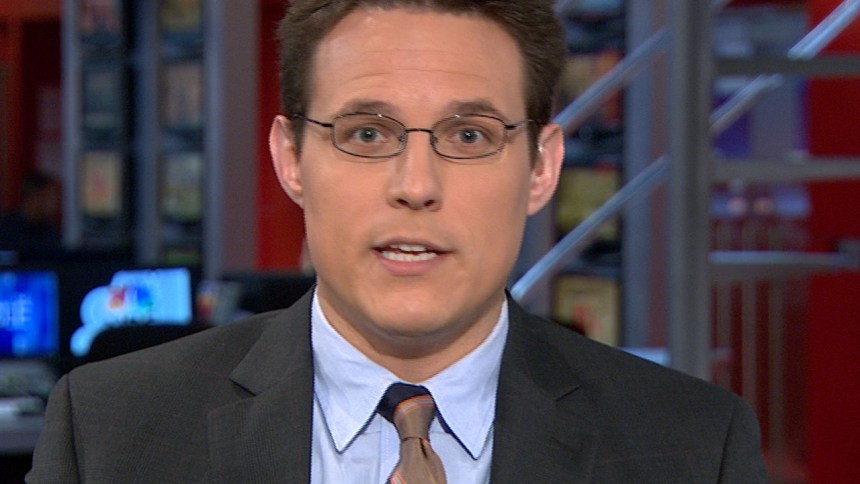
Steve Kornacki
Steve Kornacki, author of "The Red and the Blue: 1990s and the Birth of Political Tribalism," is a national political correspondent for NBC News and MSNBC. Recommended


