The Rachel Maddow Show WEEKNIGHTS 9PM ETMorning Joe WEEKDAYS 6AM ETDeadline: White House with Nicolle Wallace Weekdays 4PM ETThe Beat with Ari Melber Weeknights 6PM ETThe Weeknight Weeknights 7PM ETAll in with Chris Hayes TUESDAY-FRIDAY 8PM ETThe Briefing with Jen Psaki TUESDAYS – FRIDAYS 9PM ETThe Last Word with Lawrence O’Donnel Weeknights 10PM ETThe 11th Hour with Stephanie Ruhle Weeknights 11PM ET
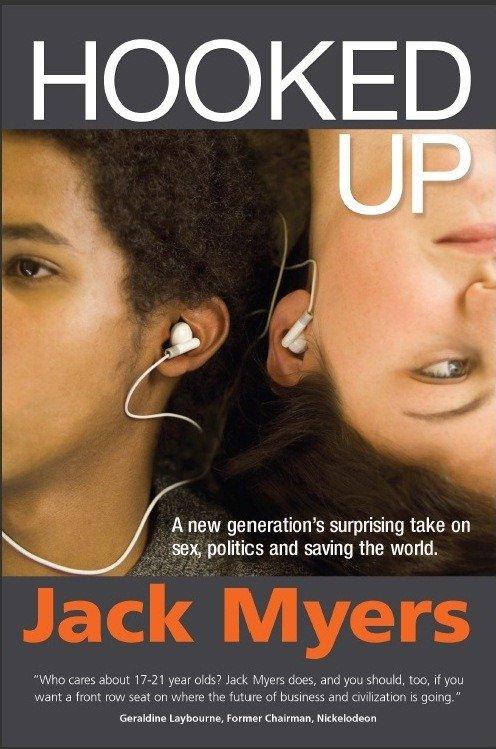
Who is the hooked up generation? Today we are talking to Jack Myers whose research paints a picture of a generation who has never known the world without twitter, email, or cell phones. They can access any information 24/7 by a click of a button, work from anywhere in the world via the internet, and their unique experience will change the world.
This generation is one who was born into chaos but will lead the world into a time of human tolerance and peace.
Be sure to tune in for the full conversation at 3pm.
EXCERPT:
A Socially Conscious Political Force
Internet Pioneers will be a quiet, socially conscious political force to be reckoned with, a bridge between generations that grew up in 20th-century politics controlled by politicians and the news media and 21st-century politics that will be increasingly impacted by wikis,collaborative enterprise and one-to-one online discourse. Internet Pioneers are connected online to the issues about which they’re passionate. They’re more likely than preceding generations to engage in politics through online organizations and communications than caucuses in high school gymnasiums and door-to-door canvassing.
Election battles are being fought on blog posts, social networking sites, and hundreds of online media outlets. They’re updated minute-by-minute and hold politicians accountable for every comment, every inconsistency, every factual inaccuracy, every involuntary facial reaction. Twitter, Facebook and YouTube are more influential to Internet Pioneers than The New York Times and the Wall Street Journal combined. When President Obama announced his plans to run for re-election on the 140-character-or-less social media venue Twitter, no one seemed surprised. When he launched his 2012 campaign with a YouTube video, commentators discussed the venue as much as the message — a clear indication that television is gradually taking a backseat to the instant access of the Internet.
Internet Pioneers are well-equipped to sort through and process the multiple strands of communications and propaganda. They have a world of knowledge at their fingertips and they know how to use and exploit it. They have access to the world’s finest libraries, opinion writers, philosophers, and media outlets, and they will take all of those voices into account as they make their selections at the polls.
With all this information available, Internet Pioneers are less interested in listening to long speeches and debates. They want concise statements of opinion and they want facts. They want to know whether a candidate is pro-life or pro-choice — not explanations or arguments for or against individual positions. They want politicians to listen to their points of view and acknowledge their right to have them.
Political advisers and campaign managers are struggling to find new and creative ways to engage young adults in political campaigns. According to the Pew Internet American Life Project, the Internet made it possible to better target get-out-the-vote campaigns through personalized communications.
The Howard Dean campaign discovered Meet-ups — in-person meetings arranged within private homes and companies. These turned out to be an effective way to meet young voters within their communities. The Kerry and Bush presidential campaigns set up house parties to make their outreach as personal and effective as possible. Move On uses neighborhood house parties to discuss political issues and organize local outreach initiatives. Campaign tactics used during the early years of the Internet are expanding to embrace more sophisticated social and mobile campaigns.
Internet Pioneers will research the ideology and voting history of the candidates in the 2012 elections and beyond. They will share what they learn with their friends, create their own mini-campaigns, and use a variety of digital and social communications techniques to express their support. They will receive, interpret and share information from a vast network of experts and pundits.
Internet Pioneers will be activists in advancing technologies to enable online registration and voting, with the expectation that online voting is not just practical, it is their right. They will solve the related issues of voter validation and privacy. By the presidential election of 2028 and possibly 2024, online voting will be established, accepted and prominent. After witnessing years of attacks on the presidency as an institution, Internet Pioneers still express an interest in voting for the next president, and are even more interested in voting in other general elections. Only 7 percent say they do not intend to vote during and after college, with 13 percent not sure. If these numbers hold, Internet Pioneers will prove to be the most politically involved and committed in history, with significant influence over who will win offices for decades ahead. They are a small but potent force.
19th-century philosopher of science Auguste Comte suggested that “social change was determined by generational change and in particular by conflict between successive generations.” If that’s the case, in the next several years we may experience the most confrontational and societally beneficial “clash of the cultures” that the world has witnessed in a long time.