








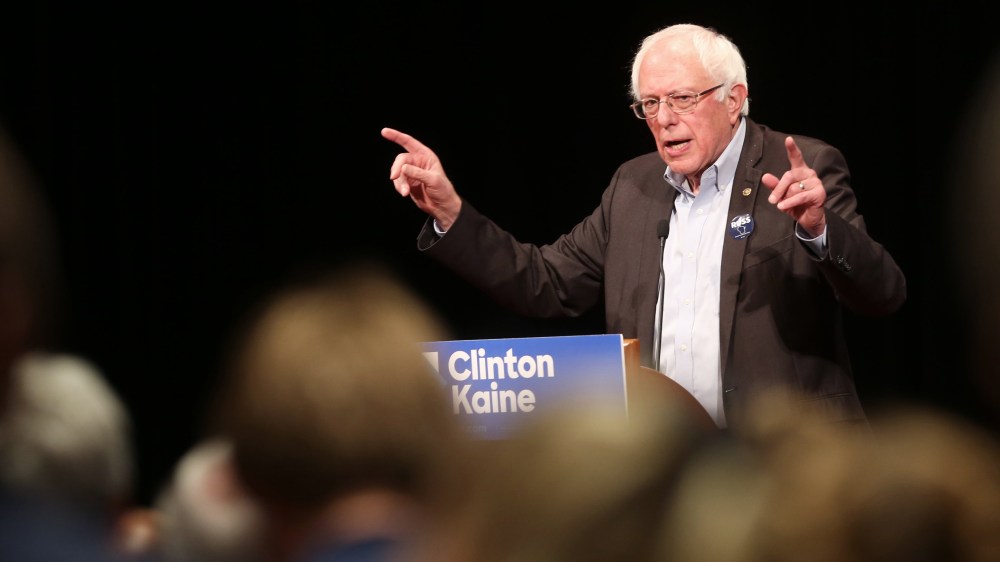
Charles Blahous of the Mercatus Center at George Mason University took a close look at Sen. Bernie Sanders’ (I-Vt.) “Medicare for All” plan and released a study that put a price tag on the proposal: $32.6 trillion. Conservatives quickly seized on the figure as proof that such a health care system is obviously prohibitively expensive.
Indeed, the Mercatus Center, a libertarian-leaning institution, put the point in a big bold headline: “M4A Would Place Unprecedented Strain on the Federal Budget.”
The $32.6 trillion figure seems like a conversation-ender. But in an unexpected twist, it appears to have had the opposite effect. As a Vox report explained:
Mercatus is projecting a $32 trillion increase in federal spending, above current projected government expenditures, from 2022 to 2031. In terms of overall health care spending in the United States over the same period, however, they are actually projecting a slight reduction.
There is the rub. The federal government is going to spend a lot more money on health care, but the country is going to spend about the same.
The problem is not with the Mercatus Center’s figure. In fact, that total sounds roughly accurate and largely in line with similar figures compiled by other researchers.
Rather, what’s interesting is the context.
We already know the United States — not just the government, per se, but all of us, collectively — is going to spend tens of trillions of dollars on heath care over the next decade. The relevant point in this political debate, however, is whether the country would spend more or less under a “Medicare for All” system.
And while it’s true that there’s more than one “Medicare for All” model, the Mercatus Center’s research suggested we’d actually spend less under Bernie Sanders’ approach than we would under the existing system. It’s why the independent senator unexpectedly found himself celebrating the new price tag. As Slate‘s Jordan Weissmann added, “This is the entire argument Sanders and his supporters make for single payer. They don’t pretend it’s not going to cost a lot of money. Rather, they argue that it only seems expensive if you look at its effect on the federal budget alone. Families are already paying money through their insurance premiums. Wouldn’t it be better if there weren’t premiums, and families paid some portion of that money as taxes instead? Then the federal government could use its power to keep health care costs down, which would, in the end, save the families and businesses money, and ensure coverage for all.” Trump administration officials are taking aim at “Medicare for All” with increasing vigor. They may want to take a look at the latest research before proceeding.
Steve Benen is a producer for "The Rachel Maddow Show," the editor of MaddowBlog and an MS NOW political contributor. He's also the bestselling author of "Ministry of Truth: Democracy, Reality, and the Republicans' War on the Recent Past." Recommended


