








By now, the general framework of the 2012 fight over tax policy is probably pretty familiar: President Obama wants to extend Bush-era rates for those making less than $250,000, while asking the top 2% to pay the higher rates on income above $250,000. Republicans say that’s unacceptable, adding they won’t allow the breaks for the middle class to continue unless Democrats agree to also protect benefits for the wealthy “job creators.”
At a certain level, the fight might seem superficial. After all, both sides are offering an expensive tax break, and the price tag between them isn’t enormous, at least in terms of percentages.
But this only part of a larger fight over tax policy. There are other tax breaks to consider.
Senate Republicans will press this week to extend tax cuts for affluent families scheduled to expire Jan. 1, but the same Republican tax plan would allow a series of tax cuts for the working poor and the middle class to end next year.
Republicans say the tax breaks for lower-income families — passed with little notice in the extensive 2009 economic stimulus law — were always supposed to be temporary. But President Obama had made them a priority in 2009 and demanded their extension in 2010 as a price for extending the Bush-era tax cuts for two years, and both the White House and Senate Democrats are determined to extend them again.
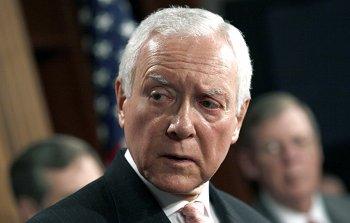
That sets up a potentially tricky issue for Republicans. They have said they do not want taxes to go up on anyone while the economy struggles to gain altitude, but under their plan, written by Senator Orrin G. Hatch of Utah, the senior Republican on the Finance Committee, about 13 million families would see their tax refunds reduced, and some would see their taxes increase.
This isn’t opinion; it’s arithmetic. GOP officials don’t even deny any of this — they simply say those breaks for working people in 2009 should expire on schedule, while breaks for the rich shouldn’t.
In the bigger picture, look at it this way: there are a series of tax policies set to expire at the end of this year. President Obama’s plan and the Senate Republican plan, as shaped by Orrin Hatch, have something in common: they both extend some tax cuts, while letting others expire.
The difference is who’ll pay more in 2013 under the competing approaches.
Under Obama’s proposal, the top 2% would see their tax burdens go up (they’d pay Clinton-era tax rates on income above $250,000). Under Hatch’s proposal, millions of middle-class and lower-class families would see their tax burdens go up — or at a minimum, would see tax rebates go down.
The New York Times report fleshed this out further.
At issue are four measures from the stimulus law. One reduced the eligibility threshold to $3,000 in earned income for the child tax credit. Without it, the threshold will jump to $13,300 next year, costing nearly nine million families about $7.6 billion, an average of $854 a family, according to the liberal group Citizens for Tax Justice. But the hit could be considerably larger. Currently, a family with one full-time minimum wage earner and two children receives a total child tax credit of $1,812, almost equal to the full $2,000 credit middle-income families with two children receive, said David Harris, president of the Children’s Research and Education Institute. If the stimulus provision lapses, that family’s credit would drop to $267, a $1,545 loss. The stimulus also enlarged the earned income credit for families with three or more children, reduced the “marriage penalty” on working poor couples by starting the earned income credit phaseout at a higher level for married earners, and expanded the middle-class tax deduction for higher-education tuition. The 2009 American Opportunity Tax Credit expanded the tax break for tuition, fees and educational expenses to $2,500 from about $1,800, and doubled the length of eligibility to four years of school from two. It also made the first $1,000 of the tuition credit refundable, meaning that a family without enough federal income tax liability could get a check from the I.R.S. to offset higher education costs. In all, the Republican plan would extend tax cuts for 2.7 million affluent families while allowing tax breaks to expire for 13 million on the bottom of the income spectrum, tax analysts say. Got that? Under Orrin Hatch’s plan, 2.7 million wealthy people get a break, while 13 million struggling people lose out. It’s simply a matter of priorities — the parties disagree on who should feel the pinch in 2013. If you’re wondering — I know I was — this apparently doesn’t count as “raising taxes” under Grover Norquist’s pledge Republicans feel compelled to sign. They’re letting tax breaks for working people expire, but that apparently isn’t a literal tax “increase” under GOP rules. There will be a pretty important vote on the Senate floor tomorrow. Something to keep an eye on.
The place for in-depth analysis, commentary and informed perspectives. Recommended


