









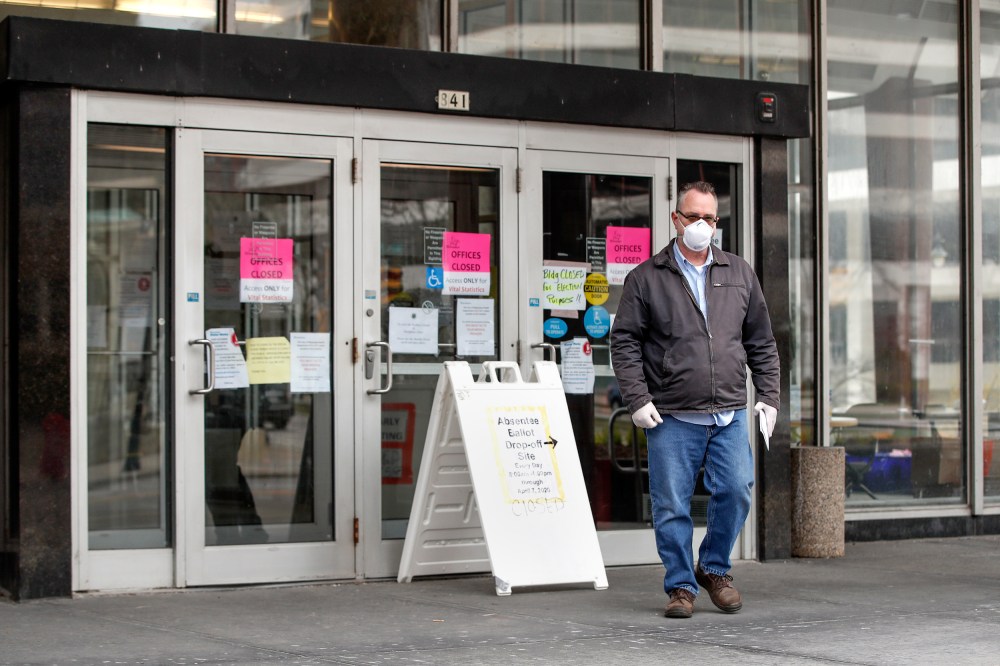

Eleven states were originally scheduled to hold elections in April; officials in ten of them realized that encouraging voters to show up at their local precincts to cast ballots during a pandemic was a ridiculous idea. Wisconsin was the exception.
And while there were a series of efforts to bring some common sense to the process, including an attempted 11th-hour executive order from Gov. Tony Evers (D), today really is Election Day in the state of Wisconsin.
Wisconsin’s controversial election is back on for Tuesday, and voters will get no extension on the deadline to return absentee ballots despite the coronavirus crisis, thanks to two top courts that sided with Republicans on Monday.
The first key ruling came at the state level. After the Democratic governor tried to postpone the election until June 9, citing the importance of public safety, the Republican-led legislature took the matter to court, demanding that the election proceed on schedule. The conservative majority on the Wisconsin Supreme Court agreed and rejected Evers’ order.
The second ruling came at the federal level, when the conservative majority on the U.S. Supreme Court also sided with Wisconsin’s GOP-led state legislature, overturning a district court ruling that extended an absentee-ballot deadline.
In that lower court ruling, issued last week, a federal judge acknowledged the unique circumstances, which predictably led to an extraordinary number of requests of absentee ballots — requests local officials found impossible to respond to under tight time constraints. The lower court said it lacked the authority to delay the election, but it nevertheless gave Wisconsin voters more time to receive absentee ballots, send them back, and have them counted.
State Republican lawmakers said that was unacceptable and persuaded five Republican-appointed justices on the high court to rule their way. Wisconsin voters will now have to vote in person, hand-deliver an absentee ballot by this evening, or make sure their absentee ballot is postmarked today and in the hands of election officials by April 13.
Voters who haven’t yet received a requested absentee ballot, because of the significant backlog, have more limited choices: vote in person, during a pandemic, or don’t vote at all.
The full ruling in RNC v. DNC is online here (pdf). If you read it, note that the majority pretends this is simply a technical dispute over scheduling and the absentee-balloting process. The five conservative justices barely acknowledge the relevant societal context.
The dissent from the four-justice center-left minority, meanwhile, is unrestrained. “The Court’s suggestion that the current situation is not ‘substantially different’ from ‘an ordinary election’ boggles the mind,” Justice Ruth Bader Ginsburg wrote.
She added, “While I do not doubt the good faith of my colleagues, the Court’s order, I fear, will result in massive disenfranchisement. A voter cannot deliver for postmarking a ballot she has not received. Yet tens of thousands of voters who timely requested ballots are unlikely to receive them by April 7, the Court’s postmark deadline.” There are also plenty of practical considerations to keep in mind. As Mother Jones‘ Ari Berman explained, the coronavirus crisis has drastically reduced both the number of available polling places in Wisconsin and the number of election officials available to work at local voting precincts. It raises the prospect of Wisconsin voters showing up to cast ballots during a pandemic, only to find closed doors and long lines — which will have to feature citizens lined up six feet apart. NBC News’ report added, “Results will not be released until April 13, however, the Wisconsin Election Commission decided in an emergency meeting Monday, citing a part of the lower court ruling the Supreme Court did not overturn.” Among the important races at stake today are the Democratic presidential primary contest and a state Supreme Court election.
Steve Benen is a producer for "The Rachel Maddow Show," the editor of MaddowBlog and an MS NOW political contributor. He's also the bestselling author of "Ministry of Truth: Democracy, Reality, and the Republicans' War on the Recent Past."
Latest Post
Recommended


