








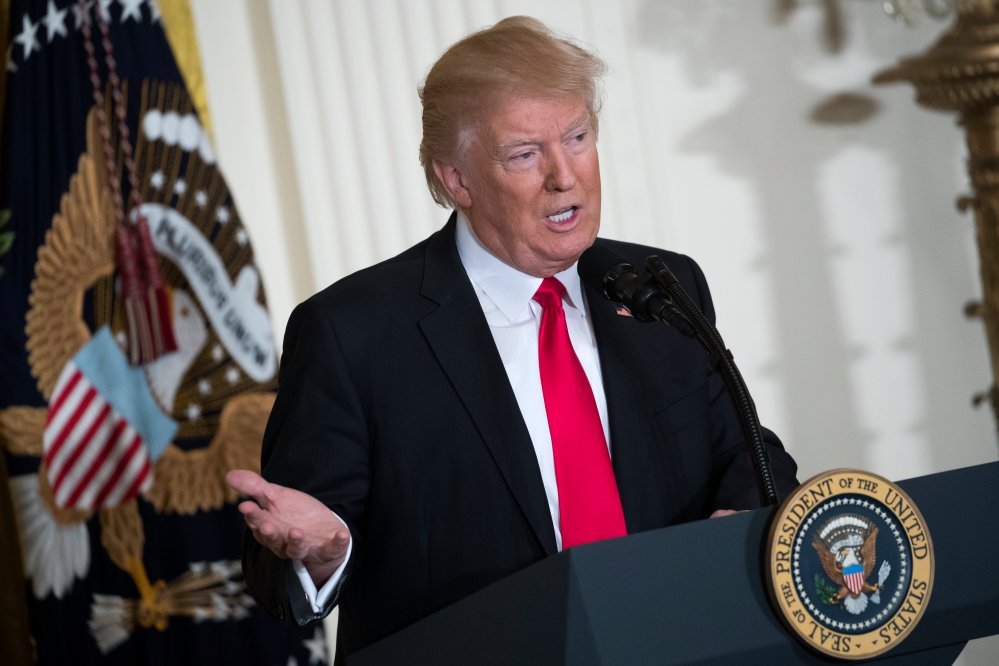
At a press briefing a few weeks ago, White House Press Secretary Sarah Huckabee Sanders said there’s all kinds of evidence that the Affordable Care Act is facing a “collapse.” To prove her point, Donald Trump’s principal spokesperson told reporters, “Premiums continue to skyrocket.”
And while it’s true that many consumers are having to pay more for coverage, what Team Trump doesn’t like to talk about is its role in creating the problem the president and his aides like to complain about. The Associated Press reported this morning:
The Trump administration’s own actions are triggering double-digit premium increases on individual health insurance policies purchased by many consumers, a nonpartisan study has found.
The analysis released Thursday by the Kaiser Family Foundation found that mixed signals from President Donald Trump have created uncertainty “far outside the norm,” leading insurers to seek higher premium increases for 2018 than would otherwise have been the case.
In fairness, there are multiple factors that contribute to premium increases — which were, of course, common long before “Obamacare” became the law of the land — but as the AP’s report explained, the Kaiser Family Foundation found that “mixed signals” from the Trump administration have clearly made matters worse.
“The vast majority of companies in states with detailed rate filings have included some language around the uncertainty, so it is likely that more companies will revise their premiums to reflect uncertainty in the absence of clear answers from Congress or the administration,” the report said.
The result is what some on the left have begun calling a “Trump Tax” on consumers: Americans are being forced to pay more for health care insurance as a direct result of the White House’s political tactics.
As we discussed in May, at the heart of the problem are cost-sharing reductions – a key component of the Affordable Care Act, which helps cover middle-class consumers’ out-of-pocket costs – that Trump has decided to turn into a political weapon. The fact that the Republican president has not yet followed through on his threats to scrap CSRs, in practice, doesn’t matter: the threat itself creates uncertainty that forces Americans to pay more.
The White House has been reminded of this repeatedly. America’s Health Insurance Plans said in no uncertain terms that Trump’s tactics surrounding CSRs are “the single most destabilizing factor in the individual market, and millions of Americans could soon feel the impact of fewer choices, higher costs, and reduced access to care.” It’s relatively straightforward: when private insurers don’t know about the fate of existing federal subsidies, they need to protect themselves against potential future losses imposed by Republicans. It’s Business 101. And so, by playing games, Trump and his GOP allies are effectively forcing insurance companies to start charging consumers more today because they don’t know what the White House and Congress will do tomorrow. The president, in other words, is imposing a political surcharge on the cost of health coverage for no reason. By threatening to make things worse, Trump and allies are already making things worse.
Steve Benen is a producer for "The Rachel Maddow Show," the editor of MaddowBlog and an MS NOW political contributor. He's also the bestselling author of "Ministry of Truth: Democracy, Reality, and the Republicans' War on the Recent Past." Recommended


