








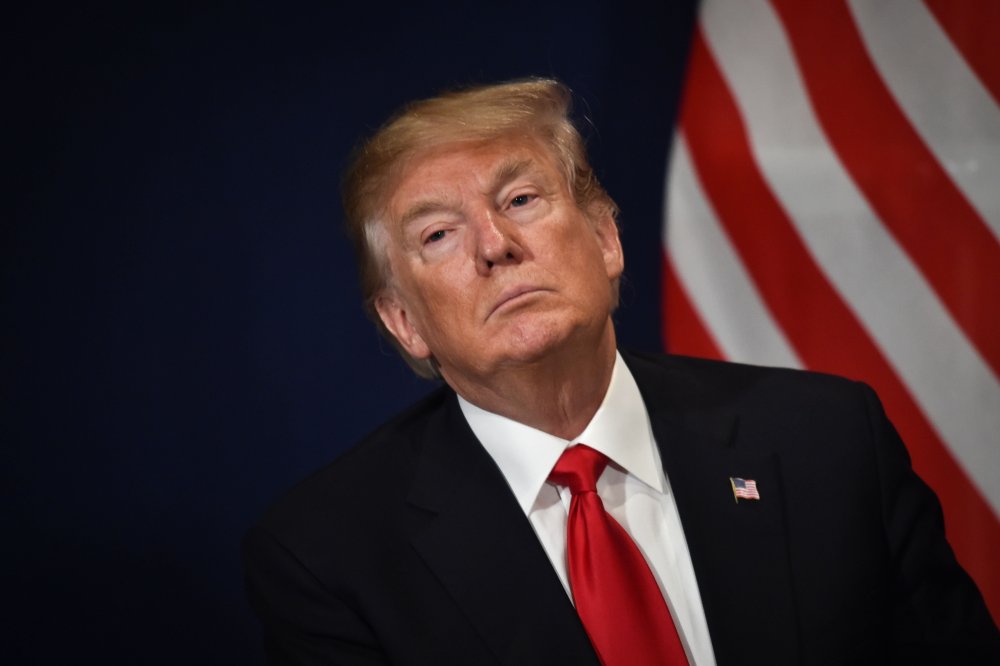
At an impromptu Q&A with reporters last week, Donald Trump, ignoring his own recent rhetoric, said he’s willing to speak under oath to Special Counsel Robert Mueller. “I’m looking forward to it, actually,” the president declared. “I would love to do that. I’d like to do it as soon as possible.”
He added he’s “absolutely” prepared to answer questions, possibly as early as next week.
It wasn’t long before the president’s attorneys walked back their client’s misplaced boasts, insisting that Trump may not have meant what he said. “Ty Cobb, the White House lawyer leading the response to the investigation, said Mr. Trump was speaking hurriedly and intended only to say that he was willing to meet,” the New York Times reported.
And while the president apparently wants the public to believe he’s eager to answer questions under oath, the Wall Street Journal reported over the weekend that Trump’s legal team “has been studying a 1990s federal court ruling that could be the basis for delaying, limiting or avoiding” a Mueller interview.
Granting Mr. Mueller an interview poses legal risks that some people close to the president find unacceptable. The 1997 case potentially gives Mr. Trump some leverage.
In that case, a federal appeals court ruled that presidents and their closest advisers enjoy protections against having to disclose information about their decision-making process or official actions.
The court ruled that prosecutors hoping to overcome arguments of executive and presidential privilege must show that such information contains “important evidence” that isn’t available elsewhere.
The idea, evidently, is that while Mueller examines possible obstruction-of-justice allegations, the president’s defense team “could invoke the 1997 case to obtain more favorable terms of any voluntary interview Mr. Trump gives, because a court fight over an interview or grand jury testimony could take months to resolve.”
So much for “I’d like to do it as soon as possible.”
A Washington Post analysis noted the other day that if Trump fails to answer Mueller’s questions, after making these public declarations, “more Americans could conclude that he’s worried and/or trying to hide something.” That’s probably because Trump seems worried and seems to be trying to hide something. As for the behind-the-scenes motivations, Axios’ Jonathan Swan reported overnight, “I can’t overstate the level of anxiety among sources close to Trump” about a Mueller interview. The piece added, “One source, who knows Trump as well as anyone, told me he believes the president would be incapable of avoiding perjuring himself. ‘Trump doesn’t deal in reality,’ the source said. ‘He creates his own reality and he actually believes it.’” In other words, people in the president’s orbit are fearful that he’ll lie — because that tends to be his standard move in every situation. Postscript: Conservative media has been throwing around the phrase “perjury trap” quite a bit recently, and that’s a shame because it’s a term of art. It doesn’t have anything to do with Mueller’s request for an interview.
Steve Benen is a producer for "The Rachel Maddow Show," the editor of MaddowBlog and an MS NOW political contributor. He's also the bestselling author of "Ministry of Truth: Democracy, Reality, and the Republicans' War on the Recent Past." Recommended


