








In the current political climate, it’s rare to see any policy measure receive broad bipartisan support; the parties are simply too far apart on practically every issue. Yesterday, however, offered an exception.
The Senate voted 97 to 2 in support of legislation imposing new economic sanctions on Russia in response to Moscow’s intervention in the American presidential election. The same measure, which now heads to the House, would block the White House from acting unilaterally on easing sanctions against Moscow — a move Donald Trump has reportedly considered more than once.
For many Senate Republicans, this was literally the first time in 2017 in which they voted against Trump’s preference.
There are a variety of interesting questions surrounding the bill — most notably, no one knows if the president would veto it — but let’s not miss the forest for the trees. The fact that the chamber took this action at all demonstrated something important: nearly every member of the Senate cares that a foreign adversary attacked our democracy, and they’re taking steps to do something about it.
Donald Trump, meanwhile, seems indifferent, if not outwardly hostile, to the core details — which is difficult to accept at face value, and even harder to defend.
Sen. Angus King (I-Maine), a member of the Senate Intelligence Committee, talked to CNN on Tuesday and expressed his frustration about Trump’s and his administration’s indifference. His comments were quite candid:
“The other question [Attorney General Jeff Session] didn’t answer — I’ve got to say, it really, really disturbed me — and that is, ‘Have you looked into what the Russians did? Have you asked for any briefings? Do you understand the magnitude of what was done to us?’ And the answer was no.
“And Jim Comey essentially said the same thing last week about the president. He had nine interactions with the president. The president never asked, ‘What did the Russians do? How did they do it? How do you know they did it?’ […]
“[T]his is the most serious attack on our country since September 11. An adversary is aiming an arrow at the heart of our democracy. And these folks are just shrugging it off and saying, you know, ‘Let’s move on and talk about other issues.’ I understand their defensiveness on whether they were involved in it or not, but the fundamental story of what the Russians did — and that they’re still at it and will continue to be at it — is just being ignored, and it really bothers me when the Commander in Chief takes that position.”
As it should.
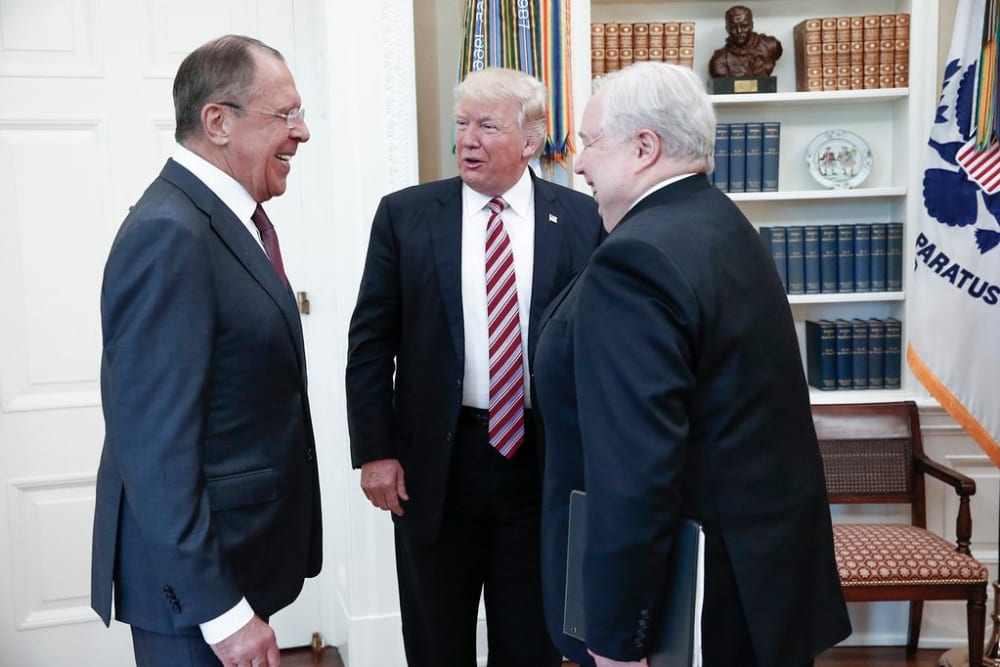
Jeff Sessions’ testimony highlighted Team Trump’s indifference, but it was the latest evidence of a larger pattern. A Politico piece noted after James Comey’s recent testimony that the “starkest aspect” of what Americans heard was “the president’s lack of curiosity about the long-running, deep-reaching, well-executed and terrifyingly effective Russian attack on American democracy…. The president is interested in his own innocence, or the potential guilt of others around him — but not at all in the culpability of a foreign adversary, or what it meant. This is utterly astonishing.” A week earlier, the Washington Post ran a piece from a former counterintelligence FBI agent who was “shocked” that Trump has “cared little about understanding either the magnitude of the Russian intelligence threat, or how the FBI might be able to prevent another attack in future elections.” The political circumstances are, to be sure, awkward. Trump is quite pleased with the result of Russia’s espionage operation against our democracy — it helped put him in the White House — and the greater the focus on the crime, the more reason Americans have to question the legitimacy of his presidency. It’s not surprising that Trump finds all of this terribly inconvenient. But the end result is nevertheless untenable. A foreign adversary attacked the United States, and the American president is inclined to do nothing — ask no questions, express no anger, seek no retribution, hold no one responsible — except welcome the foreign adversary’s officials into the Oval Office for a friendly chat, and satisfy the foreign adversary’s foreign policy goals. If Team Trump wants the public to believe there’s nothing to the Russia scandal, it should probably adopt a very different kind of posture in response to Russia’s efforts to subvert our political system.
Steve Benen is a producer for "The Rachel Maddow Show," the editor of MaddowBlog and an MS NOW political contributor. He's also the bestselling author of "Ministry of Truth: Democracy, Reality, and the Republicans' War on the Recent Past." Recommended


