








In 1987, Ronald Reagan and Mikhail Gorbachev agreed to a historic nuclear arms control treaty, banning Intermediate-Range Nuclear Forces. The INF treaty was quickly ratified by the U.S. Senate, which approved the agreement with a 93-to-5 vote.
Over the last generation, the treaty has been largely uncontroversial. Today, however, the Trump administration began the process of walking away from it.
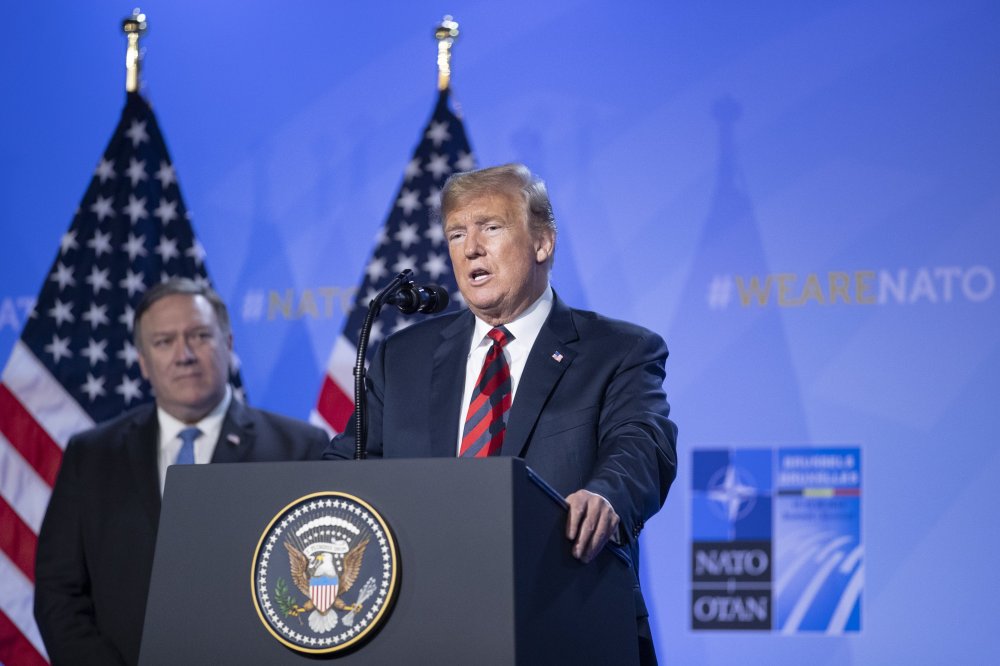
President Donald Trump on Friday said the U.S. is suspending its involvement in the Intermediate-Range Nuclear Forces Treaty and would start the process of withdrawing entirely in six months.
“For far too long, Russia has violated the Intermediate-Range Nuclear Forces (INF) Treaty with impunity, covertly developing and fielding a prohibited missile system that poses a direct threat to our allies and troops abroad,” Trump said in a statement.
The administration’s argument is pretty straightforward: if Russia isn’t fully honoring the INF Treaty’s provisions, then there’s no reason to have the INF Treaty.
It’s worth emphasizing that this morning’s drama does not mean that the treaty is officially dead. Secretary of State Mike Pompeo announced that the treaty “will terminate” if Russia continues to violate it, and for now, the administration is “suspending” the United States’ obligations under the agreement, effective tomorrow.
This will apparently initiate a six-month review process. If Moscow begins complying with the INF Treaty, the Trump administration will back off. If the administration isn’t satisfied, the treaty will end.
At first blush, this might sound like Team Trump getting tough with Russia. It’s not nearly that simple — because abandoning the INF Treaty would almost certainly make a difficult situation worse.
Indeed, John McLaughlin, deputy director of the CIA from 2000 to 2004 in George W. Bush’s first term, recently explained in an op-ed that walking away from the treaty would be “dangerous, destabilizing and potentially counterproductive.”
First, when it comes to nuclear weapons, just giving up and walking away from an arms-control treaty reverses the wise course of negotiated reductions we have followed for decades. The likely consequence of killing this treaty is that Russia will build more nukes and so will we. There are about 15,000 nuclear weapons in the world and tons of explosive nuclear material; no one needs more. While nuclear weapons can be stabilizing, that effect is most apparent when there is a degree of cross-national transparency codified in arms control agreements. […]
Second, this is wrong example to set for aspiring nuclear states such as North Korea and Iran. If the big guys can’t restrain the nuclear impulse, why should they? This is the absolute wrong moment to telegraph that to the Iranians, with President Trump having already jettisoned the U.S. nuclear agreement with them — and to Pyongyang, which has yet to follow through on its denuclearization pledges.
Recommended


Third, there’s a better way out of the INF Treaty dilemma. Why not try to turn it into an opportunity, as former U.S. senator Sam Nunn has suggested? Use the six-month withdrawal notice the treaty provides to follow through on the “Strategic Stability” talks that Trump and Russian President Vladimir Putin promised at their summit. In those, look for ways to resolve differences on this through inspections, information exchange and other measures of transparency. If that is impossible, at least try to renew momentum on arms reductions more broadly, recalling that our major nuclear agreement with Russia, New START, is set to expire in 16 months.
Heather Hurlburt had a related piece, explaining how scrapping the treaty would further advance Vladimir Putin’s plans. Fred Kaplan made a similar argument.
The point isn’t that Russia’s defiance should be tolerated. No one has made the case that the United States just look the other way in response to Putin’s actions in this area. The Trump administration has raised legitimate concerns, which are effectively identical to complaints raised by the Obama administration.
Rather, the point is, simply walking away from the treaty and hoping for the best isn’t a real policy. There are alternatives that the White House can and should pursue.
Trump has spoken on several occasions about a prospective “arms race.” I’m not sure he knows what the phrase means, but he’d likely figure it out if/when the INF Treaty ends.
Postscript: When John Bolton took over as the White House national security advisor, and many expressed alarm at the kind of influence he’d have, today’s news is emblematic of those fears. Bolton has long opposed this and other nuclear treaties with Russia, and it’s likely he’d been pushing Trump to agree with this vision.
Steve Benen is a producer for "The Rachel Maddow Show," the editor of MaddowBlog and an MS NOW political contributor. He's also the bestselling author of "Ministry of Truth: Democracy, Reality, and the Republicans' War on the Recent Past."
