








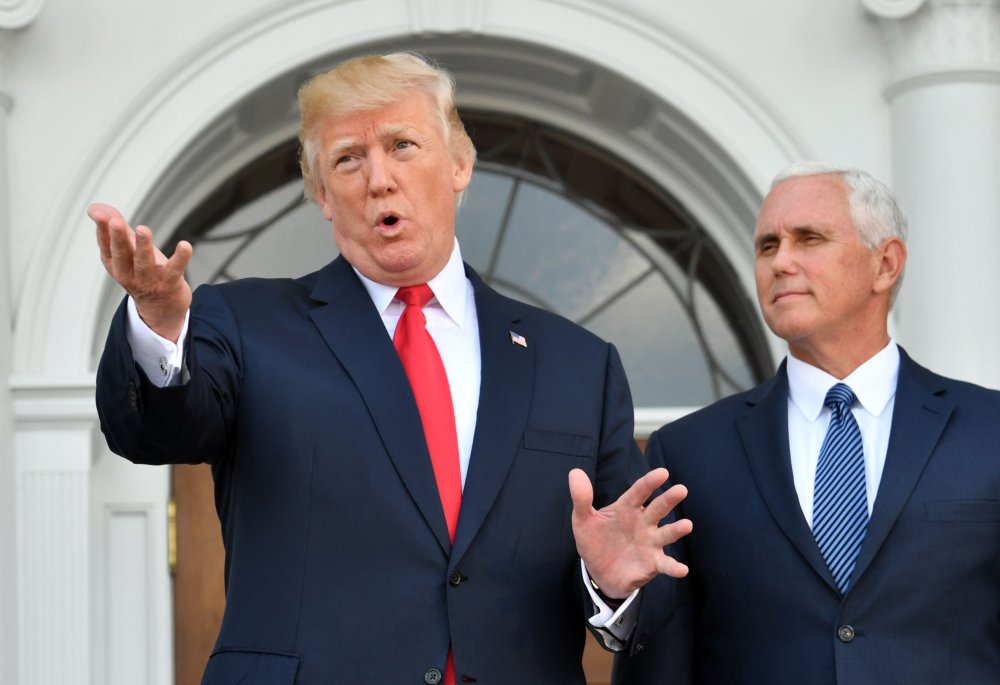
Speaking from one of his golf resorts in early August, Donald Trump used the words many in the public-health community wanted to hear.
“The opioid crisis is an emergency, and I’m saying officially, right now, it is an emergency,” the president said from Bedminster. “It’s a national emergency. We’re going to spend a lot of time, a lot of effort and a lot of money on the opioid crisis.”
As we discussed over the summer, Trump’s use of the word “officially” stood out because of its procedural significance: when a president makes an official emergency declaration, a series of steps are supposed to kick into action. NBC News reported at the time, “Experts said that the national emergency declaration would allow the executive branch to direct funds towards expanding treatment facilities and supplying police officers with the anti-overdose remedy naloxone.”
Four weeks later, the New York Times reported that the White House hadn’t actually followed up on this in any way.
When President Trump announced in early August, following a presidential commission’s recommendations, that the opioid crisis was a “national emergency,” he called it “a serious problem the likes of which we have never had.”
A month has now passed, and that urgent talk has yet to translate into urgent action. While the president’s aides say they are pursuing an expedited process, it remains to be seen how and by what mechanism Mr. Trump plans to direct government resources.
That was in September. As of yesterday, eight weeks have passed since Trump “officially” declared this an emergency, and he and his team still haven’t followed through.
NBC News reported a while back that the president needs to sign a declaration and send it to Congress in order for a series of steps to begin. Northwestern University law professor Eugene Kontorovich said Trump was not breaking any new ground when he announced a national emergency but said “such a declaration does have to be transmitted to Congress in writing.” “Relevant monies won’t be released until such a thing is signed,” Kontorovich told NBC News. “Usually presidents will announce something and sign it at the same time as a photo-op kind of thing. I say usually because Trump is famously more extemporaneous than a typical president.” Indeed, it’s the president’s reputation for “extemporaneous” policy pronouncements that leads one to wonder whether Trump meant to “officially” declare a national opioid emergency in August, or whether he just blurted out a thought that came to his mind. The president says all kinds of things, but there’s no reason to assume they reflect reality.
Steve Benen is a producer for "The Rachel Maddow Show," the editor of MaddowBlog and an MS NOW political contributor. He's also the bestselling author of "Ministry of Truth: Democracy, Reality, and the Republicans' War on the Recent Past." Recommended


