








Fearing adverse political consequences, Donald Trump occasionally likes to argue that he, unlike those rascally Democrats, is the true champion of undocumented immigrants. It’s the Republicans, the president insists, who are on their side.
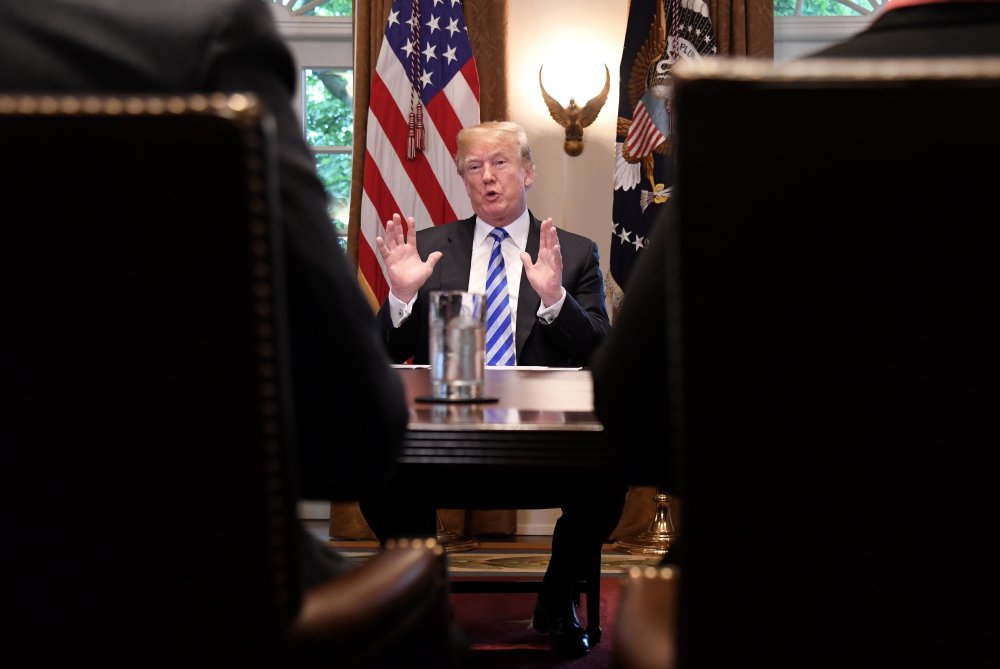
The rhetoric has long been at odds with reality, and yesterday, Trump hosted an immigration roundtable at the White House, where he dropped the facade.
“We have people coming into the country, or trying to come in — and we’re stopping a lot of them — but we’re taking people out of the country. You wouldn’t believe how bad these people are. These aren’t people. These are animals. And we’re taking them out of the country at a level and at a rate that’s never happened before. And because of the weak laws, they come in fast, we get them, we release them, we get them again, we bring them out. It’s crazy.”
This was not, alas, the first time this president referred to immigrants as “animals.” [Update: see below.]
But the fact that Trump’s rhetoric is increasingly common doesn’t make it any less offensive. Indeed, when a leader with authoritarian instincts start describing those he considers undesirable as less than human, there’s cause for concern.
A Washington Post report added, “There’s important historical context here, too, that many social media users pointed out: Referring to marginalized groups as subhuman has been a way dictators have justified the abuse of those groups.”
All of this comes less than a week after White House Chief of Staff John Kelly, echoing anti-immigration rhetoric from generations past, said undocumented immigrants are unskilled and uneducated people who can’t “easily assimilate” and “don’t integrate well.”
It’s almost as if Trump’s assurances about treating immigrants with great “heart” were insincere.
Also at yesterday’s White House event, the president added, “We have to break up families. The Democrats gave us that law. It’s a horrible thing. We have to break up families. The Democrats gave us that law and they don’t want to do anything about it. They’ll leave it like that because they don’t want to make any changes. And now you’re breaking up families because of the Democrats. It’s terrible.” As is too often the case with Trump’s policy argument, most of this is gibberish. Democrats are not solely responsible for writing the nation’s immigration laws, and congressional Dems have made overly generous offers to this White House on an immigration compromise. Trump has so far rejected every bipartisan deal. What’s more, whether the president understands this or not, breaking up immigrant families is not something he “has to” do. There is no law, from Democrats or anyone else, that requires family separations. It’s a choice Trump and his team made, which other recent presidents from both parties did not make. * Update: The official White House line is that Trump’s “animals” reference was about MS-13 members. Here’s the full transcript; take a look to see the context.
Steve Benen is a producer for "The Rachel Maddow Show," the editor of MaddowBlog and an MS NOW political contributor. He's also the bestselling author of "Ministry of Truth: Democracy, Reality, and the Republicans' War on the Recent Past." Recommended


