








At this point in American politics, whether a presidential candidate avoided service in Vietnam is probably an issue that has lost its electoral salience. While the controversy undercut Bill Clinton — and to a lesser extent, George W. Bush — its relevance in national campaigns seems to have come and gone.
So, when the AP ran a 1,200-word piece yesterday on Romney’s Vietnam-era deferments, it’s tempting to think the story just doesn’t matter. As the argument goes, his unwillingness to serve, though perhaps embarrassing, doesn’t seem to tell us anything important now.
But these assumptions aren’t quite right. The story matters in large part because this appears to be yet another area in which Romney hasn’t been honest with the public.
Though an early supporter of the Vietnam War, Romney avoided military service at the height of the fighting after high school by seeking and receiving four draft deferments, according to Selective Service records. They included college deferments and a 31-month stretch as a “minister of religion” in France, a classification for Mormon missionaries that the church at the time feared was being overused. The country was cutting troop levels by the time he became eligible for the draft, and his lottery number was not called. […]
[B]ecause Romney, now 65, was of draft age during Vietnam, his military background — or, rather, his lack of one — is facing new scrutiny as he courts veterans and makes his case to the nation to be commander in chief.
This scrutiny is turning up some underappreciated details, which raise some legitimate questions. Indeed, there’s clear evidence to suggest Romney hasn’t told the truth about his actions during the war.
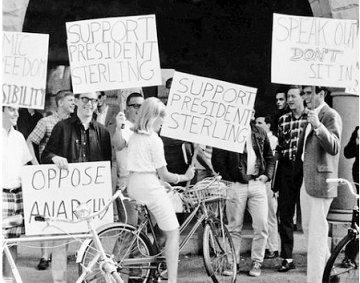
In 1965, as an undergraduate at Stanford, Romney not only supported the war in Vietnam, he participated in pro-war protests. That same year, he sought and received his first deferment.
A year later, Romney received a longer-than-usual 4-D deferment, which allowed him to do Mormon missionary work in France, despite the fact that other “young Mormon men elsewhere were denied that same status,” and the Mormon Church, which backed the war, “limited the number of church missionaries allowed to defer their military service using the religious exemption.”
By 1969, Romney had completed his work in France, but sought and received new deferments.
Many years later, in 1994, Romney said, “It was not my desire to go off and serve in Vietnam, but nor did I take any actions to remove myself from the pool of young men who were eligible for the draft.” That wasn’t true — he took several steps to remove himself from the eligibility pool. By 2007, Romney, a presidential candidate, argued. “I longed in many respects to actually be in Vietnam and be representing our country there, and in some ways it was frustrating not to feel like I was there as part of the troops that were fighting in Vietnam.” But that’s not what he said in 1994, and if “longed” to serve in the war he protested to support, Romney probably shouldn’t have gone so far out of his way to make sure he didn’t have to go. Again, I can appreciate why this all seems like ancient history. But if Romney has misled voters about his decision to avoid military service during a war — and there’s ample reason to believe he has — that’s clearly a legitimate campaign issue. For that matter, if Romney benefited from preferential treatment, unavailable to those who weren’t born into a wealthy and politically influential family, that matters, too.
The place for in-depth analysis, commentary and informed perspectives. Recommended


