








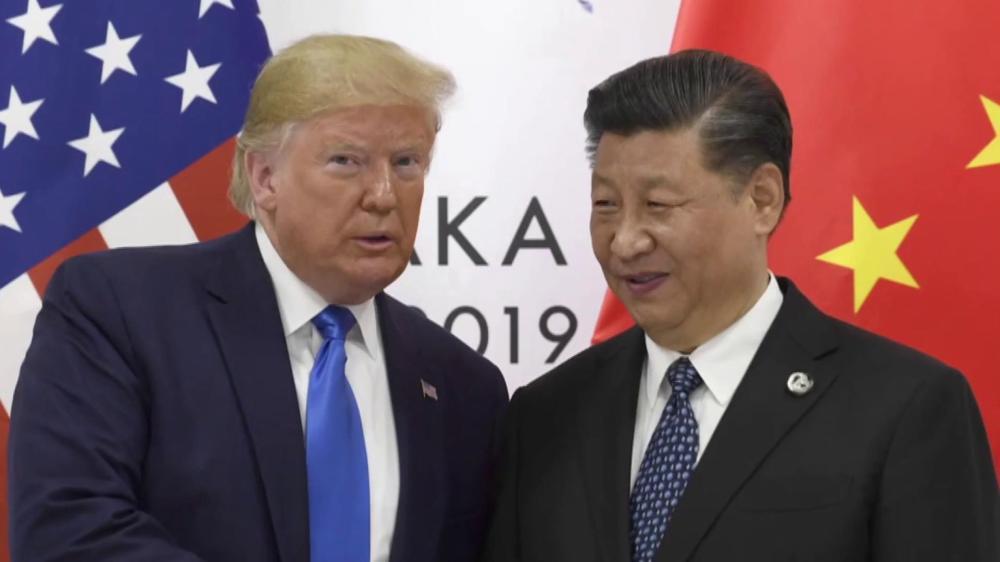
By most measures, Donald Trump’s first meaningful trade agreement came together in September 2018, when the president signed a deal with South Korea alongside Moon Jae-in. “I’m very excited about our new trade agreement,” the American president said at the time. “And this is a brand-new agreement. This is not an old one, rewritten. This is a brand-new agreement.”
It was not a brand-new agreement. Negotiators tweaked and revised an existing policy, but Trump found that unsatisfying, so he hyped it in ways that defied reason.
A year and a half later, he’s doing the same thing with even more enthusiasm.
On China, for example, Trump and his team tried to negotiate a sweeping new trade agreement, failed spectacularly, and settled on a modest “phase one” deal. Formalizing the agreement this week, the Republican declared, “It really just doesn’t get any bigger than this.”
That wasn’t even close to being true. The new deal is vague, incomplete, and according to a variety of experts, “underwhelming.” Politico quoted Trump confidants who “privately admit” the president is “hyping” a deal that doesn’t do much.
He’ll soon do the same thing with NAFTA 2.0, a.k.a. the U.S.-Mexico-Canada Agreement (USMCA). The Washington Post‘s Catherine Rampell drove the point home nicely:
Trade was supposed to be President Trump’s signature issue. He was going to get us the best, biggest, America-First-iest trade deals ever.
We’re now two years into his multifront trade wars. They’ve fractured our international alliances, imposed tens of billions of dollars of new taxes on Americans, resulted in two expensive agricultural bailouts, multiplied farmer bankruptcies and landed the manufacturing sector in a recession.
Today, we’re left to ask: Is that all there is?
She concluded that the best one can say about Trump’s allegedly “historic” deals is that they won’t make his unnecessary trade wars worse, which isn’t exactly the basis for an impressive boast.
Heather Hurlburt recently added that Trump’s trade breakthroughs are ultimately “a triumph of the trivial.” So why bother with them? Because Trump, who’s never demonstrated any meaningful familiarity with the substance of trade policy, is almost totally focused on saying, “Look, I’m doing some stuff!” He’s also desperate to distract attention from the impeachment crisis that’s rocked his presidency. Trump told reporters yesterday, “This is a hoax. It’s a sham. I did the biggest deal ever done in the history of our country yesterday in terms of trade — and probably other things too, if you think about it: the deal with China. And that was the second story to a total hoax.” None of this made factual sense — the Ukraine scandal is very real; he didn’t come close to negotiating “the biggest deal ever done in the history of our country”; etc. — but his whining reinforced the fact that he’s desperate to put his supposed victories in the foreground. The trouble is, for those who take the substance seriously, the one thing Trump’s trade deals have in common is that they’re simply not the sweeping breakthroughs he wants and needs them to be.
Steve Benen is a producer for "The Rachel Maddow Show," the editor of MaddowBlog and an MS NOW political contributor. He's also the bestselling author of "Ministry of Truth: Democracy, Reality, and the Republicans' War on the Recent Past." Recommended


