








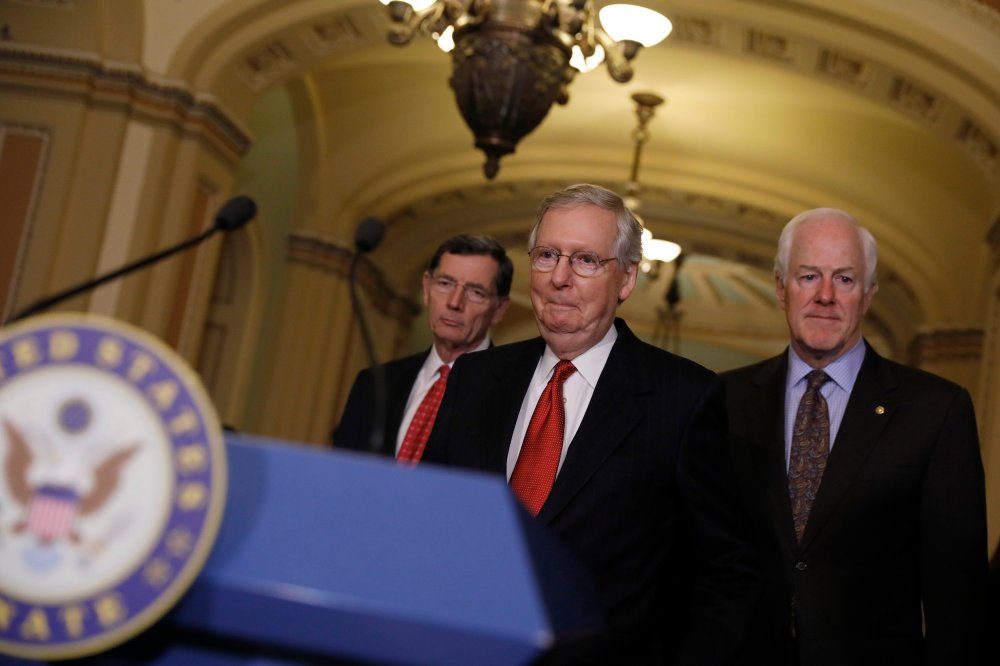
The Senate Republicans’ secret health care bill is, as of this morning, no longer a secret. Though the website GOP senators created for the proposal doesn’t appear to be working perfectly, the bill is now available for public scrutiny — with only a week to go before a scheduled floor vote.
But as we start digging in on the blueprint, and await a report from the Congressional Budget Office on its impact, it’s worth taking a moment to think about the strange political incentives surrounding the entire initiative.
Because, frankly, I find them baffling.
Senate Republicans have kept the bill-writing process secret, in large part because they recognize how deeply controversial and unpopular their efforts are. GOP leaders have been reluctant to even talk about their own policy ideas, effectively telling their own members, “We better pass this now before anyone realizes how horrible the plan is.”
But then what? What exactly do Republicans expect to happen once their regressive ideas are imposed on the nation?
In 2009 and 2010, Democrats wanted the public to know as much about their health care proposal as possible. Dems were desperate for Americans to learn the details, in part because Democratic officials believed people would like what they saw, but also because Dems wanted the facts to counteract the nonsensical rumors and brazen lies touted by the ACA’s opponents. What’s more, once “Obamacare” was law, Dems were confident that the law’s popularity would eventually grow — which is largely what’s happened.
In 2017, however, all of this is reversed. Republicans plainly don’t want Americans to get too close a look at their unpopular legislation, and have no real confidence that the public will actually like what GOP officials came up with behind closed doors.
All of which leads to a question that isn’t asked often enough: why in the world are they doing this? Or more to the point, why aren’t they concerned about a political backlash? As Vox’s Ezra Klein put it the other day, “If their plan is so unpopular they can’t defend it in theory, how will they defend it in practice? Each day this goes on, it seems less like a legislative process and more like a form of madness.”
The most plausible explanation is that Republicans believe they’re keeping a promise — for which they’ll be rewarded by the electorate. For many GOP officials, it doesn’t matter if the bill’s unpopular, and it doesn’t matter if people will hate the end result. The only consideration should be honoring a commitment: Republicans vowed that they’d gut the current system, so it’s incumbent on GOP officials to do what they said they’d do.
But that doesn’t really make sense, either. Sure, Republicans promised to go after “Obamacare” for reasons they’ve never been able to explain in a compelling way, but they also made all kinds of related promises — about Medicaid, about coverage for the uninsured, about protections for those with pre-existing conditions — that the GOP is abandoning without any anguish. If honoring pre-election commitments was paramount, Republicans wouldn’t be pursuing this course at all. The more alarming explanation came yesterday by way of Slate‘s Jamelle Bouie. [U]ltimately it’s not clear the party believes it would face those consequences. The 2018 House map still favors Republicans, and the party is defending far fewer Senate seats than Democrats. Aggressively gerrymandered districts provide another layer of defense, as does voter suppression, and the avalanche of spending from outside groups. Americans might be hurt and outraged by the effects of the AHCA, but those barriers blunt the electoral impact. […] It seems, then, that we have an answer for Republicans insist on moving forward with the American Health Care Act. Because they can. And who is going to stop them? I can’t say with confidence whether this is what GOP officials are thinking, but if it is, they’re not just endangering the public’s health security; they’re also thumbing their nose at our system of government. If Republicans are pursuing regressive, unpopular, and dangerous ideas because they see themselves as insulated from public will, confident that they can act with impunity because voters won’t or can’t punish them, we’re going to have to have a much larger conversation about the breakdown of American democracy.
Steve Benen is a producer for "The Rachel Maddow Show," the editor of MaddowBlog and an MS NOW political contributor. He's also the bestselling author of "Ministry of Truth: Democracy, Reality, and the Republicans' War on the Recent Past." Recommended


