








In early 2009, when the Great Recession was still very much an ongoing crisis, congressional Democrats began work on reforming the financial industry’s rules, including bankruptcy reform proposals. When some of these ideas failed, then-Senate Majority Whip Dick Durbin (D-Ill.) became frustrated, and was willing to say so in candid ways.
“[T]he banks — hard to believe in a time when we’re facing a banking crisis that many of the banks created — are still the most powerful lobby on Capitol Hill,” Durbin said nine years ago. “And they frankly own the place.”
By some measures, that hasn’t changed.
The Senate passed on Wednesday legislation sponsored by Senate Banking Committee Chair Mike Crapo (R-ID) that would rewrite parts of the 2010 Dodd-Frank Act, the landmark financial regulation overhaul enacted in response to the 2008 financial crisis. The bill cleared the Senate with ease, 67 to 31, earning support from 16 Democrats and Sen. Angus King (I-ME) in addition to 50 Republicans.
The Senate bill would adjust the size at which banks are subject to certain regulatory scrutiny and exempt small banks from some requirements for loans, mortgages, and trading, among other measures.
Right now, banks with more than $50 billion in assets are subject to Dodd-Frank regulations. The Senate bill would, among other things, raise that threshold to $250 billion.
The bill faced fierce criticism from Sen. Elizabeth Warren (D-Mass.) and much of the left — the very idea that Congress would roll back financial-industry safeguards right now seems dangerous from a progressive perspective, especially with the industry already flush with cash — but it cleared the Senate anyway. All 31 “no” votes came from the Senate Democratic caucus, but they were easily outnumbered.
What’s especially interesting right now, however, is what House Republicans intend to do with the Senate bill.
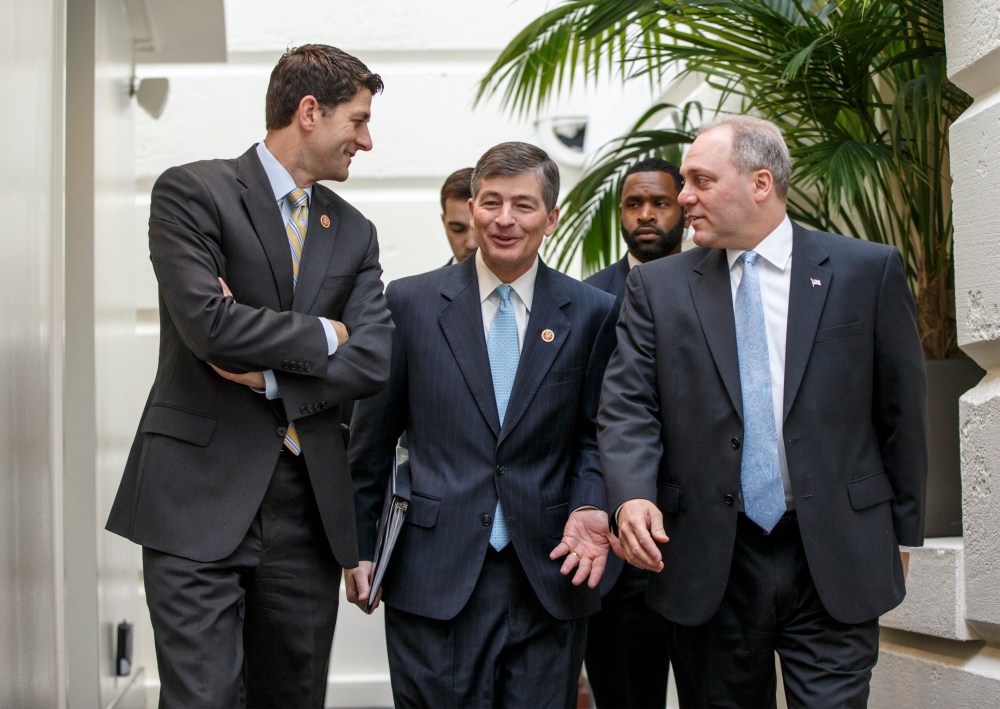
Indeed, as the Wall Street Journal reports, House Financial Services Committee Chairman Jeb Hensarling (R-Texas) considers the Senate bill as “an important first step.”
Mr. Hensarling, who is retiring from Congress this year, said he discussed the bill with House Speaker Paul Ryan (R., Wis.) and was told the bill wouldn’t leave Mr. Ryan’s desk “unless and until the Senate negotiates with the House,” indicating House lawmakers want to debate adding provisions they favor to the legislation. And that leaves progressives in an unexpected place: the left is suddenly hoping Hensarling and the House GOP make this bill even worse, which in turn might derail the entire effort. That’s not at all unrealistic. Democratic centrists in the upper chamber were willing to go along with the Senate version of the deregulation bill, but they say they’re not open to House efforts to move the bill even further to the right. Hensarling, a longtime proponent of Wall Street’s regulatory requests, however, seems to think the moderate Senate Dems are bluffing — and that they’ll feel compelled to vote for package, even if House Republicans add new, conservative elements. Or maybe it’s Hensarling, who’s retiring this year, who’s bluffing, and he’ll eventually pass the Senate version in its current form. We’ll see soon enough which side prevails, but if it’s Jeb Hensarling, and not Elizabeth Warren, who kills this bill, I’m going to laugh quite a bit.
Steve Benen is a producer for "The Rachel Maddow Show," the editor of MaddowBlog and an MS NOW political contributor. He's also the bestselling author of "Ministry of Truth: Democracy, Reality, and the Republicans' War on the Recent Past." Recommended


