









The fact that this was inevitable does not make the developments any less painful.
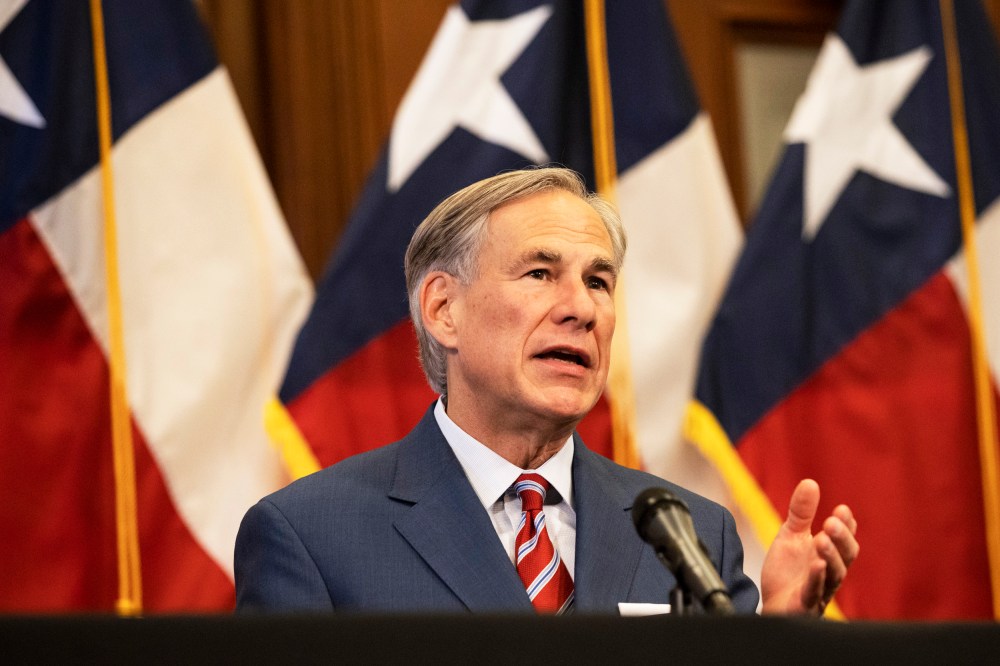
Texas Republican Gov. Greg Abbott signed a sweeping election bill into law on Tuesday morning, after months of battles with Democrats who fled the state in a futile effort to block the legislation…. Democrats have called the bill “Jim Crow 2.0” and said the law is designed to suppress access by voters of color.
Circling back to our coverage from last week, Democratic legislators in Texas clearly did what they could to delay the process. When Texas Republicans moved forward with plans to impose sweeping new voting restrictions, dozens of state House Democrats left the state altogether and deny the legislature the quorum needed to work.
But the minority party in the state legislature couldn’t stay away from Austin indefinitely, and efforts to protect democracy and the franchise in the Lone Star State ran their course.
To be sure, in the wake of the 2020 presidential election and the Republican Party’s enthusiastic embrace of the Big Lie, GOP policymakers in multiple states have upended voting laws – not in response to fraud or irregularities, but because the party is exploiting confusion, created by partisan lies, to further rig democracy in Republicans’ favor.
The Texas policy goes further than most. As Rachel explained on the show in July, at issue is a proposal to make voting in Texas even more difficult by banning drive-through voting, restricting voting by mail, banning voting in overnight hours, empowering partisan poll waters, and restricting absentee voting. Indeed, it will now be a felony in Texas for election officials to send unsolicited mail-in ballot applications to voters.
The Lone Star State’s election system was already flawed, but Texas Republicans were determined to make it considerably worse, on purpose, in the hopes of creating an electoral advantage that would keep them in power for the foreseeable future.
NBC News’ report noted that Texas Democrats and other voting-rights advocates are already planning to challenge the upcoming law in court. Indeed, some litigation was filed before the GOP governor put his signature on the bill. But given what’s become of the 5th Circuit Court of Appeals, and the Republican-dominated U.S. Supreme Court’s increasingly overt hostility toward voting rights, it’s difficult to be optimistic.
In case this isn’t obvious, GOP policymakers in the state are attacking a problem that does not exist, and imposing restrictions on solutions that have worked quite well. In the not-too-distant past, Houston’s Harris County, for example, struggled with a ridiculously sclerotic election system. Local officials adopted 24-hour voting and drive-through voting last year, which was both popular with the electorate and effective in boosting turnout.
For Texas Republicans, this success was a problem that needed to be “fixed.” As the editorial board of The Washington Post recently put it, “This is because their sole motivation is to make it more difficult for Democrats, and Black Democrats, to vote.”
For voting advocates, the available options have dwindled. Texas Democrats couldn’t stay away from Austin forever; appealing to Texas Republicans’ consciences and sense of propriety has failed spectacularly; and partisan judges have left little doubt that they’ll likely endorse the GOP’s voter-suppression efforts.
That leaves effectively all of the power in the hands of one group of people: Democratic members of the U.S. Senate. As regular readers know, it was last month when Senate Majority Leader Chuck Schumer spoke about detailed talks with a group of Democratic senators – Minnesota’s Amy Klobuchar, Oregon’s Jeff Merkley, West Virginia’s Joe Manchin, Georgia’s Raphael Warnock, California’s Alex Padilla, Virginia’s Tim Kaine, Maine’s Angus King, and Montana’s Jon Tester – on a new, compromise voting rights bill. As we discussed at the time, the New York Democrat concluded that the group has made “a great deal of progress” on a bill, and voting rights will be the first matter of legislative business when senators return to Capitol Hill. There’s no reason to believe Republicans senators will ever budge on protecting voting rights, and no bill, no matter how narrow or carefully tailored, will overcome a GOP filibuster. But the fact that these senators continue to work on this legislation is notable in its own right. Whether or not you always agree with the relevant players, these senators aren’t dumb. They’re well aware of the legislative arithmetic, and it seems unlikely that they’d invest time and energy into an important bill that was doomed from the outset. It’s against this backdrop that the senators have dug in – while Republicans in states like Texas put new barriers between Americans and their democracy. Watch this space.
Steve Benen is a producer for "The Rachel Maddow Show," the editor of MaddowBlog and an MS NOW political contributor. He's also the bestselling author of "Ministry of Truth: Democracy, Reality, and the Republicans' War on the Recent Past."
Latest Post
Recommended


