








Donald Trump’s immigration plan has meandered in different directions, but when it comes to DACA protections for Dreamers, the president’s strategy has been fairly obvious for a while: Trump rescinded the DACA policy, imperiling the fate of hundreds of thousands of young immigrants, in order to gain leverage over the Dreamers’ Democratic allies.
If Dems want to protect the young immigrants from the threat of deportation, they’re going to have to pay the White House a ransom.
Trump’s plan ran into trouble when the courts blocked his policy and allowed DACA to continue, but the president and his lawyers expected the Supreme Court to bail them out. Trump was explicit on this point a couple of weeks ago, predicting that after conservative justices on the high court endorse his position, “we’ll work out a deal very fast with the Democrats on DACA.”
There was a certain logic to it. Once the high court knocks down DACA, Democrats would have no choice but to go to Trump, hat in hand, begging for some kind of deal to shield Dreamers. The president could, and certainly would, make the same demands he made last year: he’d agree to protections for Dreamers in exchange for border funding and significant cuts to legal immigration.
This morning, Trump’s strategy ran into a (ahem) wall. NBC News reported:
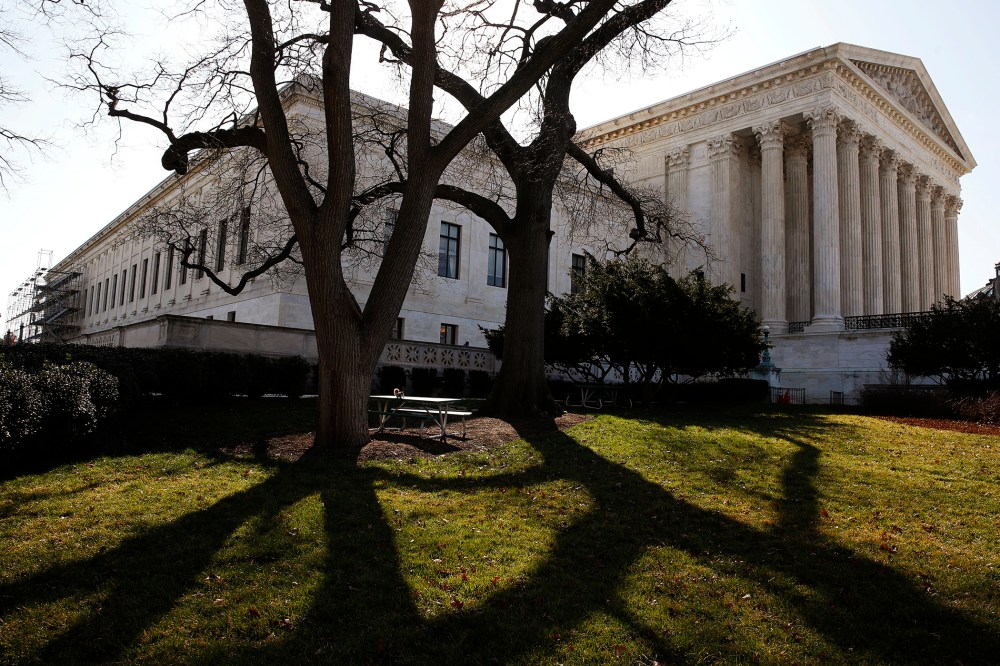
The U.S. Supreme Court took no action on Tuesday on the future of the Deferred Action for Childhood Arrivals program, a move that requires the government to keep the program going for at least 10 more months.
The Trump administration urged the justices to hear appeals of lower court rulings that prevent the government from shutting DACA down. Now, any cases accepted in subsequent weeks won’t be heard until the next term, which begins Oct. 1, and it would take a few months more for the court to issue a decision.
Just so we’re clear, the Supreme Court didn’t issue any rulings on DACA this morning; the justices simply chose not to act on the issue at all.
The Washington Post added, “If the court sticks to its normal procedures, that would mean that even if it accepts the case as a later date, it would not be argued until the new term starting in October, with a decision likely in 2020.”
That’s not what Trump wanted to hear. Indeed, it makes his whole plan, such as it is, effectively impossible to execute. Remember, as recently as Saturday, the president extended a slightly tweaked offer to Democrats on the government shutdown: if they agreed to give him billions of taxpayer dollars for a border wall, he’d agree to a temporary, three-year extension of DACA protections to Dreamers. It was an absurd offer for a variety of reasons, but today’s developments at the Supreme Court make it even less credible: under the new Trump blueprint, the Republican “concession” would be a temporary extension of protections that already exist, and those protections will remain in place for the rest of 2019. All of which suggests the leverage the president expected to have — “Give me what I want or I’ll hurt Dreamers” — doesn’t exist, and won’t exist for a while (if ever). I can’t wait to see Trump’s back-up plan.
Steve Benen is a producer for "The Rachel Maddow Show," the editor of MaddowBlog and an MS NOW political contributor. He's also the bestselling author of "Ministry of Truth: Democracy, Reality, and the Republicans' War on the Recent Past." Recommended


