








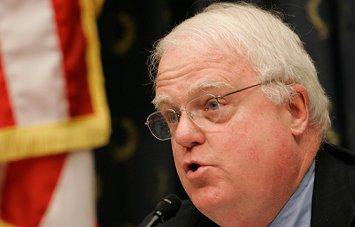
Last November, Sen. John McCain (R-Ariz.) was struggling to turn Benghazi into a political controversy. At one point, he scheduled a press conference to raise questions he wanted answers to, unaware of the fact that there was a classified briefing underway on Benghazi — which McCain had been invited to, but did not attend.
It was an embarrassing setback, which left McCain looking foolish. He had questions, and could have received answers, but instead complained to the media about his lack of information.
As it happens, McCain isn’t the only one. Rep. Jim Sensenbrenner (R-Wis.) recently complained to Attorney General Eric Holder about the scope of NSA surveillance, demanding to know, among other things, “How could the phone records of so many innocent Americans be relevant to an authorized investigation as required by the [Patriot Act]?”
Sensenbrenner’s interest was more noteworthy than most — the Wisconsin Republican did, after all, take the lead in writing the Patriot Act during the Bush/Cheney, so his questions and concerns carry some additional weight.
But just as McCain failed to get the available information on Benghazi, it turns out that Sensenbrenner failed to get the available information on NSA surveillance. msnbc’s Adam Serwer reported that the congressman chose not to attend “classified briefings on the National Security Agency’s program over the last three years.”
Two letters from the leadership of Senate intelligence committee in 2010 and 2011 obtained by msnbc show that a series of closed-door briefings and reports on the Patriot Act were made available to lawmakers from both houses. A senior Obama administration official sent msnbc a list showing at least six classified briefings or meetings on the Patriot Act between 2009 and 2011. And a former Justice department official who participated in the briefings said they offered specifics on the exact issues that Sensenbrenner claims were withheld.
Asked whether his boss had attended any of those sessions during that period, Sensenbrenner spokesperson Ben Miller said the congressman “does not want to be limited by the restraints of confidentiality. Therefore, he believes in an open dialogue by which legislative solutions can be constructed and passed into law before the public.”
I suppose that’s a nice attempt to spin an embarrassing revelation, but it’s not exactly persuasive.
According to Sensenbrenner’s spokesperson, the congressman could have attended classified briefings, but Sensenbrenner prefers “an open dialog.” That’s certainly his right — the Wisconsin lawmaker is not required to attend briefings on matters of national security — but occasionally U.S. intelligence agencies have confidential information to share with Congress, and those agencies don’t want to share the details publicly.
And that leaves politicians like Sensenbrenner with a choice: he can either attend the briefings and get answers to questions or he can boycott the briefings and remain in the dark.
The problem comes when he chooses the latter, only to express outrage by his lack of information.
Adam’s report added: Since details of the NSA surveillance program came to light in newspaper articles in The Guardian and The Washington Post, a number of members of Congress have complained that they were not briefed. Some, it turns out, left briefings early or never showed up. Sensenbrenner, who has been among the most insistent and aggressive in his claims that he was not informed, didn’t attend at all. I’ve long believed one of the keys to avoiding abuses in surveillance programs is a meaningful system of checks and balances. The executive branch will invariably be responsible for overseeing and implementing the programs, but it should have to go to a court to receive warrants, while also going to Congress for legal approval and a notification process. But part of that means lawmakers have to muster the will to show up for briefings. Last week, Sensenbrenner complained in a column he wrote, “While some members of Congress were briefed, particularly those on the intelligence committees, most, including myself, were not.” He appears to have left out a relevant detail as to why he was not briefed.
The place for in-depth analysis, commentary and informed perspectives. Recommended


