








Most lawmakers in both parties believe there will not be a government shutdown in two weeks, but to avoid one, Congress will need to pass something called a continuing resolution. It’s temporary spending bill that will keep the government’s lights on through the end of the fiscal year. The House has already passed its version and the Senate is advancing its alternative.
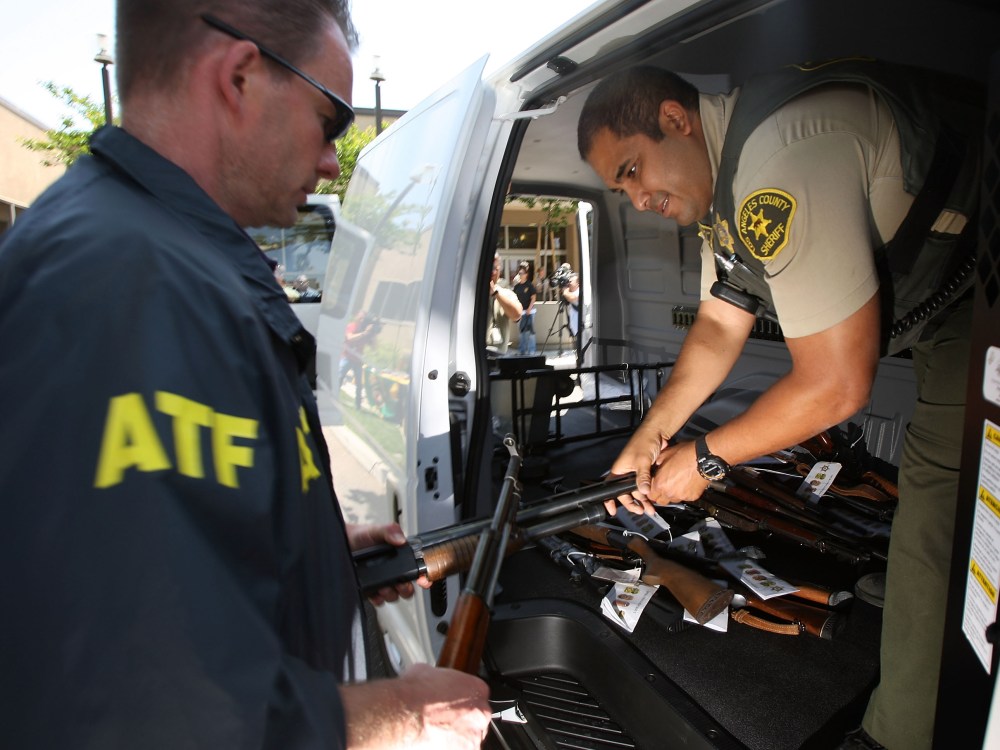
Ordinarily, you might think the partisan disputes over the stopgap bill would be over spending levels and possible cuts, but as it turns out, the most contentious issue might be, of all things, gun policy. The New York Times reports that some unnamed lawmakers “quietly” added some “temporary gun-rights provisions largely favored by Republicans” to the CR. From the Times:
The provisions, which have been renewed separately at various points, would prohibit the Bureau of Alcohol, Tobacco, Firearms and Explosives from requiring gun dealers to conduct annual inventories to ensure that they have not lost guns or had them stolen, and would retain a broad definition of “antique” guns that can be imported into the United States outside of normal regulations.
Another amendment would prevent the A.T.F. from refusing to renew a dealer’s license for lack of business; many licensed dealers who are not actively engaged in selling firearms can now obtain a license to sell guns and often fly under the radar of the agency and other law enforcement officials, which gun control advocates argue leads to a freer flow of illegal guns.
A final measure would require the bureau to attach a disclaimer to data about guns to indicate that it “cannot be used to draw broad conclusions about firearms-related crimes.”
Keep in mind, it’s pretty tough to defend the provisions in question. What’s wrong, for example, with having gun dealers conduct inventories to make sure firearms haven’t been lost or stolen? I don’t know, but under a Republican measure in the temporary spending bill, the ATF would be prohibited from enforcing this basic regulation.
Also note, some of these ideas aren’t new–they’ve been temporary policies included in previous spending bills–but the new GOP-backed proposals make the policies permanent.
What’s worse, these provisions appear likely to pass because Senate Democrats see related measures in the House bill as even worse. As Roll Call noted:
[A Democratic Senate] aide characterized the permanent provisions as a trade-off in negotiations that occurred late last year with House appropriators, who had sought to make additional gun-related riders permanent in the continuing resolution. Other riders — such as one banning the activities of the ATF from being transferred to another government entity, such as the more powerful FBI — are included in the Senate bill but not on a permanent basis. According to the Senate aide, House appropriators also sought to include another provision that Democrats and the White House viewed as far more objectionable. […] Although the Senate’s gun language was agreed to late last year–before the fatal shooting of 20 first-graders at a Connecticut elementary school–gun-control advocates and some Democratic members of Congress said the deal now looks like poor timing. They said it undermines a concurrent effort in both chambers to crack down on gun violence. Third Way’s Jim Kessler, a former aide to Sen. Chuck Schumer (D-N.Y.), told Roll Call, “It shows that the NRA is always on offense and rarely on defense. Even in a very adverse situation for them, in which many in Congress and the White House are trying to do something constructive to keep guns out of the hands of criminals and crazy people, the NRA continues to advance its agenda.” This post first appeared on The Maddow Blog.
The Blog Recommended


