








The modern Senate has earned its unflattering reputation. As abuses became more common and norms were abandoned, the once-venerated institution became a lumbering, dysfunctional, and inefficient mess.
But when it really wants to, the Senate can move with lightning speed.
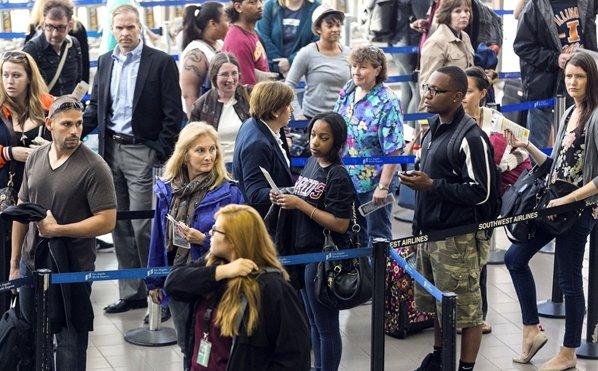
The Senate moved quickly Thursday evening to help ease the Federal Aviation Administration’s ability to handle automatic spending cuts set forth in the sequester.
Senators unanimously approved the “Reducing Flight Delays Act of 2013” — a patch to fix the deep cuts that have furloughed air traffic controllers and delayed flights across the country.
The bill gives the FAA authority to spend up to $253 million of money already in the FAA’s budget — but not allocated to pay for other things — to keep employees on the job and make sure more flights are on time.
The measure didn’t even face a Republican filibuster — it just passed by unanimous consent. It will now move to the House, where it’s scheduled to be brought to the floor today. It will be considered on something called the “suspension calendar,” which means it’ll need a two-thirds majority to pass, but proponents appear optimistic.
To clarify an important detail, the “Reducing Flight Delays Act of 2013” does not allocate funds to replace the budget cuts and end the furloughs, but rather, gives the FAA the authority to move around other funds within its existing budget to make up the difference. In this sense, it’s a win for Republicans — Democrats have argued that when it comes to ending the sequestration fiasco, Congress should either turn it off or replace it with a balanced compromise. The GOP line, meanwhile, has been to put the onus on the Obama administration to make the cuts work. It’s a relatively tiny slice of the pie, but the FAA fix is in line with the Republican approach.
So why did Democrats go along? Because they were just looking to solve this problem quickly, and this was the path of least resistance.
Procedural considerations notwithstanding, we’re still left with an unnerving examination of Washington’s often twisted priorities.
When the sequester started kicking children out of pre-K, Congress did nothing. When this stupid policy denied low-income seniors the benefits of Meals on Wheels, Congress barely noticed. When sequestration cuts put new burdens on cancer patients and cut housing aid to struggling families, most of Congress shrugged its shoulders. But when business travelers ran into flight delays on Monday, a unanimous Senate approved a fix without breaking a sweat on Thursday. I have no special fondness for FAA furloughs or disrupted air travel, but when Republicans pushed for sequestration, the goal was to create a policy that would hurt the country on purpose. What’s more, it’s proven to be quite effective — millions of Americans have been affected and continue to feel the pinch. But it appears that lawmakers are also mindful of which Americans are affected and what kind of inconveniences the political world is prepared to tolerate. Children being thrown out of Head Start centers is a shame, but wealthier air travelers waiting on the tarmac for a couple of hours is a travesty in need of swift congressional intervention. Noam Scheiber had a good take on this: The problem with the deal to end the airport delays — as with so many of the other ways the sequester has been eased — is that it does away impact of the dreaded FAA cut without an alternative that would be roughly as painful for the affluent. It treats the delays as a kind of gratuitous sideshow to the sequester fight when in fact they’re really the whole point. “The public’s going to be furious when they find out that this could have been prevented,” Republican Senator Dan Coats complained to the [Wall Street Journal]. Exactly. And it was only then that they would have had the moral standing to judge the rest of the sequester.
The place for in-depth analysis, commentary and informed perspectives. Recommended


