








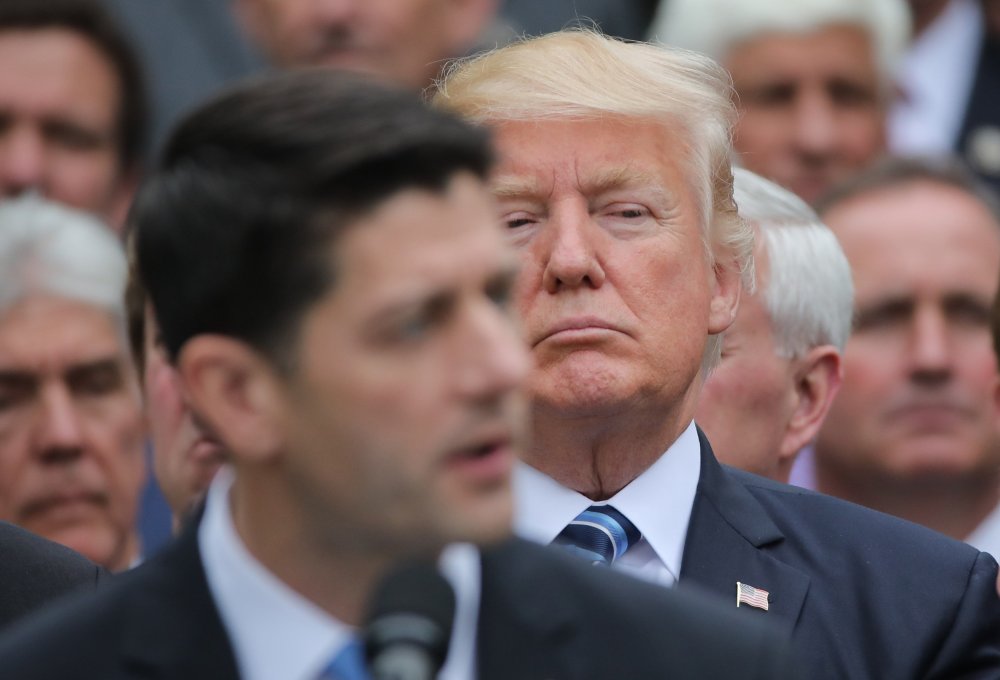
House Speaker Paul Ryan (R-Wis.) was in Dallas over the weekend, and a reporter brought up the possibility of impeachment proceedings against Donald Trump. The top House Republican dismissed the idea as “ridiculous” and said he wouldn’t discuss it further.
The Speaker may have been a bit too quick to reject the possibility.
Last month, we learned that Trump not only fired FBI Director James Comey with the investigation into the Russia scandal in mind, but the president also reportedly asked Comey to shut down the investigation into Michael Flynn, the White House’s former national security advisor. Comey apparently kept contemporaneous notes to document what transpired.
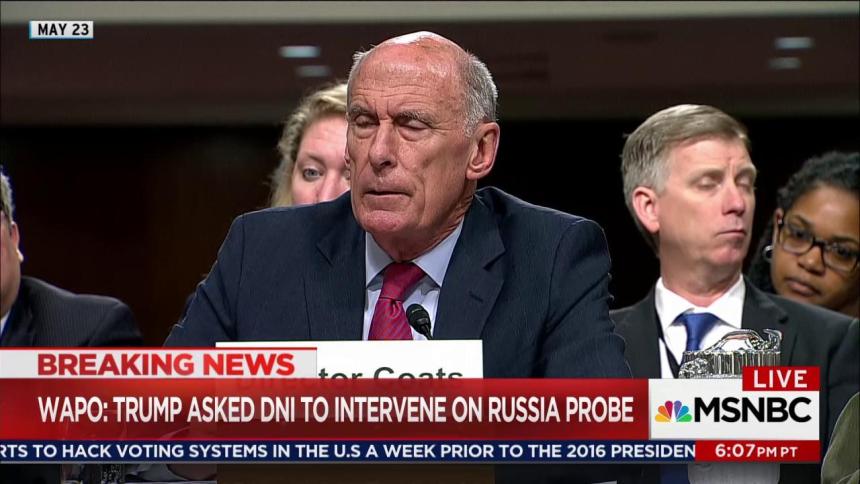
A week later we learned that Trump asked Director of National Intelligence Dan Coats and Adm. Michael Rogers, the director of the National Security Agency, to participate in a public-relations push against the Russia investigation. As Rachel noted on last night’s show, that served as a precursor to the latest scoop from the Washington Post.
The nation’s top intelligence official told associates in March that President Trump asked him if he could intervene with then-FBI Director James B. Comey to get the bureau to back off its focus on former national security adviser Michael Flynn in its Russia probe, according to officials.
On March 22, less than a week after being confirmed by the Senate, Director of National Intelligence Daniel Coats attended a briefing at the White House together with officials from several government agencies. As the briefing was wrapping up, Trump asked everyone to leave the room except for Coats and CIA Director Mike Pompeo.
The president then started complaining about the FBI investigation and Comey’s handling of it, said officials familiar with the account Coats gave to associates. Two days earlier, Comey had confirmed in a congressional hearing that the bureau was probing whether Trump’s campaign coordinated with Russia during the 2016 race.
Coats did not intervene with the FBI director, but the fact that Trump allegedly asked him to adds a new wrinkle to a scandal that already represents an existential threat to the Trump presidency.
Indeed, let’s not forget that in in August 1974, with the Watergate scandal ravaging Richard Nixon’s presidency, the “smoking gun” tape made it impossible for the Republican to stay in office. The recording, which Nixon fought to conceal, showed the then-president discussing a plan with an aide: they’d try to get intelligence officials to help derail the FBI’s ongoing investigation into the scandal.
We’re now confronted with a Washington Post report that says the current president may have personally spoken to intelligence officials about intervening in an ongoing FBI investigation into a top Trump aide. Forty years ago, GOP members of Congress, confronted with evidence of Nixon obstructing justice, quickly abandoned their party’s president, and Nixon resigned soon after. Now, however, Paul Ryan is characterizing the possibility of impeachment as “ridiculous,” to which the proper response should be, “Let’s not be too hasty.” Coats, a former Republican senator, is scheduled to testify today before the Senate Intelligence Committee. In light of the latest reporting, it should be a very interesting conversation. Postscript: James Clapper, Coats’ predecessor as the director of national intelligence, said overnight that the Watergate scandal “pales” in comparison to Donald Trump’s Russia scandal.
Steve Benen is a producer for "The Rachel Maddow Show," the editor of MaddowBlog and an MS NOW political contributor. He's also the bestselling author of "Ministry of Truth: Democracy, Reality, and the Republicans' War on the Recent Past." Recommended


