








Late last week, the Democratic-led House voted 402 to 12 to ensure the 9/11 Victims Compensation Fund doesn’t run out of money. The bill then went to the Republican-led Senate, where it was expected to pass without controversy.
Yesterday afternoon, however, the process hit an unexpected barrier.
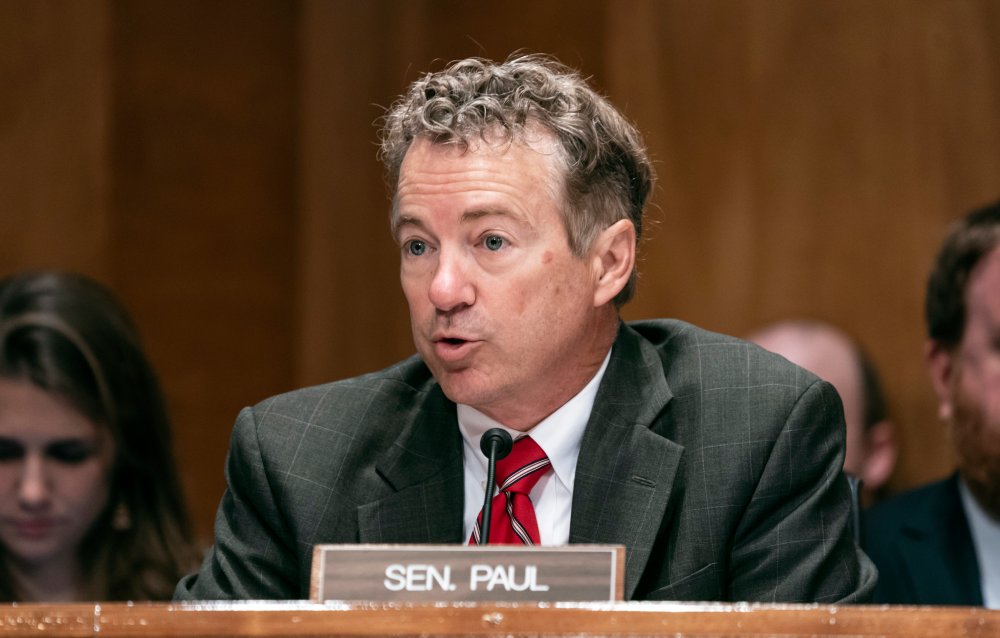
Republican Sen. Rand Paul on Wednesday blocked a bipartisan bill that would ensure a victims’ compensation fund related to the Sept. 11 attacks never runs out of money.
Paul objected to a request by Sen. Kirsten Gillibrand, D-N.Y., to approve the bill by unanimous consent, which would fast-track approval.
Paul, R-Ky., questioned the bill’s 70-year time frame and said any new spending should be offset by corresponding cuts. The government already faces a $22 trillion debt, a figure that grows every year, Paul said.
It’s worth emphasizing that the bill, by congressional standards, isn’t expensive. As the Associated Press’ report added, the Congressional Budget Office estimated that the legislation would cost about $10.2 billion over the next decade, all of which would go toward care for 9/11 first responders.
In contrast, the Republican tax plan, designed to disproportionately benefit the very wealthy, cost roughly 100 times more. When that came up for a vote, Rand Paul was all for it, seemingly indifferent to the bill’s impact on the national debt.
But when it’s the 9/11 Victims Compensation Fund on the line, suddenly the Kentucky Republican has concerns about fiscal responsibility.
As a practical matter, the bill will almost certainly pass anyway — eventually. Yesterday’s effort, initiated by Kirsten Gillibrand, was to expedite the process and get the legislation on a fast track. Rand Paul didn’t block the measure altogether, so much as he slowed it down.
And to my mind, that almost makes matters worse: the GOP senator surely knows he can’t stop the bill, but he wanted to make a show of his efforts to drag out the process a bit. As a result, the Senate will almost certainly still pass the bill, but it’ll take more time — which is the one thing many of the ailing first responders do not have. Jon Stewart, who’s been a public advocate for the first responders and their families, called Rand Paul’s posturing “absolutely outrageous,” and given the circumstances, I’m hard pressed to imagine how anyone would disagree. Postscript: Proponents of the 9/11 Victims Compensation Fund have taken care to avoid turning this debate into a partisan dispute, which is wise. But it’s also true that Republicans, who routinely pretend that they’re the sole arbiters of American patriotism, have consistently been a hindrance for this bill. In addition to Rand Paul’s stunt yesterday, it was a group of Republicans who opposed the bill in the House last week. What’s more, as Matt Steib noted overnight, “Over the years, advocates for funding for first responders and victims of 9/11 have had to face Republicans blocking the effort in the name of fiscal responsibility. In 2010, 42 Republicans motioned to block the vote on the passage of the Zadroga Act, named after the first NYPD officer whose death could be attributed to exposure to toxic chemicals at Ground Zero. In 2015, the bill was held up again by two House Republican committee chairmen concerned about spending.”
Steve Benen is a producer for "The Rachel Maddow Show," the editor of MaddowBlog and an MS NOW political contributor. He's also the bestselling author of "Ministry of Truth: Democracy, Reality, and the Republicans' War on the Recent Past." Recommended


