








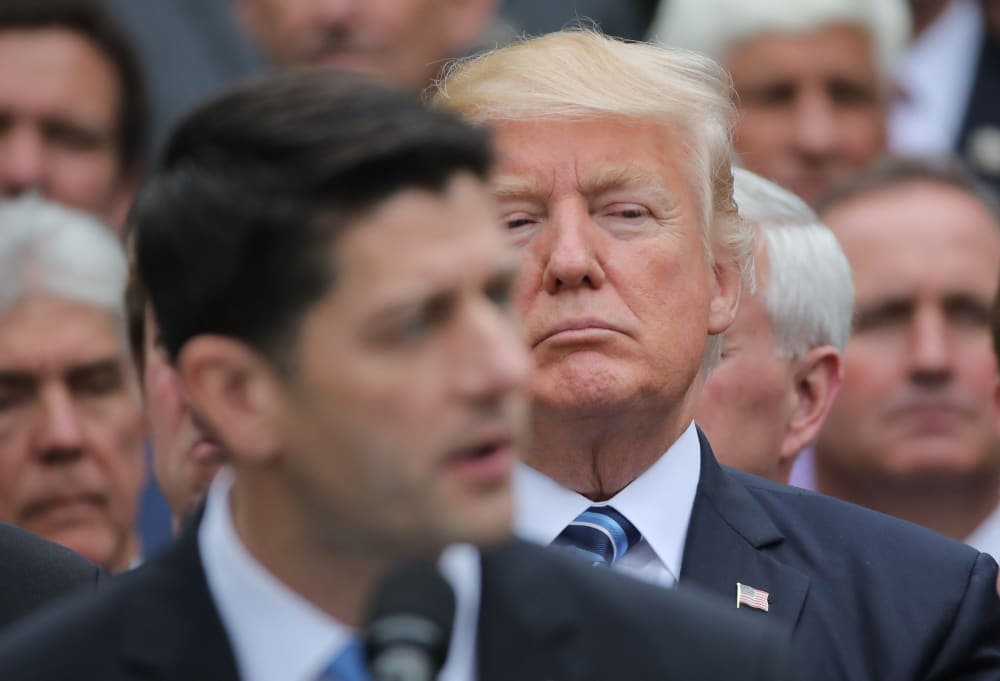
House Speaker Paul Ryan (R-Wis.) yesterday published a tweet highlighting his latest meeting with European ambassadors, discussing “economic cooperation.” Maybe this was a coincidence, or maybe the Speaker of the House was being a little passive aggressive, signaling his support for international trade with European allies while his party’s president prepares a “trade war” and chides the E.U.
Throughout Donald Trump’s tenure, Ryan has played the role of loyal partisan soldier, aligning himself with the White House through thick and thin. The Wisconsin congressman will occasionally wring his hands and express some tepid disappointment with the president’s more outlandish antics, but in general, Trump can expect Ryan to be in his corner.
It’s what made yesterday’s developments stand out.
President Donald Trump had a message for Hill Republicans unhappy with his new trade policy: Get used to it.
Asked about pushback from House Speaker Paul Ryan and congressional GOP leadership, who have ramped up their battle against the president’s surprise announcement last week of new tariffs on imported steel and aluminum, Trump told reporters Monday that “we’re not backing down.”
Trump has openly sparred with members of his own party over the move. “We are extremely worried about the consequences of a trade war and are urging the White House to not advance with this plan,” Ryan spokeswoman AshLee Strong said Monday. “The new tax reform law has boosted the economy and we certainly don’t want to jeopardize those gains.”
OK, but there’s a difference between the House Speaker’s office not wanting something and House Republican leaders actually taking deliberate action. Ryan’s spokesperson expressing “extreme” concern is a notable first step, which the president is likely to ignore.
Which naturally raises the question of what the second step might be.
The Constitution may empower Congress to “regulate commerce with foreign nations,” but the White House gradually expanded its power in this area, especially when it comes to tariffs (though the last time Congress changed the law, the idea was to empower the executive branch to eliminate tariffs, not create new ones).
With this in mind, it would take a new law to block Trump’s proposed tariffs on steel and aluminum — and there’s been some chatter about Congress doing exactly that. Alternatively, as the Washington Post noted, GOP leaders “could try to halt the tariffs by inserting something into a must-sign piece of legislation, such as the government-funding bill that is due later this month.” To be sure, moves like these would represent aggressive moves by Republican lawmakers against a Republican White House — Trump has a track record of lashing out when his ostensible allies defy him — and it’s difficult to say whether Ryan and his colleagues are prepared to be this bold. Though it seems unlikely, it wouldn’t be completely unprecedented. Last summer, the president was staunchly opposed to legislation that imposed new sanctions on Russia for its attack on American elections. Lawmakers largely ignored Trump’s position and passed it anyway. (It’s precisely why so few members have perfect 100% voting records when it comes to voting with the White House.) House Republicans are “extremely worried” about the president’s tariffs? It’s time to find out just how worried they are.
Steve Benen is a producer for "The Rachel Maddow Show," the editor of MaddowBlog and an MS NOW political contributor. He's also the bestselling author of "Ministry of Truth: Democracy, Reality, and the Republicans' War on the Recent Past." Recommended


