








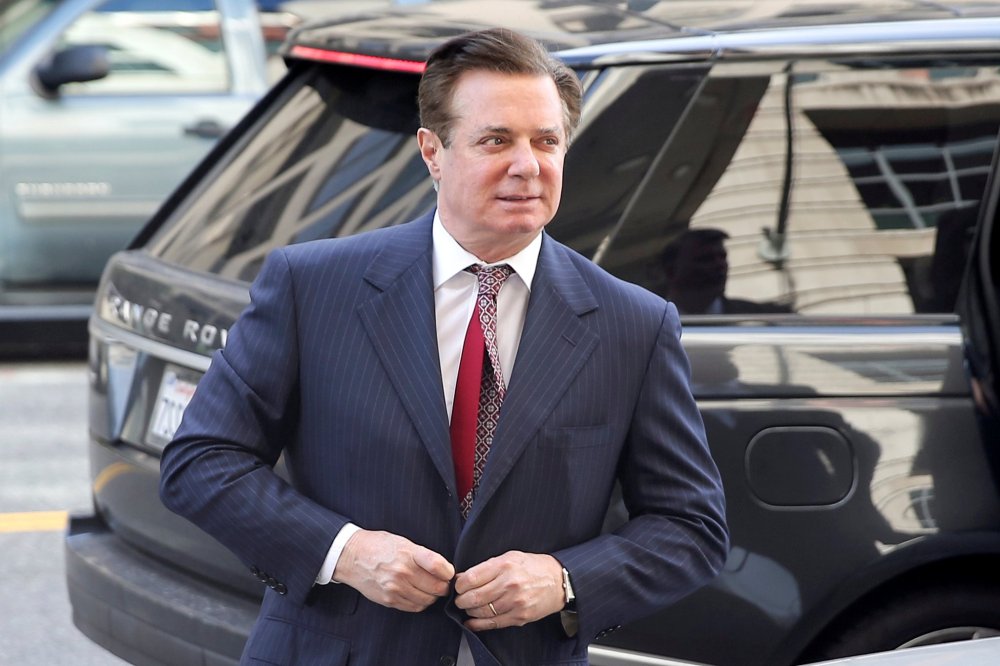

A few weeks ago, a jury in Virginia convicted Paul Manafort, Donald Trump’s former campaign chairman, on eight felony counts involving bank and tax fraud. It was a brutal outcome, but it wasn’t the end of Manafort’s legal troubles.
Because the jury was deadlocked on 10 counts, the president’s former campaign aide faced the prospect of a retrial on those charges. Making matters quite a bit worse, Manafort was also facing a second trial on several related charges, in a case that was poised to begin in Washington, D.C.
This morning, the defendant and his attorneys dramatically changed direction.
Paul Manafort, formerly President Donald Trump’s campaign chairman, pleaded guilty on Friday to two counts and agreed to cooperate with federal prosecutors.
Prosecutor Andrew Weissman called Manafort’s plea deal a cooperation agreement during an 11 a.m. hearing at the federal courthouse in Washington.
A charging document filed Friday in the District of Columbia accuses Manafort, 69, of participating in a conspiracy against the United States — involving money laundering, tax fraud, failing to file Foreign Bank Account Reports, violating the Foreign Agents Registration Act, and lying and misrepresenting to the Department of Justice.
The charging document is available in its entirety here.
In separate press statements, White House Press Secretary Sarah Huckabee Sanders and Trump attorney Rudy Giuliani both said Manafort’s guilty plea has “nothing to do with” the president. It’s worth appreciating the fact, however, that based on what we now know, Manafort was committing a variety of felonies when Trump hired him to lead his political operation.
Initially, many observers noted that Manafort could reach an agreement with prosecutors in which he agreed to plead guilty in exchange for a lesser sentence, without becoming a cooperating witness. In other words, it was entirely possible that he’d strike a deal, go to jail, but not share information with Special Counsel Robert Mueller and his team.
But that made it all the more interesting this morning when prosecutors described Manafort’s deal as a cooperation agreement. For now, there’s a big question mark hanging over this angle to the controversy. We don’t know, for example, what kind of information Manafort has to share or what it may (or may not) have to do with Donald Trump. But if the president’s former campaign chair is cooperating with Mueller’s investigation, as now appears to be the case, it’s probably not a positive development for Trump World. Just last month, in a highly provocative tweet, the president praised Manafort for having “refused to break.” Trump may need to publish a follow-up missive on the subject now. Today’s developments won’t do Trump’s “witch hunt” narrative any favors, either.
Steve Benen is a producer for "The Rachel Maddow Show," the editor of MaddowBlog and an MS NOW political contributor. He's also the bestselling author of "Ministry of Truth: Democracy, Reality, and the Republicans' War on the Recent Past." Recommended


