









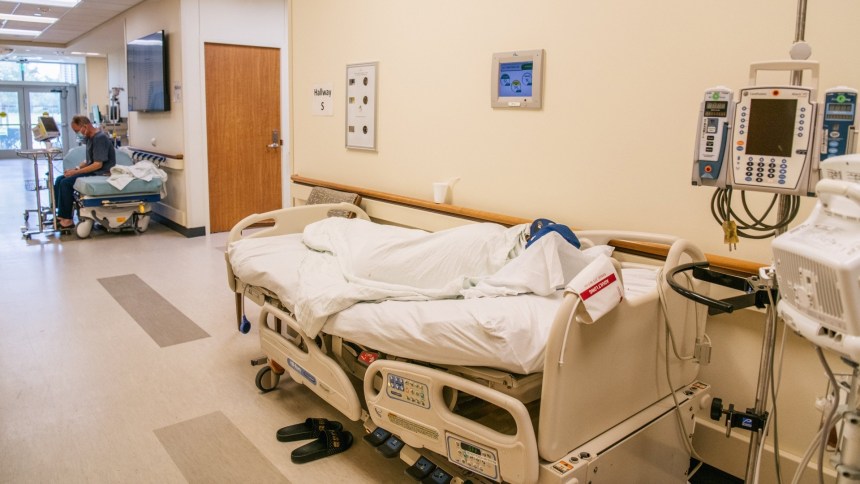

The Washington Post recently highlighted the plight of a man in Houston named Joel Valdez, who was an unlucky bystander to a domestic dispute outside a grocery store. Through no fault of his own, Valdez was shot six times during the incident.
Not surprisingly, he was taken to a nearby hospital for surgery. What was surprising, however, is that Valdez had to wait 10 days — because his hospital was busy treating so many COVID-19 patients.
“Having broken bones and bullets in me for over a week now, it’s a little frustrating,” Valdez told a local television station.
Well, yes, I imagine that would be frustrating. But as outlandish as Joel Valdez’s situation was, there are similar reports popping up elsewhere. The NBC affiliate in Orlando had this report yesterday:
Dr. Nitesh Paryani, a third-generation radiation oncologist in Tampa, Florida, recently was forced to make a decision that he says he and his family have never had to make in 60 years of treating patients. A nearby hospital was working to transfer a cancer patient to a location that had adequate treatment options. Paryani said he regularly accepts such patients, but for the first time, could not do so due to the number of those sick from Covid-19.
“We just didn’t have a bed,” the doctor explained. “There was simply no room in the hospital to treat the patient.”
One of the more common talking points among those who refuse to get vaccinated and/or refuse to wear mask protections is that they’re making a personal choice. It is, the argument goes, a private matter, to be left to individuals and their consciences. They say that if they want to take risks, that’s up to them — and they’re prepared to accept the consequences as private citizens, come what may.
And if those who contract the virus were somehow hidden away, alone in their bedrooms, this might even be somewhat persuasive.
But reality tells a very different story. At issue is a dangerous contagion. Those who believe they’re taking a personal risk are actually creating a societal hazard — one that, among other things, fills hospitals and delays medical care for everyone in the community, whether they’ve tested positive or not. When areas run out of intensive-care-unit beds, which has happened too often in recent weeks, it obviously affects COVID-19 patients in extreme distress. But it also affects those who have heart attacks. And strokes. And who get into car accidents. And who get shot because they happen to go to a grocery store at the wrong time. “I don’t think it’s anybody’s damn business whether I’m vaccinated or not,” Texas Rep. Chip Roy recently told CNN. The Republican added, “This is ridiculous, what we’re doing.” It is ridiculous, though probably not for the reason the congressman believes.
Steve Benen is a producer for "The Rachel Maddow Show," the editor of MaddowBlog and an MS NOW political contributor. He's also the bestselling author of "Ministry of Truth: Democracy, Reality, and the Republicans' War on the Recent Past."
Latest Post
Recommended


