








It was just a few weeks ago that U.S. military intervention in Syria appeared almost inevitable, the consequences of which were hard to predict. Diplomatic solutions were elusive and generally not even part of the larger discussion. Even if the Obama administration wanted to work through the United Nations, the process appeared hopeless due to Russian and Chinese support for the Assad government.
Following up on a segment from last night’s show, the shift has been sudden, complete, and rather extraordinary.
The United States and Russia — with help from France — negotiated a deal that would compel Syria to hand over its chemical weapons. The measure now goes to the full U.N. Security Council for a vote.
The deal includes enforcement language — under Chapter 7 authority of the UN charter — but is not explicit on military action or other automatic penalties if Syria does not comply.
Chapter 7 authority refers to a UN provision giving member countries the right to take military and non-military action to confront threats to peace and security.
The New York Times’ report added that the agreement marks “a remarkable turn for President Obama.” That’s clearly true — though the Beltway will likely complain about the lack of missile strikes, Obama has achieved an amazing foreign policy victory without firing a shot. The process may yet unravel, but for now, it appears the president has managed to get literally everything he wanted, while advancing U.S. interests, disarming a dangerous regime, and getting rivals like Russia to commit to the process the administration wants.
Not too shabby.
Better yet, progress in Syria comes against the backdrop of progress with Iran.
The diplomatic breakthrough on Syria came as Iran’s foreign minister, Mohammad Javad Zarif, said progress had been made toward a resolution of the nuclear dispute between his country and the West, suggesting it could happen in a year.
Recommended


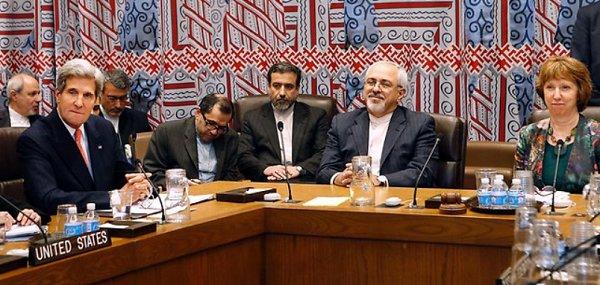
Mr. Zarif spoke optimistically after emerging from what he called a “very substantive, businesslike” meeting at the United Nations with representatives of the big powers. He also met face to face with Secretary of State John Kerry in one of the highest-level discussions between the estranged countries in years.
As Rachel and Andrea Mitchell talked about last night, the fact that the U.S. Secretary of State and the Iranian Foreign Minister sat down for a formal diplomatic conversation represents a step unseen since 1979.
To reiterate a point from last week, there is ample room for skepticism. Syria may end up playing games and failing to honor its obligations, and Iran may see Congress’ recent debate over the authorization to use force as proof that there’s no real American appetite for another confrontation in the Middle East. Maybe Assad will break every promise and maybe Rouhani’s outreach is made up of nothing but hollow gestures.
But for now, there is hope. The diplomatic approach in Syria is working; tensions with Iran show signs of cooling; and there are even peace talks between Israelis and Palestinians underway for the first time in years.
The conventional wisdom is that President Obama cannot possibly hope to achieve anything in his second term in light of the broken and dysfunctional Congress. But if we broaden our vision, the opportunities for success may be found outside our borders, in areas congressional Republicans will find it difficult to screw up.
The place for in-depth analysis, commentary and informed perspectives.
