








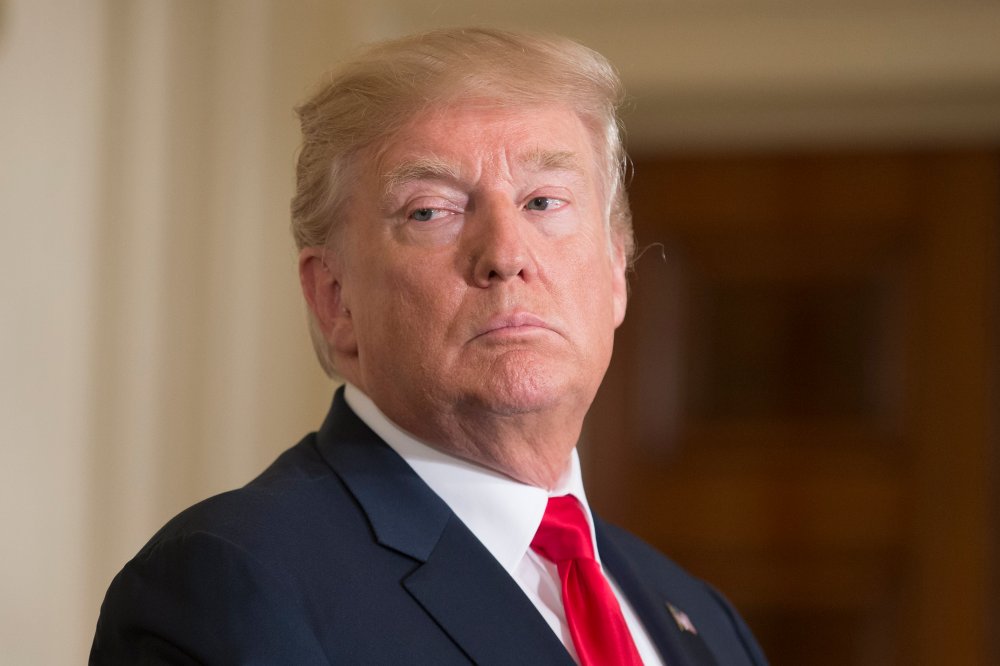
Two weeks ago, Donald Trump appeared in the White House Rose Garden alongside Senate Majority Leader Mitch McConnell (R-Ky.) for a press conference, and the investigation into the Russia scandal came up very briefly.
REPORTER: You discussed the special counsel and the investigation currently. Are you considering firing Robert Mueller?
TRUMP: No, not at all.
That’s not an excerpt; it was the entire exchange. And taken at face value, the president’s response may have been reassuring that the special counsel’s ongoing investigation will continue without interference from the West Wing.
But if there’s one thing that should be overwhelmingly clear at this point, it’s that taking Trump’s rhetoric at face value is a fool’s errand.
As things stand, we don’t know if the president is going to seriously consider trying to oust Robert Mueller. We also don’t know if Trump is going to seriously consider it, only to be talked out of it by his White House aides.
But there’s already some evidence that Trump’s far-right allies are responding to Mueller’s probe, not by defending the president and his team, but by going after Mueller and the legitimacy of his investigation.
Over the summer, Sen. Lindsey Graham (R-S.C.) said that if Trump went after Mueller, it “could be the beginning of the end of the Trump presidency.” Today seems like a good time for the political world to revisit these sentiments — just in case.
Indeed, it wasn’t that long ago when there were bipartisan efforts underway to protect Mueller and his team from Trump, in the event that the president tried to go after them. When some measures were drafted along these lines — the bills didn’t receive any support from GOP leaders, and to date have gone nowhere — Trump reportedly called one of the Senate Republicans who supported the idea, expressing his personal opposition to the legislation.
It’s important to emphasize that Trump lacks the legal authority to fire the special counsel directly, but the president could try to force Mueller’s ouster by pressuring Justice Department leaders to do his bidding. There’s also the possibility that Trump could abuse his pardon powers — again — and start issuing get-out-of-jail-free cards to everyone involved in the scandal. And while I don’t know if any of these steps will happen, I do know it’s a good idea for the political world to consider the possibility now — before a crisis begins. Why not get members of Congress on the record now, asking what they would and wouldn’t tolerate? If enough lawmakers made clear now that Trump would face impeachment if he tried to fire Mueller, the odds of the president taking such a step would worsen considerably. Some may see such a possibility as outlandish, even for Trump, but let’s not forget that this is a president who’s already fired an FBI director, an acting attorney general, and dozens of U.S. Attorneys. Is it really that hard to believe he’d consider going after a special counsel, too?
Steve Benen is a producer for "The Rachel Maddow Show," the editor of MaddowBlog and an MS NOW political contributor. He's also the bestselling author of "Ministry of Truth: Democracy, Reality, and the Republicans' War on the Recent Past." Recommended


