








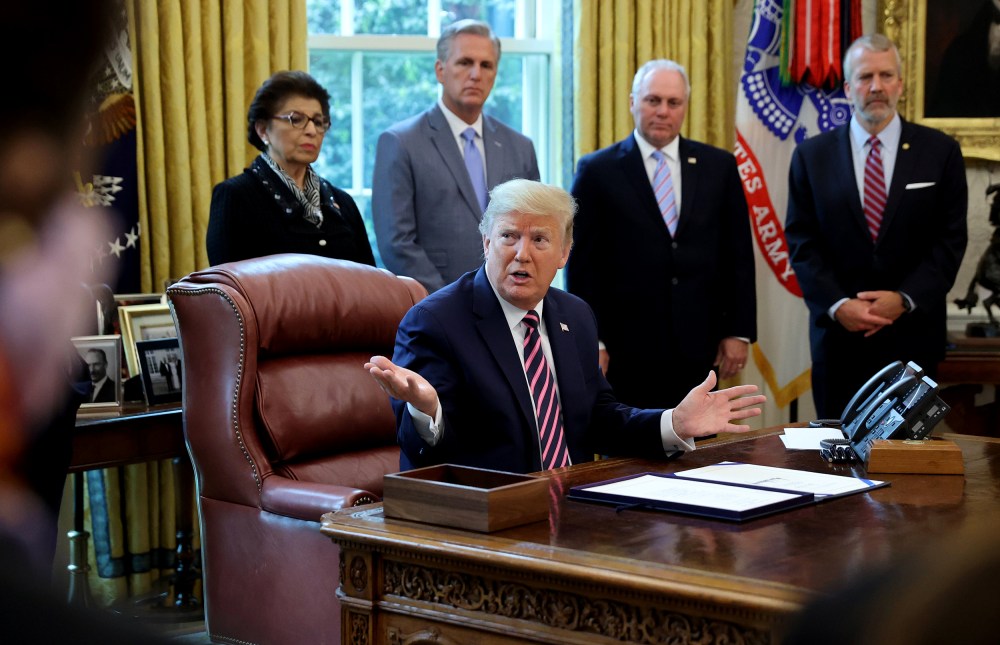

It was on March 16 that Donald Trump unveiled the White House’s coronavirus guidelines — they were called at the time, “15 days to stop the spread” — complete with social-distancing recommendations. Much of the United States effectively came to a halt soon after. It wasn’t long, however, before the president started feeling antsy.
A week after the announcement, Trump started talking up the idea of retreating from mitigation restrictions by Easter, to the alarm of public-health professionals who knew that would be far too soon. Cooler heads prevailed, and as March came to a close, the president said he was leaving the guidelines in place through the end of April.
But there was something in his announcement that stood out for me. On March 29, Trump stood in the Rose Garden and said, “[W]e will be extending our guidelines to April 30th to slow the spread.” About a minute later, he added, “We can expect that, by June 1st, we will be well on our way to recovery. We think, by June 1st, a lot of great things will be happening.”
Those familiar with how calendars work took note of the gap: Trump extended the White House guidelines until the end of April, and he expected great things at the start of June. Isn’t there a month in between?
Given the framing, I more or less assumed that officials would conclude that social-distancing measures were having the intended effect and the White House would therefore leave the guidelines in place another month. As USA Today noted, that’s not what happened.
The deadline to lift social distancing guidelines quietly passed on Thursday as the White House pushed a new set of suggestions designed to reopen the U.S. economy now decimated by the coronavirus pandemic. The White House is sunsetting the federal guidelines, once a central tenet of its coronavirus response and the focus of the administration’s message, in the latest sign of the president’s eagerness to revive the once booming economy upended by the coronavirus crisis. In their place, the guidelines have been replaced with voluntary re-opening directives, creating a patchwork model in which states are left to do as they please. It’s not hard to find knowledgeable observers who see this as a mistake. Richard Besser, the CDC’s former acting director, told the Washington Post that no one in the Trump administration has yet offered a clear explanation on why states could begin to relax such measures. Besser added, “You don’t want people to misconstrue the expiration of these guidelines as a recommendation that it’s okay to go back to your normal life, because it’s not.”
Steve Benen is a producer for "The Rachel Maddow Show," the editor of MaddowBlog and an MS NOW political contributor. He's also the bestselling author of "Ministry of Truth: Democracy, Reality, and the Republicans' War on the Recent Past."
Latest Post
Recommended


