








The U.S. budget deficit for the last fiscal year, which ended in September, was $779 billion, up 16% from the previous year. As we recently discussed, that deficit was the fifth largest in modern American history — in non-inflation adjusted terms — and stood at 3.9% of GDP, up from 3.5% a year prior.
Those expecting an improvement in this fiscal year are going to be disappointed. The Wall Street Journal reported overnight:
The U.S. budget gap widened in the first two months of the fiscal year as tax collections lagged behind federal outlays, which included higher spending for the military and interest on the national debt.
The government ran a $305 billion deficit in October and November, compared with $202 billion during the same period a year earlier, the Treasury Department said Thursday.
Just so we’re clear, the budget deficit for 2019 is already over $300 billion. In the not-too-distant past, that would’ve been a fairly significant budget shortfall over a 12-month span. Now it’s the deficit over just the first two months of the fiscal year.
As a rule, it’s best not to make too big a fuss about fiscal data from a short period of time, since the data can and will bounce around a bit. The fact that the deficit was $305 billion in the first two months of the fiscal year, for example, does not necessarily mean that it will be nearly $2 trillion when the fiscal year ends.
That said, the latest evidence doesn’t do any favors for the Republicans who assured Americans that massive tax breaks for the wealthy will pay for themselves.
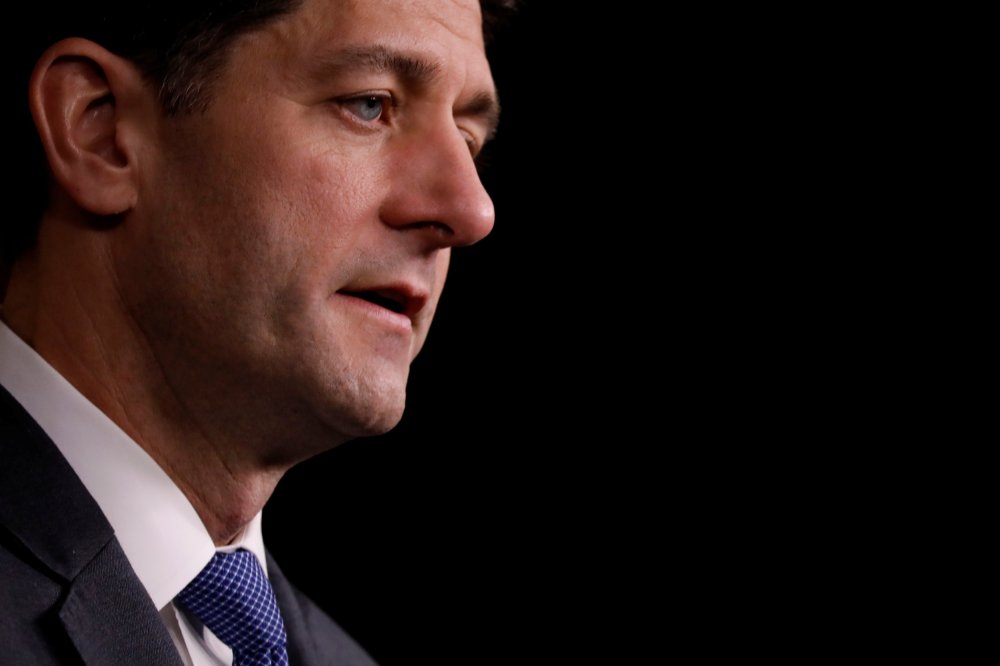
And it also won’t help House Speaker Paul Ryan (R-Wis.) as the retiring congressman considers his legacy.
“As he prepares to leave office, Ryan says that debt reduction is one of those things ‘I wish we could have gotten done,’” Vox’s Ezra Klein wrote this week. “Ryan, the man with the single most power over the federal budget in recent years, sounds like a bystander, as if he watched laws happen rather than made them happen. To understand the irony and duplicity of that statement, you need to understand Ryan’s career.”
Ezra fleshed out the retiring Speaker’s record in some detail, but the bottom line is unavoidable: Paul Ryan said he was serious about deficit reduction. He promised to champion the cause. He asked the political world to see him, not just as a leader, but as a visionary.
But it was all a con.
Every time we discuss the deficit, I feel compelled to point out again that I’m not a deficit hawk, and I firmly believe that larger deficits, under some circumstances, are absolutely worthwhile and necessary. These are not, however, those circumstances. When the economy is in trouble, it makes sense for the United States to borrow more, invest more, cushion the blow, and help strengthen the economy. The Trump White House and the Republican-led Congress, however, decided to approve massive tax breaks for the wealthy and big corporations when the economy was already healthy — not because they were addressing a policy need, but because they were fulfilling an ideological goal. Now that Democrats are poised to reclaim control of the House, what do you want to bet that Republicans will once again start pretending to care about the issue again? Postscript: As luck would have it, the Congressional Budget Office released a report yesterday listing a series of deficit-reduction ideas. Of the 121 “options” in the document, more than half are tax increases of one kind or another. Because Republicans oppose raising any taxes on anyone, at any time, by any amount, for any reason, these ideas will be ignored.
Steve Benen is a producer for "The Rachel Maddow Show," the editor of MaddowBlog and an MS NOW political contributor. He's also the bestselling author of "Ministry of Truth: Democracy, Reality, and the Republicans' War on the Recent Past." Recommended


