









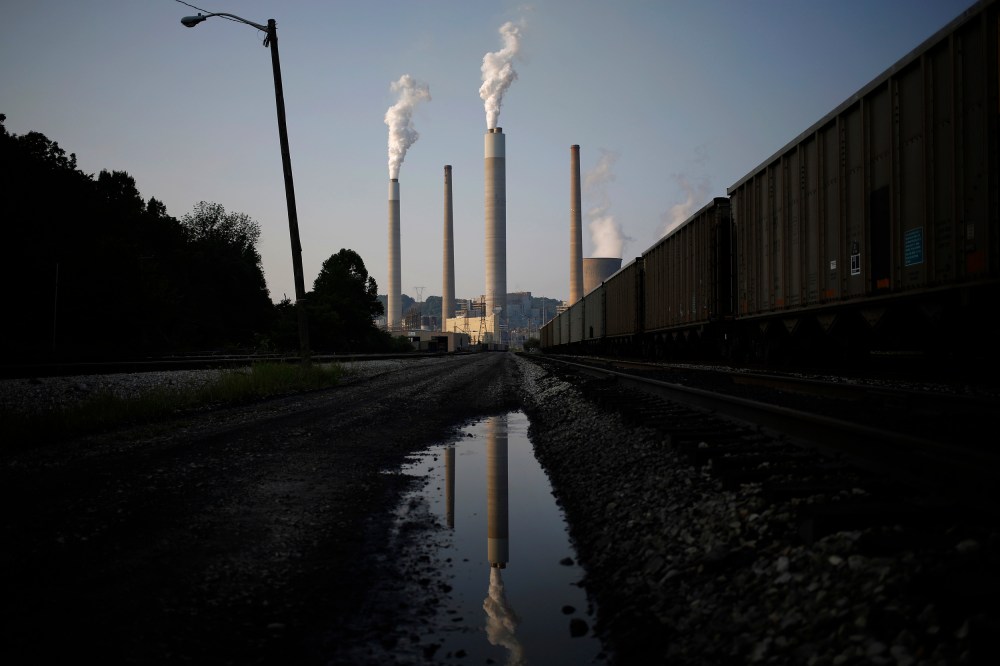

For much of the last few years, Donald Trump’s administration has taken steps to ease rules on mercury pollution from power plants — not simply as part of a general hostility toward environmental safeguards, but specifically to help the coal industry, which the president sees as a political ally.
What I did not expect, however, is for the Republican administration to go further down this road than even the industry expected or wanted. The Washington Post had a striking report on this yesterday.
For more than three years, the Trump administration has prided itself on working with industry to unshackle companies from burdensome environmental regulations. But as the Environmental Protection Agency prepares to finalize the latest in a long line of rollbacks, the nation’s power sector has sent a different message: Thanks, but no thanks.
The article noted that Exelon, one of the nation’s largest utilities, told the EPA that its effort to change a rule that has cut emissions of mercury and other toxins is “an action that is entirely unnecessary, unreasonable, and universally opposed by the power generation sector.”
It’s a striking realization when Trump’s Environmental Protection Agency takes a position that is more pro-pollution than the position of polluters themselves.
We saw a similar dynamic nearly a year ago, when some of the world’s largest auto manufacturers, whom Trump has tried to help by gutting emission standards, collectively told the administration it was going too far to make polluting easier. The president’s agenda, the companies explained in June 2019, was bad for business and created “untenable” manufacturing instability.
And on mercury emissions, it’s just as striking, if not more so. Power companies weren’t exactly thrilled with the environmental safeguards — they had the effect of closing several coal plants — but in time the industry adopted the Obama-era rules, complied with the regulations, and created cleaner conditions. Or as Kathy Robertson, a senior manager for environmental policy at Exelon, told the Post, the status quo “works.”
The administration doesn’t seem to care. From the article: The agency plans to declare that it is not “appropriate and necessary” for the government to limit harmful pollutants from power plants, even though every utility in America has complied with standards put in place in 2011 under President Barack Obama. While it will technically keep existing restrictions on mercury in place, it means the government would not be able to count collateral benefits — such as reducing soot and smog — when it sets limits on toxic air pollutants. It’s a rollback that industry officials argue could open the door to new legal fights, prompt some plants to turn off their pollution controls and ultimately sicken more Americans — all so that the administration can rewire how the government weighs the costs of regulation. At issue is something called Mercury and Air Toxics Standards (MATS), which applies to dangerous neurotoxins believed to cause developmental problems in children. The Obama-era safeguards were effective in cutting emissions by 85%. This is the progress Trump is prepared to walk away from. When the Republican president brags about scrapping “regulations,” as he did again yesterday, it’s worth remembering that these are the kinds of policies he’s referring to.
Steve Benen is a producer for "The Rachel Maddow Show," the editor of MaddowBlog and an MS NOW political contributor. He's also the bestselling author of "Ministry of Truth: Democracy, Reality, and the Republicans' War on the Recent Past."
Latest Post
Recommended


