

The day before Russia’s invasion of Ukraine, oil was trading at about $92 per barrel. On March 8, that price spiked, reaching nearly $124 per barrel, and it was an open question how much higher it would climb.
As it happens, in the days that followed, it didn’t climb. In fact, the price fell again yesterday, dropping to $95 — roughly in line with the figure from a month ago at this time.
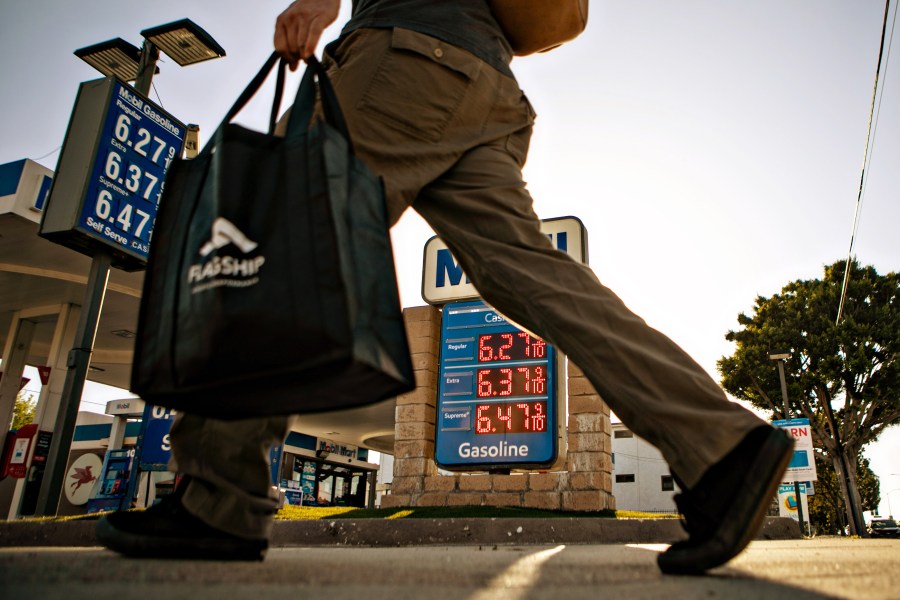
It’s tempting to think that as prices start to level off, that would translate into consumers paying less at the pump than they were a couple of weeks ago. Indeed, the White House released a chart yesterday showing gas prices climbing in line with the recent per-barrel spike, but without the relief as the cost of crude oil eases.
In a tweet, President Joe Biden said, “Oil prices are decreasing, gas prices should too. Last time oil was $96 a barrel, gas was $3.62 a gallon. Now it’s $4.31. Oil and gas companies shouldn’t pad their profits at the expense of hardworking Americans.”
He’s not the only one thinking along these lines. Politico reported yesterday:
Senate Majority Leader Chuck Schumer said Wednesday his chamber would call big oil and gas executives to testify. He wants to know why the companies are enabling greater corporate stock buybacks rather than taking steps to cut the price of gas at the pump.
The New York Democrat told reporters, in reference to increased stock buybacks, “It is outrageous to me. It’s one of the disturbing signs of American capitalism.”
He added, “The CEOs of large oil and gas companies should be advised they’ll have to provide answers before the Senate very soon.”
To be sure, the broader dynamic isn’t too surprising. There’s an expression that’s existed for years in the world of energy and finance: “Up like a rocket, down like a feather.” The idea is, gas prices are notoriously quick to climb, but the descent is vastly slower and more gradual.
It’s not a popular maxim at 1600 Pennsylvania Avenue. “Try explaining how it’s just rockets and feathers to President Biden, and you’d better be ready to hear, ‘That’s a bunch of malarkey’ coming back at you,” a senior White House official told CNN. “The president is very much within his rights to point out that if you’re going to have rockets on the way up, you need to have rockets on the way down, not feathers.” Politico’s report added, “There is normally a lag in the oil prices falling and movement on the gas front, but the question is how long that lag should last.” Democrats apparently believe that public pressure — including the prospect of Capitol Hill hearings — can have a direct impact on energy companies’ decisions. The more Biden, Schumer, and their colleagues turn Big Oil into a villain, the more they believe executives will, or at least might, ease prices. Time will tell whether those assumptions have merit, but the hearings are bound to be interesting. Not only will executives face questions about prices at the pump, it’s likely Democrats will press oil companies to explain why they haven’t increased production, despite the Biden administration issuing plenty of drilling permits.
Steve Benen is a producer for "The Rachel Maddow Show," the editor of MaddowBlog and an MS NOW political contributor. He's also the bestselling author of "Ministry of Truth: Democracy, Reality, and the Republicans' War on the Recent Past."
Latest Post
Recommended