








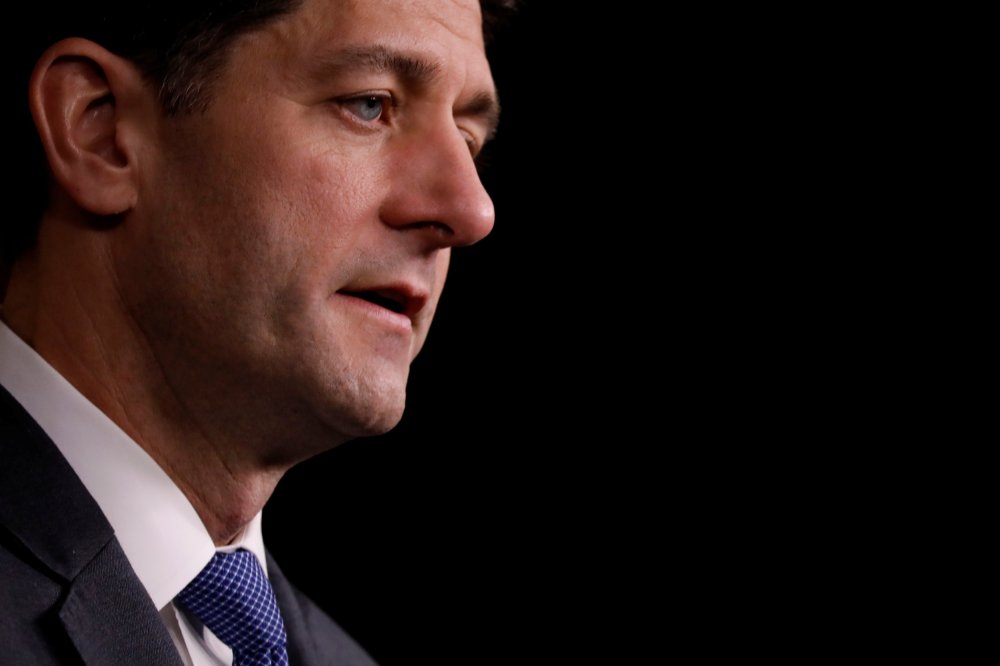
House Speaker Paul Ryan (R-Wis.) spoke at the National Catholic Prayer Breakfast yesterday, and he shared a message that, devoid of context, would’ve been largely predictable. From his remarks:
“At this time, there is a deeply serious problem we see right now within our society. We see moral relativism becoming more and more pervasive in our culture. Identity politics and tribalism have grown on top of this.”
It’s somewhat surprising to see the Republican leader, poised to step down from Congress after two decades on Capitol Hill, suggest there’s something wrong with “identity politics and tribalism.” After all, Ryan has long been one of American politics’ most rabid partisans, often rejecting bipartisanship as a course he was loath to even consider.
But it was the Wisconsin congressman’s denunciation of moral relativism that stood out as especially important.
For those unfamiliar with the phrase, moral relativism is a rejection of the idea that there are core, universal moral standards that should be applied without concern for culture or context. Moral relativists believe there are fluid answers to questions of right and wrong, rather than inviolable principles that must always be honored in all instances.
In general, it’s the left that’s associated with moral relativism, and the right that’s traditionally found it offensive. And yet, in the Donald Trump era, those lines have been blurred.
As the president has confronted the Stormy Daniels scandal, for example — Trump financed a hush-money payment to a porn star shortly before the 2016 presidential election — many of his conservative allies, including politically conservative evangelical Christians, have explicitly made the case that they’re inclined to look the other way. Why? In part because the president is a Republican, but mainly because Trump’s presidency is helping advance many of their other goals. In other words, the religious right is prepared to tolerate the president’s personal failings just so long as the White House meets the movement’s political needs. It’s transactional morality — Trump gives the conservatives what they want, and in exchange, they suggest payoffs to porn stars aren’t a big deal — but it’s also, obviously, relativistic. What’s more, the Daniels controversy is hardly an isolated example. The right believes lying is wrong, but conservatives tolerate Trump’s breathtaking dishonesty. The right tries to make the case that it has no use for racism, but Republicans did effectively nothing after the president defended “very fine” racist activists in Charlottesville. To a degree, maybe Ryan’s correct. Maybe moral relativism is becoming more common. But the question for the Speaker of the House is, does this denunciation include his allies on the right?
Steve Benen is a producer for "The Rachel Maddow Show," the editor of MaddowBlog and an MS NOW political contributor. He's also the bestselling author of "Ministry of Truth: Democracy, Reality, and the Republicans' War on the Recent Past." Recommended


