








The Senate’s Democratic majority this week pushed a measure, known as the “Buffett Rule,” that would have closed a tax loophole benefiting millionaires and brought in roughly $46 billion to the Treasury over the next decade. It died after a GOP filibuster.
Today, the House Republican majority will vote on a measure of its own, known as the “Small Business Tax Cut Act,” that will cost roughly $46 billion, and which is expected to pass. Is the bill any good? Actually, no.
[The bill would] let most business owners deduct up to 20 percent of their business income in 2012 — a $46 billion tax cut. Despite the Mom-and-Pop label, it is designed so that nearly half of the tax cut would go to people with annual income over $1 million, and more than four-fifths would go to those making over $200,000, according to the Tax Policy Center.
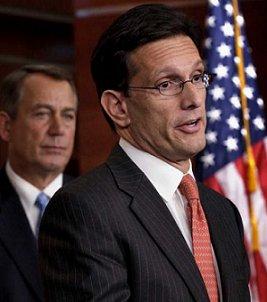
The bill’s proponents, led by Majority Leader Eric Cantor, say that lower taxes would lead to more hiring. But the economic reality is that employers, big and small, are hesitant to hire because of slow or uncertain demand for their products and services, not because of their tax burden. And companies would receive the tax cut even if they did not hire new workers — making it a windfall, not an incentive.
Part of the problem is that the Republican definition of “small businesses” includes some very large businesses that are already quite profitable and don’t need another tax cut.
What’s more, the White House, which has already promised a veto if the bill reaches President Obama’s desk, would probably be economically counterproductive. As The Hill reported, administration officials contend that proposal “could actually stifle hiring, saying small businesses that have invested or hired more might get a smaller cut than those who did not, encouraging firms to avoid hiring for the year to maximize the benefit. The White House also contended the cut could be a tool for abuse, as companies might ‘hire’ family members for a deduction, or try to re-characterize existing activities to qualify for it.”
And then there’s the most entertaining angle of them all: House Republicans would pay for their bill by — you guessed it — simply adding the costs to the deficit they sometimes pretend to care about.
Politico reported, “Several Republican leadership aides say they have no plans to offset the tax cut, which [is] a centerpiece of their agenda during these next two weeks in session.”
I wouldn’t say I’m surprised by this, exactly, but it’s awfully amusing. In the name of “fiscal responsibility,” Republicans have successfully bullied Democrats into making sure every proposal they even think about is fully paid for, because bills that add so much as a penny to the deficit is the moral equivalent to taking a baseball bat to our grandchildren. Just a few months ago, House Republicans said this even applies to the payroll tax cut, which primarily benefited the middle class — they opposed the tax break, but would consider it if Dems guaranteed it was paid for. But now Cantor & Co. want a $46 billion tax cut for small businesses that aren’t small, and as of earlier this week, they had no intention of even trying to pay for it. It’s almost as if Republicans panicking about an alleged “debt crisis” don’t really believe their own rhetoric, and only use the line to rationalize brutal cuts to domestic investments that they oppose anyway.
The place for in-depth analysis, commentary and informed perspectives. Recommended


