









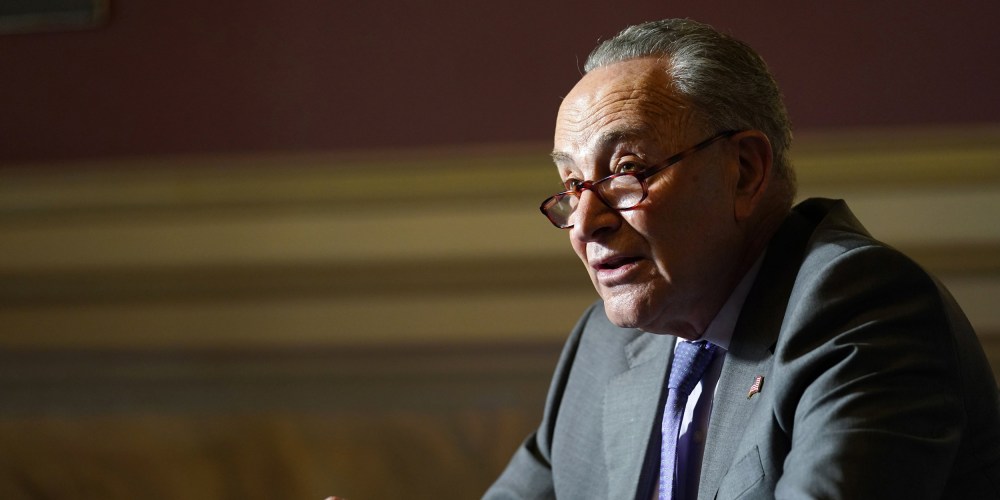

Senate Majority Leader Chuck Schumer (D-N.Y.) covered a lot of ground with Rachel last night, but there was one comment he made, almost in passing, which is worth keeping in mind as the new Congress unfolds.
In context, the Democratic leader described an ambitious program to help consumers make the switch to electric vehicles. He added, referring to his climate plan:
“By the way, President Biden very graciously made it part of his Build It Back Better Plan, which does a lot on climate. And we’re looking at how we may … fit as much of it into reconciliation as we can, because we get two reconciliation motions: one for COVID and then one probably for Build It Back Better.”
For those who don’t follow such things closely, I imagine some of this might’ve been confusing, so let’s unpack the process Schumer was describing.
Democrats have all kinds of policies and proposals they’re eager to tackle over the next two years, and nearly all of them are likely to fail because of the Senate’s filibuster rules: Republicans will demand 60-vote supermajorities on legislation, and since there aren’t 10 GOP senators willing to break ranks and help Democrats pass their agenda, those bills will die, even if a majority of lawmakers and a majority of Americans support them.
Democrats could scrap the filibuster rules and return the Senate to its majority-rule traditions, but a handful of Senate Dems are refusing, which severely limits governing options.
There is one key tactic, however, that offers the majority a way to work around the filibuster: it’s called the budget reconciliation process, which is what Schumer mentioned as part of his answer to Rachel.
Reconciliation is complicated and it can’t be used to pass any kind of legislation. On the contrary, it can only be used on budget bills related to spending and taxes. In the Trump era, Republicans relied on this tactic, for example, to pass tax breaks for the wealthy, and unsuccessfully tried to use it again to repeal the Affordable Care Act.
So what’s to stop Democrats from taking advantage of reconciliation on dozens of bills? It’s not that easy: the process has to start with a budget resolution, and Congress generally passes one budget resolution per fiscal year. That’s why, as a rule, reconciliation is seen as a once-per-year tactic.
Schumer, however, told Rachel last night that Democrats “get two reconciliation motions,” which is true. The Center on Budget and Policy Priorities recently explained why: [N]o fiscal year 2021 budget resolution was adopted in calendar year 2020. That would allow Congress to first take up the overdue budget resolution for fiscal year 2021, use that to generate an initial reconciliation bill, and then take up a budget resolution for fiscal year 2022 (which begins on October 1, 2021) to generate a second reconciliation bill. It’s precisely why Democratic leaders are eyeing two bites at the apple: relying on reconciliation first to pass a COVID relief package, and then again for … something else. Schumer pointed to an infrastructure plan — referencing Biden’s Build It Back Better blueprint — but others in the party may push for a different priority. (If the Supreme Court destroys the Affordable Care Act, it’s a safe bet Democrats will turn to reconciliation to pass a health care bill, for example.) Watch this space. Postscript: I’m planning to write a more detailed overview of the reconciliation process one of these days, but in the meantime, Vox and the CBPP have published helpful primers.
Steve Benen is a producer for "The Rachel Maddow Show," the editor of MaddowBlog and an MS NOW political contributor. He's also the bestselling author of "Ministry of Truth: Democracy, Reality, and the Republicans' War on the Recent Past."
Latest Post
Recommended


