








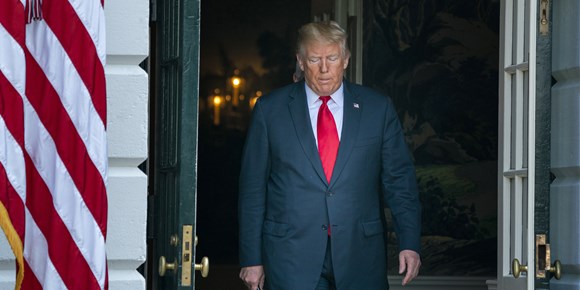
Continuing to defend a policy he doesn’t seem to understand, Donald Trump announced over the weekend, “Tariffs are working big time.” The president added, “Tariffs will make our country much richer than it is today. Only fools would disagree.”
In reality, of course, few outside the West Wing genuinely seem to believe the White House tariffs will magically produce broad prosperity. In fact, we’re frequently confronted with reports like this one from The State newspaper in Columbia, South Carolina.
Beleaguered Fairfield County is losing another 126 jobs after TV-maker Element Electronics said Monday it will close its Winnsboro plant in response to tariffs imposed by President Donald Trump. […]
Element was one of Fairfield’s largest remaining employers, two years after its largest grocery store, Walmart, shuttered its doors.
In a letter to the S.C. Department of Employment and Workforce obtained by The State, Element wrote “the layoff and closure is a result of the new tariffs that were recently and unexpectedly imposed on many goods imported from China, including the key television components used in our assembly operations in Winnsboro.”
The Trump administration has unveiled a $12 billion bailout package for those adversely affected by the president’s policy, but the funds, at least for now, are only being made available to farmers and those in the agricultural sector.
I’m mindful of the fact that it’s best not to draw sweeping inferences from individual examples. A closed plant in South Carolina doesn’t necessarily prove Trump’s approach is a failure, any more than an opened plant somewhere else prove his policy is a success.
The trouble is, examples like Element Electronics keep popping up.
We talked the other day, for example, about a Washington Post report on the number of recent layoffs generated by Trump’s tariffs. The paper spoke to the head of an Indiana company that makes lawn-care equipment, which has already laid off 75 employees as a result of the president’s policy. The article added that the company, which has been in business since 1839, has “survived recessions and the Civil War, but it might not survive a prolonged trade war.” We’ve seen similar reports about nail makers, cheesemakers, and whiskey distilleries, among others, that are also feeling adverse effects of the administration’s agenda. There’s a fair amount of uncertainty about the near future. Maybe the effects will be temporary. Maybe the administration will reach some kind of breakthrough with our trading partners. Maybe the president will soon see some segment on television and decide to pursue the exact opposite of the policy he’s implementing now. But barring an unexpected shift in direction, the number of Americans who believe “tariffs are working big time” is likely to be quite small.
Steve Benen is a producer for "The Rachel Maddow Show," the editor of MaddowBlog and an MS NOW political contributor. He's also the bestselling author of "Ministry of Truth: Democracy, Reality, and the Republicans' War on the Recent Past." Recommended


