








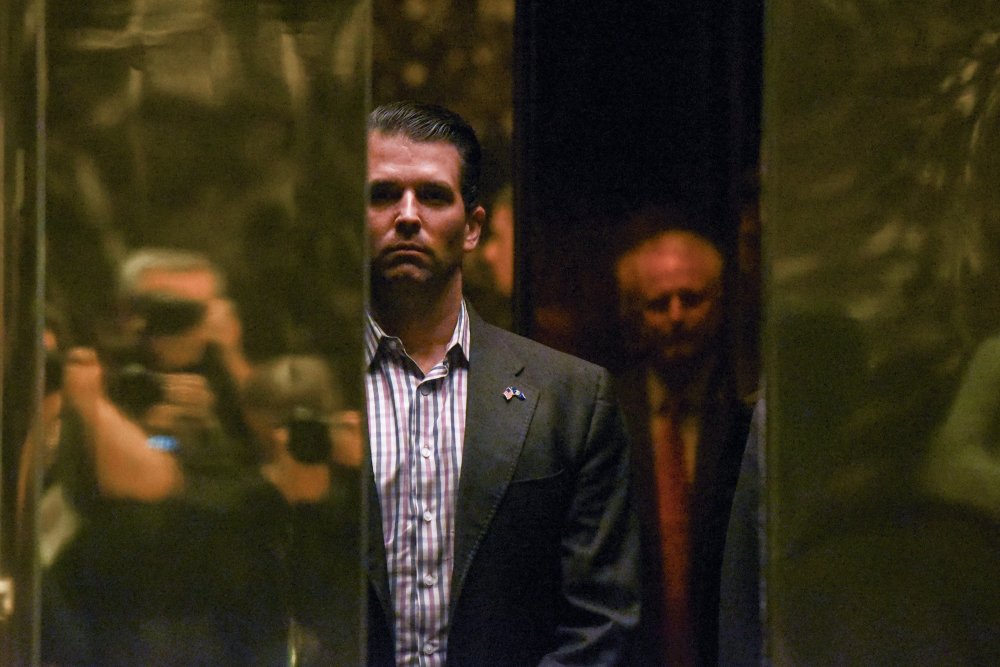
The New York Times reported last night that Donald Trump Jr. agreed to meet with a Kremlin-connected Russian lawyer following an enticing email. The message reportedly said if he agreed to meet the attorney, she could provide compromising information about Hillary Clinton, as part of the Russian government’s effort to help elect his father.
The report sent shockwaves through the political world — it pointed to evidence of the Trump campaign attempting to collude with Russia during its attack on the United States — but we hadn’t seen the specific emails. Perhaps the language was more benign than the account from the Times’ sources?
Donald Trump Jr. on Tuesday tweeted his email chain showing him making plans to meet with a Russian attorney said to have damaging information about Hillary Clinton during the 2016 presidential election.
The email exchange shows an acquaintance with ties to Russia, music publicist Rob Goldstone, telling the son of then-candidate Donald Trump last year that the attorney has “information that would incriminate Hillary and her dealings with Russia and would be very useful to your father.”
The New York Times, which obtained the emails before the tweets, noted that the emails went on to tell Trump Jr., “This is obviously very high level and sensitive information but is part of Russia and its government’s support for Mr. Trump.”
The candidate’s son responded soon after, “If it’s what you say I love it especially later in the summer.”
The meeting between Trump, Jared Kushner, Paul Manafort, and Natalia Veselnitskaya was then arranged for June 9 — just six days after the original email.
The specific language is tough to defend. Told that the Russian government wanted to share “very high level and sensitive information” with the Trump campaign, Trump Jr. and his associates probably should’ve called the FBI. Instead, they welcomed the opportunity to collude with a foreign adversary during its intervention in our political system.
In an unintentionally amusing twist, Trump Jr., who put images of the emails on Twitter this morning, said he was releasing the exchange “to be totally transparent.” There may be some confusion on his part as to what “transparency” means. Donald Trump Jr. initially said he hadn’t spoken to any Russian nationals during the campaign. Then he said he changed his story, saying he attended a meeting, but it was about adoption policy. Then he changed his story again, saying he hoped to acquire campaign dirt, but was disappointed by what he’d been offered. Then, asked for comment about emails the New York Times had already obtained and was poised to publish, Trump Jr. decided to tweet the materials himself. If he thinks this is an example of being “totally transparent,” he’s very confused.
Steve Benen is a producer for "The Rachel Maddow Show," the editor of MaddowBlog and an MS NOW political contributor. He's also the bestselling author of "Ministry of Truth: Democracy, Reality, and the Republicans' War on the Recent Past." Recommended


