








Nearly four years ago, 10 Republican presidential hopefuls gathered for their first primary debate of the cycle, and I spent a little time yesterday afternoon reviewing how it went. The event was worse than I’d remembered.
Donald Trump, for example, spent a little time going after Rosie O’Donnell. Ben Carson complained about “the Alinsky Model, taking advantage of useful idiots.” Mike Huckabee talked about taxing “pimps” and ignoring Supreme Court rulings he doesn’t like. At one point, Marco Rubio told the audience, “[I]f this election is a resume competition, then Hillary Clinton’s going to be the next president” — which sounded an awful lot like the senator describing the Democrat as the most qualified candidate.
It was a discouraging, largely substance-free display, with candidates peddling obvious falsehoods, conspiracy theories, and cheap insults.
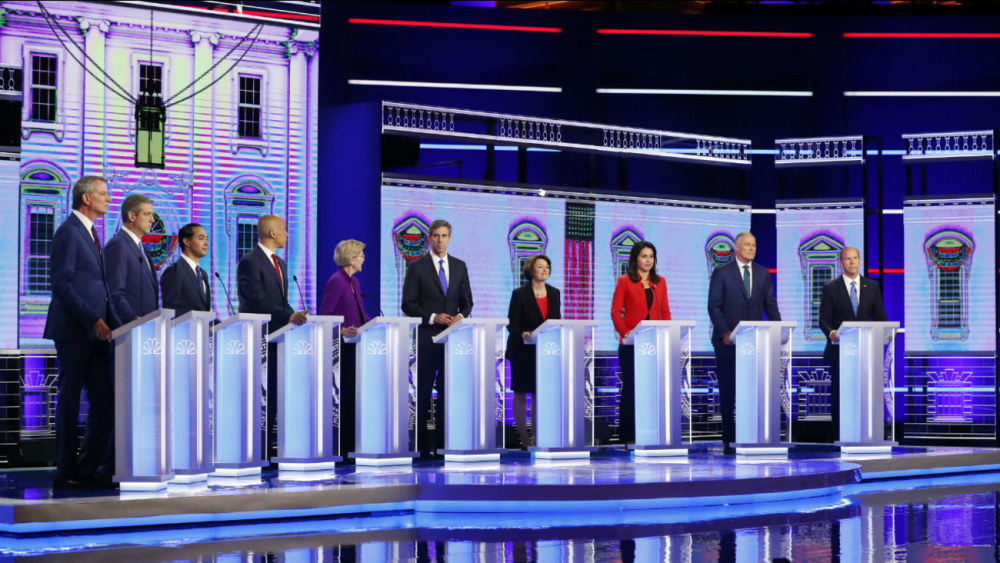
Nearly four years later, 10 Democratic presidential hopefuls gathered for their first primary debate — the first half of a two-night gathering — and the differences between the parties was hard to miss. Mother Jones‘ Tim Murphy’s big-picture take was very much in line with my own:
The first Democratic presidential debate didn’t focus on electability. There were no questions from NBC’s panel of moderators about polling numbers, gaffes, or the tone and rhetoric in Washington. For one night, it was as if President Donald Trump’s Twitter account didn’t even exist.
Instead, the 10 candidates who took the stage in Miami Wednesday night were peppered with a series of substantive questions about the policy fights that have consumed the party over the last two years. And they seemed perfectly content to talk about those issues.
Full transcript: #DemDebate Night 1, sortable by topic. https://t.co/fxmrWNszu8
— NBC News (@NBCNews) June 27, 2019
We've annotated the debate transcript so you can search through the candidates' answers on the top issues of the night. – @NBCNewsGraphics pic.twitter.com/vNGEWt4gGy
Quite right. It’s exactly how the process of choosing a major-party presidential nominee is supposed to work, with a heavy emphasis on substance, governing priorities, and policy visions.
In fact, perhaps the most contentious moment of the night was a dispute between Julian Castro and Beto O’Rourke, who disagreed over whether and how to implement Section 1325 of the Immigration and Nationality Act. I’ll leave it to others to argue over who “won” the exchange, but let’s not miss the forest for the trees: there was a fairly heated exchange between two knowledgeable candidates over the merits of a specific policy provision.
It was emblematic of a serious group of people having a real debate over things that matter. After what Americans have seen from much of the political world of late, it was a refreshing change of pace. At one point during the event, as the discussion turned to migrant children at the southern U.S. border, Donald Trump interrupted his trip to Japan to offer some commentary on the Democratic debate. “BORING!” he wrote in a single-word missive on Twitter. It wasn’t altogether surprising, but it reinforced the larger point: a group of Democratic presidential candidates had a candid debate on the major issues of the day, and clashed at times over how best to implement shared goals, while the man they hope to replace made clear he wasn’t sufficiently entertained. Of course he wasn’t. In Trump’s mind, substantive and honest discussions aren’t any fun. But for the rest of us, it was a two-hour event that told us quite a bit about how 10 would-be presidents would lead — which, of course, was the point of the gathering.
Steve Benen is a producer for "The Rachel Maddow Show," the editor of MaddowBlog and an MS NOW political contributor. He's also the bestselling author of "Ministry of Truth: Democracy, Reality, and the Republicans' War on the Recent Past." Recommended


