








After the 2010 Census, Pennsylvania Republicans crafted a gerrymandered congressional map that was tough to defend. As regular readers may recall, the GOP-led state legislature took an evenly divided state, drew up 18 congressional districts, and put 13 of them safely in Republican hands.
It created a dynamic in which Democratic candidates won 51% of the vote in Pennsylvania, but received only 28% of the power.
The state Supreme Court rejected that map — calling it “clearly, plainly, and palpably” unconstitutional — and ended up unveiling a better map of its own. Republicans still have an advantage under the new district lines, but it’s not nearly as outrageous as the GOP’s previous version.
To put it mildly, Republican officials weren’t satisfied, and when they weren’t threatening to impeach state Supreme Court justices, they filed lawsuits. Yesterday, those efforts failed.
Pennsylvania Republicans were handed a pair of defeats Monday in their quest to keep old congressional maps in place for the 2018 midterms, potentially giving Democrats a boost when it comes to winning back the House in November.
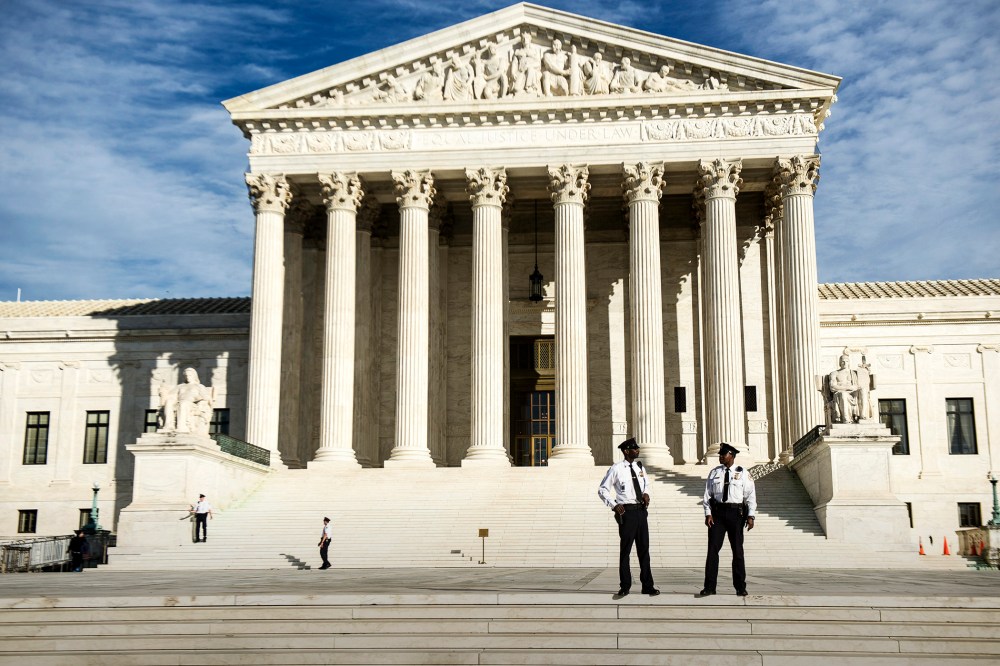
The U.S. Supreme Court declined a request from Republican leaders to put the new congressional district map, imposed last month by the Pennsylvania Supreme Court, on hold. Earlier Monday, in a separate case, a panel of federal judges dismissed a legal challenge by Republican congressmen to the new map.
There are no additional appeals. The court-drawn map will be the one in place for this year’s midterm elections.
Why should voters outside of the Keystone State care? Because this one development is likely to have a significant impact on which party has political power in the coming years.
Vox sketched out the net impact of Pennsylvania’s new, un-gerrymandered map:
* It creates two new districts where Democrats are favored that didn’t exist in the previous map (and in one of those, they’re overwhelmingly favored). * It keeps the same number of very closely divided swing districts that existed before (three). * It changes one district that had been overwhelmingly Republican to be one where the GOP is favored but not entirely certain to win (Trump won the new district by about 9 points). * Overall, it reduces by one the number of safe Republican districts (where Trump won by more than 15 points), and by one the number of lean Republican districts (where Trump won by 5 to 15 points). So open seats held by retiring GOP Reps. Pat Meehan and Charlie Dent are more likely to flip, Republican incumbents like Rep. Ryan Costello and Keith Rothfus are now more embattled, and even GOP Rep. Scott Perry is no longer assured of skating to reelection. To put this in practical terms, if Conor Lamb’s victory is certified, House Democrats will need a net gain of 23 seats to retake the House majority. That’s already seen as an attainable goal — there are, coincidentally, 23 seats currently represented by Republicans in districts won by Hillary Clinton — which is made easier by new pick-up opportunities in Pennsylvania.
Steve Benen is a producer for "The Rachel Maddow Show," the editor of MaddowBlog and an MS NOW political contributor. He's also the bestselling author of "Ministry of Truth: Democracy, Reality, and the Republicans' War on the Recent Past." Recommended


