








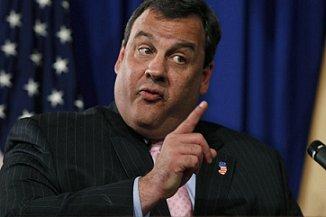
For New Jersey Gov. Chris Christie (R), the month of April isn’t off to an especially good start.
Earlier this week, Newark’s Star-Ledger ran a lengthy, detailed report documenting the extent to which the governor’s legislative proposals, executive orders, and agency rules were written, at times word for word, by the American Legislative Exchange Council (ALEC), a shadowy far-right group that seeks to impose a conservative agenda in state legislatures.
Yesterday, the New York Times’ Charles Bagli reported on Christie’s practice of handing out lucrative tax credits to preferred in-state corporations.
Since taking office in 2010, Gov. Chris Christie has approved a record $1.57 billion in state tax breaks for dozens of New Jersey’s largest companies after they pledged to add jobs. Mr. Christie has emphasized that these are prudent measures intended to help heal the state’s economy, which lost more than 260,000 jobs in the recession. The companies often received the tax breaks after they threatened to move to New York or elsewhere.
The generous distribution of subsidies in New Jersey has come under fire from government-reform groups, Mayor Michael R. Bloomberg of New York City and some New Jersey landlords, who contend that the programs are an expensive and ineffective form of assistance to wealthy corporations.
The critics pointed out that even when the promised jobs have not materialized, the Christie administration has merely reduced, not withdrawn, the subsidies. And they say that the administration is mortgaging the state’s future by forgiving so much tax revenue for the next 10 to 15 years.
At a certain level, this may seem routine. After all, governors from both parties routinely use tax incentives to, for example, entice employers to relocate to their state. This is neither new nor controversial.
But with the Christie administration, the details paint a different, and more problematic, picture. For one thing, some of these businesses are using the money to simply move from one New Jersey location to another New Jersey location. For that matter, Republican principles dictate that the government not pick private-sector winners and losers, but rather let the free market work. New Jersey’s GOP governor, however, is handing out corporate welfare faster than any of his predecessors, despite only having been in office for two-and-a-half years, and despite his state’s financial difficulties. Moreover, the policy itself is problematic. As Matt Yglesias explained, “The game of maintaining relatively high statutory rates and then handing out special breaks to politically influential firms just opens the door to corruption and abuse, while disadvantaging both small firms and especially the kind of potentially fast growing startups that account for the bulk of net job creation in a dynamic economy.” As Christie continues to gear up for a role on the national stage — remember, he’s already talking about how ready he’ll be to run for president “four years from now” — expect stories like these to linger.
The place for in-depth analysis, commentary and informed perspectives. Recommended


