








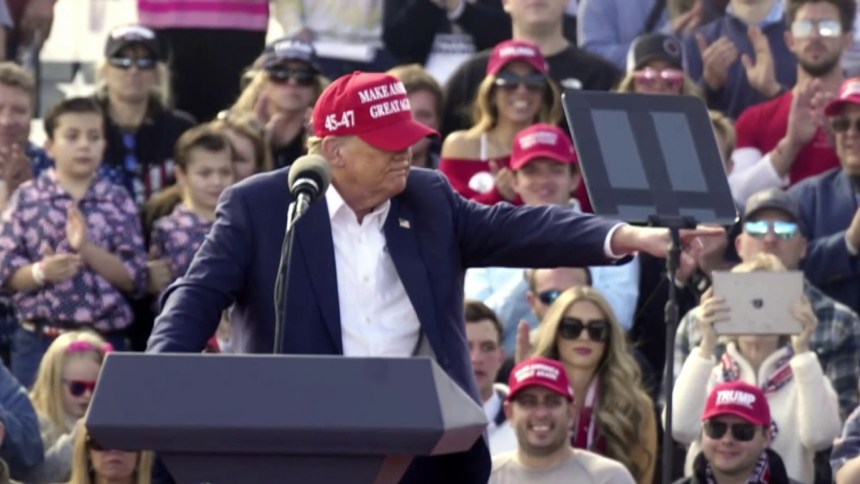
Donald Trump has long cited his economics degree from the prestigious Wharton School as evidence of his “super genius stuff” skills in business.
But if he were a student there right now, he’d get a failing grade for his proposals’ effects on rising prices.
With polls showing that inflation remains a top concern among voters, the presumptive Republican nominee has somehow put together a campaign platform featuring multiple proposals that would raise prices on everything from groceries to new cars, both directly and indirectly.
Some of the ideas would lead to higher prices as a side effect of tackling some other issue. Some might make sense if economic conditions were different. And some come from the oddball theories of his motley assortment of advisers.
Lowering interest rates in the current environment would supercharge spending, spurring demand and, again, leading to higher prices for consumers.
But added together, they amount to a massive own goal on one of the most important policy issues in the 2024 presidential election, with Trump undercutting one of his strongest arguments against President Joe Biden’s performance.
There’s a lot to unpack here, but stick with us and we’ll walk through it step by step.
Lesson No. 1: Tariffs lead to higher prices
In recent decades, tariffs fell out of favor as the U.S. embraced free trade, allowing other countries to sell their goods cheaply here in return for American companies selling their wares overseas.
Trump, who brought tariffs back into the mainstream, now wants to impose a 10% “universal tariff” on all imports, plus a 60% tariff on Chinese goods and a 100% tariff on foreign cars.
But, as I’ve explained before, foreign companies respond to tariffs by raising the prices on their products sold in the U.S. The result? American consumers would pay more.
Lesson No. 2: Low interest rates lead to higher prices
When inflation is high, the Federal Reserve raises interest rates, making loans more expensive. That helps cool the economy, reducing the demand that is driving prices higher.
Some Trump allies are reportedly drawing up plans to put the traditionally independent Federal Reserve more under the president’s control. And Trump has long made clear that he would actually prefer lower interest rates.
But lowering interest rates in the current environment would supercharge spending, spurring demand and, again, leading to higher prices for consumers.
Lesson No. 3: Tax cuts can lead to higher prices
When taxes go down, people have more money in their pocket, and they’re likely to spend more of it. That’s not a bad thing; governments facing a recession will often cut taxes to boost spending and get things back on track.
In his campaign, Trump has proposed making permanent the individual and estate tax cuts from his 2017 bill that are set to expire and keeping the corporate income tax rate at 21%.
There are all kinds of arguments on both sides about the wisdom of these proposals (and Biden wants to cut some taxes, too) but suffice to say, they would probably end up boosting spending and increasing demand. Coming on top of Trump’s other inflationary proposals, that would likely lead to higher prices as well.
When you buy something at the store, a big chunk of the price is determined by how much the company had to pay its workers. When the labor pool is tight, as it is right now, salaries go up, and so do prices. Again, not always a bad thing. But Trump’s hard-line immigration plans would further shrink the labor force. He’s proposed tightening worker visas, changing immigration laws, cutting the number of refugees and rolling back Temporary Protected Status designations. He has also proposed large-scale raids and deportations of potentially millions of undocumented immigrants. Depending on the scale and success of these various proposals, the U.S. labor force could be reduced dramatically as a result, again, leading to higher prices. Everyone loves the dollar. When foreign investors get nervous, they exchange their own currency for the greenback. When foreign leaders want to keep their currency stable, they tie its value to the dollar. All of this has led to what is called the “strong dollar.” A top Trump adviser has called for undoing that, seeking to devalue the dollar in an effort to boost U.S. exports. The resulting “weak dollar” would have complicated effects on the global economy, but a major side effect here in the U.S. would be to make imports even more expensive. Again: higher prices. On their own, these proposals can be defended by reasonable people. Economics is complex, and there are always trade-offs. But each of them just happens to have a downside of raising prices at a time when high inflation is a major concern for voters. As the terminally online might put it: Tariffs? In this economy? These proposals also wouldn’t happen in isolation. If Trump succeeds with all of these plans, American consumers will pay more for imported goods, while the economy overheats due to increased spending, right as domestic manufacturers find themselves paying more in labor costs due to worker shortages. Then there’s the risk of trade wars and global economic turmoil caused by massive shifts in U.S. policy. All of this points to higher and higher prices. The economic misery that would bring would end up being studied for years to come in textbooks bought by students at Trump’s alma mater of Wharton. “Super genius stuff” indeed.
Ryan Teague Beckwith is a newsletter editor for MS NOW. 

Lesson No. 4: Fewer workers leads to higher prices
Lesson No. 5: A weak dollar leads to higher prices
In conclusion, prices would rise under Trump
