









Harvard University on Tuesday announced a massive study of slavery and how the Ivy League university profited from it, and the university paired that announcement with a promise of a $100 million fund to address the effects of the university’s past.
Unlike with other contrite statements made regarding slavery, Harvard is committing to putting some of its considerable wealth behind its words.
Harvard acknowledged in a 134-page report that the leaders, staffers and donors at the university owned at least 70 human beings while slavery was legal in Massachusetts.
“Slavery and its legacy have been a part of American life for over 400 years,” Harvard President Lawrence S. Bacow said in a statement. “The work of further redressing its persistent effects will require our sustained and ambitious efforts for years to come.”
Even more importantly, the report said a committee authorized by Bacow has made seven recommendations “to remedy the persistent educational and social harms that human bondage caused to descendants, to the campus community, and to surrounding cities, the Commonwealth, and the nation.” Unlike with many other contrite statements made regarding the long-term effects of slavery, Harvard is committing to putting some of its considerable wealth behind its words, a pledge few entities have made.
Like Harvard, other universities, governments and corporations are voluntarily acknowledging their complicity in slavery. The University of Virginia is leading a consortium of almost 100 colleges and universities that it said are “committed to research, acknowledgment, and atonement regarding institutional ties to the slave trade, to enslavement on campus or abroad, and to enduring racism in school history and practice.”

Entities other than schools are moving in this direction, too. Last year, Evanston, Illinois, became the first U.S. city to make reparations available. Providence, Rhode Island, announced a city commission on the matter in February, and Boston is considering a commission, as well.
Other places are also putting their hard-earned cash behind their research. Georgetown University created a reparations fund for the descendants of 272 slaves the university sold in 1838 to stave off bankruptcy. California is working through how and if its state money should be used to compensate its residents who are descendants of American slavery.
Once again, unlike many groups that have offered apologies, these entities are putting their money where their mouths are. They’re not offering empty words but a path for redemption for themselves and recovery for those who suffered through generations of damage because of a system that oppressed them and denied them citizenship.
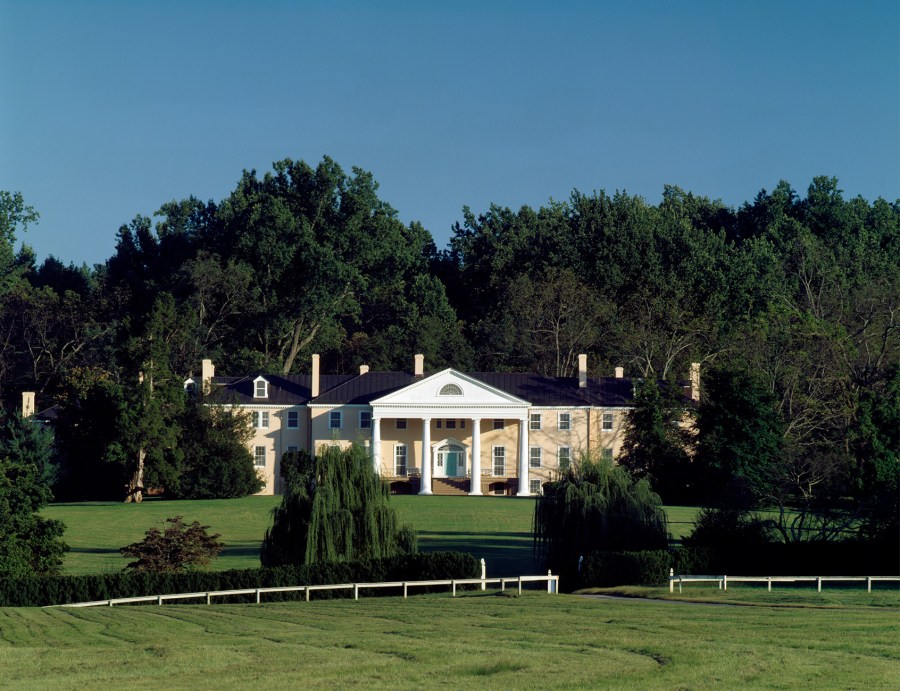
But too many institutions — including Montpelier, the Virginia plantation owned by Founding Father and former President James Madison — are giving us the okey-doke. In case you don’t know, the okey-doke is a con, a scam. It’s smiling in a person’s face while looking for the best spot to stab them in the back.
The foundation that runs the plantation received national acclaim in June for agreeing to share equal power with the descendants of those who’d been enslaved at Montpelier and, contrary to the instructions spelled out in Madison’s will, sold away from there. The announcement was lauded as the first time that descendants of slaves would co-oversee a major national historic site where their ancestors were once enslaved. But last month the foundation’s majority-white board voted to undo its vow to share power with the nonprofit Montpelier Descendants Committee. The board even fired some Montpelier staffers who supported bringing some of the descendants of Montpelier’s enslaved people to power on the board.
The board called its recent vote retracting a power-sharing agreement a “reset.” Gene Hickok, chair of the foundation’s board, said in a statement on the historic site’s website: “The issue regarding parity at Montpelier has been settled for some time. The disagreement is about how it should be achieved.” But the issue appears to be the concern that the descendants’ bloc could outvote previous members of the board.
It’s about who controls the story of a slaveholding president who also had a hand in crafting the United States’ most cherished documents.
All of this is about money and power, of course. But most of all, it’s about who controls the story of a slaveholding president who also had a hand in crafting the United States’ most cherished documents, including the Federalist Papers, the U.S. Constitution and the Bill of Rights. It’s also about who gets to tell the story of the enslaved human beings America’s fourth president used to build the fortune that allowed him to do all of that.
Matt Reeves, the director of archaeology at Montpelier until he was fired this month, told The Washington Post, “The board’s resistance to full parity with the MDC rests in the threat they see in expanding the national narrative beyond the myth of the Founding Fathers to include all people in this history.”
This isn’t the first example of the okey-doke at Montpelier. Madison left instructions that none of the people he’d enslaved be sold away from the plantation without their consent, but his widow, Dolley Madison, sold almost all of them off because her son, addicted to gambling and alcohol, was depleting the family’s fortune. Is it any wonder that the descendants of those slaves don’t trust the words of the white power structure today? Over the last half-century, many historic sites have moved to acknowledge the existence of enslaved Africans on their grounds, from the Behind the Big House tour in Holly Springs, Mississippi, to The Other Half tours and experiences at Colonial Williamsburg in Virginia. But Montpelier had promised to go beyond putting up markers and hiring actors to tell the story of enslavement; it had promised to be the place where the descendants of the enslaved people had a say in telling the story of the plantation, the president who owned it and, by extension, the story of the South in the United States. But apparently that’s a bridge too far for some people at Montpelier. Is it any wonder that the descendants of those slaves don’t trust the words of the white power structure today? It’s important that corporations, governments and places such as Harvard are finally acknowledging their complicity in the enslavement of human beings, but they aren’t necessarily the best places to learn about how the institution of slavery did lasting damage to the United States and its people. Places such as Montpelier, the sites where the worst acts of slavery actually took place, must become equally committed to acknowledging the horrible history their lands hold and welcoming back the descendants of those who were harmed. They must also be willing to allow those who were harmed to help define how those lands are perceived by future Americans who won’t accept the mythical Founding Fathers or “Gone With the Wind” narratives anymore. A few plaques, a couple of exhibits and powerless seats in the rooms where decisions about Montpelier are being made? Let’s call it what it is: another okey-doke. American history deserves more than that.
Jesse J. Holland
Jesse J. Holland, an award-winning author, professor and journalist, teaches journalism at the School of Media & Public Affairs at George Washington University and was a longtime congressional, Supreme Court and White House reporter with The Associated Press. He is the author of two African American history books about Washington, D.C., and has written for major entertainment franchises, including Lucasfilm’s "Star Wars," DC Comics’ "Superman" and Marvel’s "Black Panther." 


