








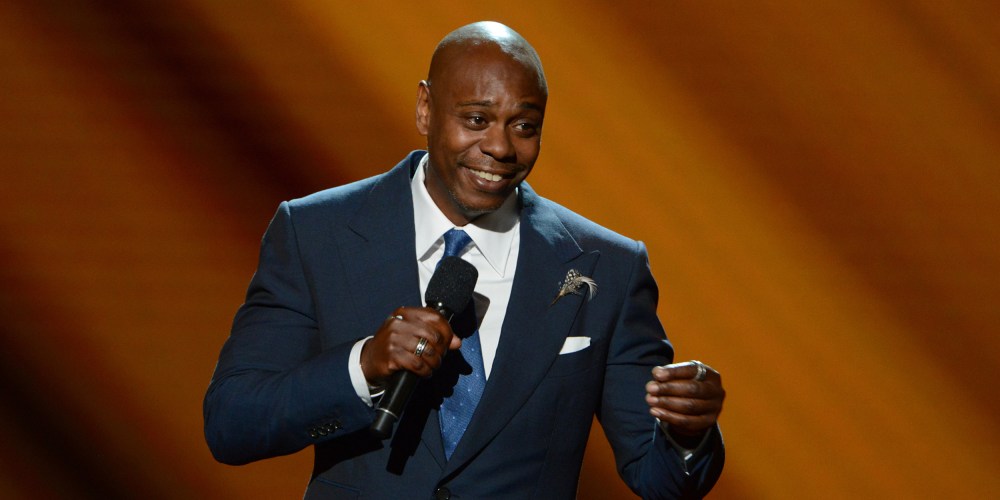
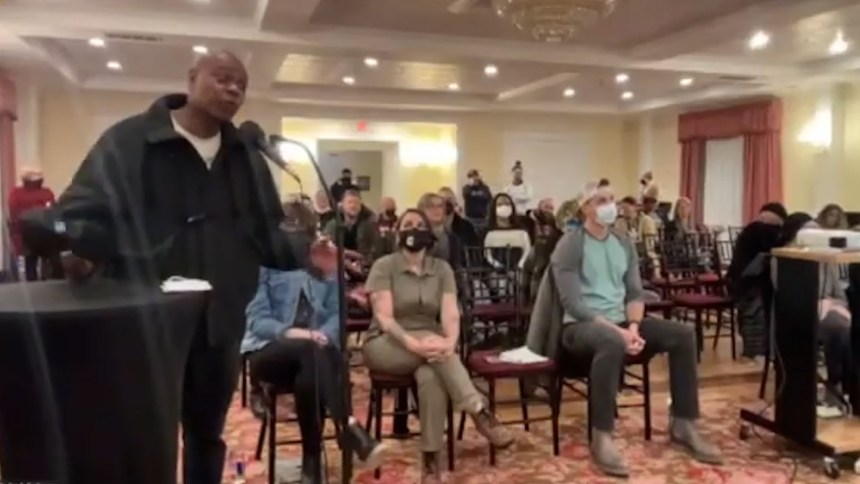
Dave Chappelle got another round of bad publicity recently — this time not for off-color jokes or smoking indoors, but from leveraging his vast wealth to get an affordable housing project canceled. He lives in Yellow Springs, Ohio, a small college town and suburb of Dayton, where a developer had proposed a mixed development including dozens of row houses and some multifamily buildings, plus a park and a smaller number of affordable units. At a City Council meeting on Monday, Chappelle threatened to take away several planned investments if the development (which was a smallish part of a larger plan) was not scrapped. “I am not bluffing,” he said. “I will take it all off the table.” The City Council duly complied and voted down the necessary rezoning.
Chappelle had all the usual, irritable NIMBY fig leaf arguments.
Chappelle had all the usual irritable NIMBY fig-leaf arguments. A spokesperson said that Chappelle is “against the poorly vetted, cookie-cutter, sprawl-style development deal which has little regard for the community, culture and infrastructure of the Village,” before later arguing that the proposed affordable housing wasn’t actually affordable. The problem with these arguments, as Henry Graber points out at Slate, is that the developer can now build a cookie-cutter, sprawling, expensive bunch of detached single-family homes without needing any approval, and almost certainly is going to do just that.
It’s a perfect example of the functioning of structural bigotry. As a Black man, Chappelle is obviously no racist in terms of his personal views, and, in fact, as anyone who has watched his heartfelt and raw show in response to George Floyd’s murder can attest, he takes many forms of racist policy very seriously. But he’s also a wealthy homeowner and businessman, and he clearly has the kind of politics typically associated with that kind of person. To put it bluntly, he’s acting like a rich man who doesn’t want poor people in his neighborhood. His obstruction harms Black people and other minorities, even if he doesn’t mean to do it.
Here’s why.
First, there is a housing crisis in this country. Recent history is part of the problem: Because the Recovery Act stimulus in 2009 was far too small, the economic recovery after the 2008 financial crisis was slow, and housing construction especially was depressed for a decade — leaving America badly short of housing units. But now, because of the generous pandemic bailout packages, tens of millions of people who put off getting married or starting families are now flush with cash and in the market for a home or bigger apartment. Thus, both rents and home prices are skyrocketing in many cities. It will take years to catch up with the missing supply.
That’s putting the disproportionately nonwhite working class and poor population in an economic vise, causing (among other things) a steep increase in homelessness. And among all racial groups, Black Americans are hurt worst because they have the lowest average income and wealth. Black households had only about 60 percent of the median white income in 2019, and just 13 percent of the average white household wealth.
Now, rents and home prices in nearby Dayton — the likeliest source of new residents — are still cheap compared to, say, San Francisco. But Dayton (which is about 38 percent Black) also has one of the highest poverty rates in the country, at 31 percent in 2019. A $600 rent payment is no small thing to someone making minimum wage. What’s more, according to Department of Housing and Urban Development data, rents are 10 to 15 percent higher today than two years ago.
Chappelle is following a long and wretched history of privileged suburbanites keeping the heavily non-white underclass trapped in dysfunctional cities.
Even Dayton’s relatively cheap rents and homes, a consequence of high employment and low-paying jobs, are indicative of racial injustice. As Ta-Nehisi Coates wrote in 2014 in “The Case for Reparations,” as the government used housing ownership subsidies to build the American middle-class after World War II, Black Americans were systematically excluded from a fair share of the proceeds. They were stuffed into segregated locations through redlining and racist mortgage practices, tricked with abusive “contract” loans, and, because their incomes were generally lower, they struggled to afford down payments in the first place. Fewer Black folks got to own homes and those that did found theirs were worth considerably less than comparable ones in white neighborhoods.
Then when civil rights legislation banned the most overt kinds of legal discrimination, many white families responded by fleeing to the suburbs — thus forming new neighborhoods that were still de facto segregated, and ensuring that their local tax money did not flow to Black families. And when neoliberal trade policy gutted the job market of Rust Belt cities like Dayton, causing its population to fall by about 46 percent since the 1960s, one result was Black neighborhoods with vastly higher rates of unemployment, poverty and, hence, crime. Chappelle is following a long and wretched history of privileged suburbanites pulling the ladder up and keeping the heavily nonwhite underclass trapped in dysfunctional cities with an eviscerated tax base (though it’s worth noting that much of the motivation for the specific plan in Yellow Springs was to moderate the price of housing for existing residents, who were getting squeezed by high rents). Now in the grand scheme of things the lack of a few dozen affordable units would not move the needle much in terms of racial economic inequality. But as Graber points out, Chappelle’s complaints are indicative of a much, much more widespread political tendency among both liberals and conservatives. People are certainly less personally racist than they were in the 1950s, but the politics of pulling up the ladder and keeping the inconvenient poor out of sight is very much alive. In my view, this whole story tends to suggest the sharp limits of the politics of representation. It is good and proper for the economic elite to become more representative of the country as a whole, but, as Chappelle demonstrates, a more diverse elite can easily have the same bad politics as their predecessors. The way to solve structural problems like poverty or a housing shortage is with structural solutions like the welfare state or social housing. If the federal government makes sure that all people without exception have a baseline standard of living (in part by taxing millionaire entertainers), there will be no poverty, as there is virtually no poverty in Denmark. If it builds affordable and market-rate units in every city and town on land it owns itself, then a reasonable cost of housing won’t depend on getting the approval of random stubborn celebrities.
Ryan Cooper
Ryan Cooper is managing editor of The American Prospect. His work has appeared in The Nation, The New Republic and The Washington Post. He is the author of the book "How Are You Going to Pay for That: Smart Answers to the Dumbest Question in Politics." 


