








The Facebook Oversight Board could have just changed the entire game for content moderation — and, potentially, the fate of the internet as we know it.
What matters more is what this tells us about the role of the Oversight Board itself, and the role of tech companies like Facebook, in shaping our online speech.
But on Wednesday, the Oversight Board announced its decision on whether to ban former President Donald Trump’s accounts on Facebook and Instagram with a fairly anti-climactic ruling: “In applying a vague, standardless penalty and then referring this case to the board to resolve, Facebook seeks to avoid its responsibilities,” the board concluded, stating it “declines Facebook’s request and insists that Facebook apply and justify a defined penalty.”

The statement also read, “Facebook’s normal penalties include removing the violating content, imposing a time-bound period of suspension, or permanently disabling the page and account.”
“Given the seriousness of the violations and the ongoing risk of violence, Facebook was justified in suspending Mr. Trump’s accounts on January 6 and extending that suspension on January 7. However, it was not appropriate for Facebook to impose an ‘indefinite’ suspension.”
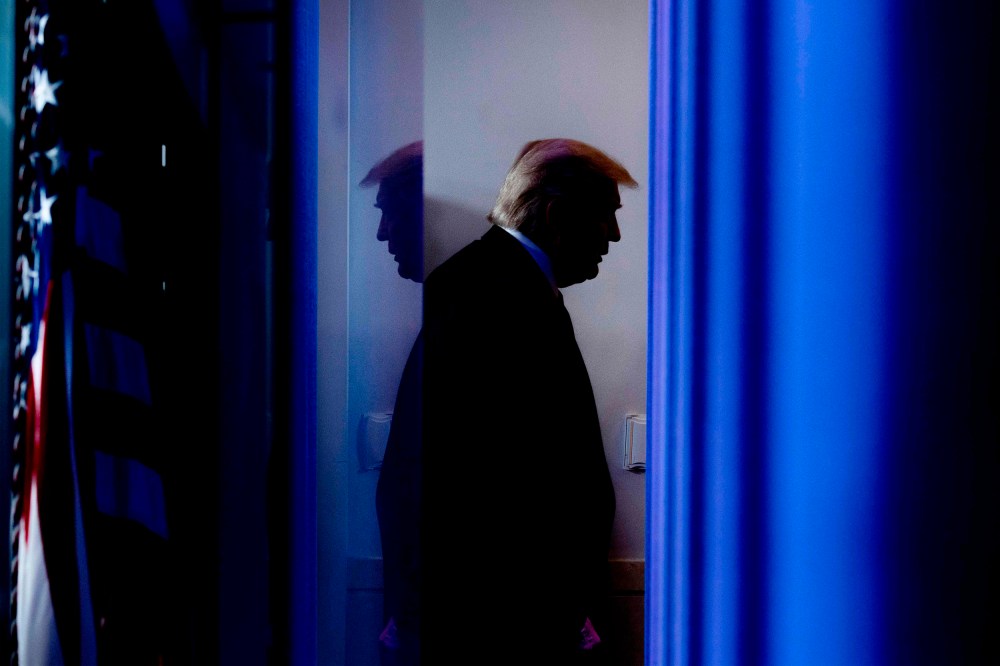
Facebook made the initial decision to ban Trump from its platforms on Jan. 7, the day of the attempted armed insurrection, after Trump catalyzed hundreds of his supporters to violently storm the U.S. Capitol, in an attempt to overturn the lawful results of the 2020 U.S. presidential election.
There is no question that tech platforms today are powerful. But are they too powerful?
Facebook wasn’t alone in that decision. On the same day, other platforms, including Twitter and YouTube (and even Shopify) took similar action in banning the then-sitting president of the United States from using or communicating with anyone through their apps and websites.
This decision by Facebook and its platform peers created shockwaves across the nation and the world. Some supported the decision, arguing that Trump had used social media to fan the flames of insurrection, spreading disinformation about the election and using his large platform to harass and intimidate others. But not everyone agreed that it was a good idea — which may be why the Trump ban quickly became the most talked-about case before what some have called the “Facebook Supreme Court.”
Facebook’s Oversight Board was created to help the company figure out how to approach difficult content decisions, including deciding which posts to take down or leave up, and which accounts to suspend, remove, or reinstate. The board has only been in existence since 2020.

When Trump’s account was banned, the board had barely begun to function. And the Trump case quickly became its most high-profile problem. When the board announced an open comment period asking the public to weigh in, a staggering 9,000 comments were filed.
What’s really interesting about the Facebook Oversight Board decision was never actually about the fact that they could potentially reinstate or ban Trump’s account. Of course, a decision like that does affect the future of online speech and, in particular, the future prospects for other public figures spreading disinformation. But what matters more is what this tells us about the role of the Oversight Board itself, and the role of tech companies like Facebook, in shaping our online speech.
While Trump’s account suspension quickly became a high-priority, high-profile case, some of Facebook’s actions regarding other world leaders may not receive the same level of scrutiny.
The reason we are all paying so much attention to Facebook and its Oversight Board is the simple fact that today a single tech company can choose to silence the voice of a sitting president.
It seems ridiculous to think that any one company could have more power than the U.S. president. And realistically, that isn’t the case. As we saw in the aftermath of biggest platforms shutting down Trump’s account, no one platform had more power than the president; it was the combined power of the social media industry that helped censor Trump. And even with all of those efforts, Trump has still been able to reach his followers — through direct communication (like his new platform, “From the Desk of Donald J. Trump”), alternative platforms like Parler, and through traditional media, including press releases covered in newspaper, radio, and television broadcast.
There is no question that tech platforms today are powerful. But are they too powerful? Many would say yes — and the ruling of the Oversight Board seems to uphold this belief as well, when it stated that it “was not appropriate for Facebook to impose an ‘indefinite’ suspension” on Trump’s accounts. Policymakers across the aisle increasingly favor greater tech regulation, with such strange bedfellows as Sens. Josh Hawley, R-Mo., Ted Cruz, R-Texas, Amy Klobuchar, D-Minn., and Elizabeth Warren, D-Mass., all agreeing on the need to regulate social media and internet platforms. (This includes proposals to repeal Section 230, the law immunizing platforms from some liability for user-generated content.) In creating the Oversight Board, Facebook offloaded some of its content moderation authority, and the company promises to be bound by the board’s decisions. But the board is still created and funded by Facebook. Another interesting wrinkle to the Facebook Oversight Board decision is its quintessential American-ness. Some critics have argued that the Oversight Board is too American in its makeup, without enough representation from other countries, particularly any in the global south. (Currently, one out of five board members comes from institutions in America.) While Trump’s account suspension quickly became a high-priority, high-profile case, some of Facebook’s actions regarding other world leaders may not receive the same level of scrutiny. Recently, however, the board did rule to restore a deleted post that criticized Indian Prime Minister Narendra Modi. Regardless of the nationalities of the Oversight Board members, the Facebook Oversight Board will likely remain an American endeavor — and a uniquely American one at that. In creating the Oversight Board, Facebook offloaded some of its content moderation authority, and the company promises to be bound by the board’s decisions. But the board is still created and funded by Facebook. Treating content moderation choices as Supreme Court decisions on free speech is a very American way to think about social media regulation. Perhaps nothing is more American than turning to a private corporation to regulate itself, with no consequences elsewhere. However, the spirit of ingenuity that drove Facebook to create the Oversight Board and Twitter to create Birdwatch (another attempt at innovating content moderation) is also in line with the American approach to the internet and to online speech. There are few things this country values more than freedom, and chief among the freedoms we value is the freedom of speech. In 100 years, it might not matter whether or not Trump will be able to come back to Facebook some months after he arguably incited a riot. But the impact of this and future decisions made by the platform’s Oversight Board has the power to change the way we understand online speech forever.
Tiffany C. Li
Tiffany C. Li is a technology lawyer and legal scholar. She is an assistant professor of law at the University of New Hampshire School of Law and a fellow at Yale Law School's Information Society Project. 


