








This is the Dec. 3 edition of “The Tea, Spilled by Morning Joe” newsletter. Subscribe here to get it delivered straight to your inbox Monday through Friday.
What a strange turn of events.
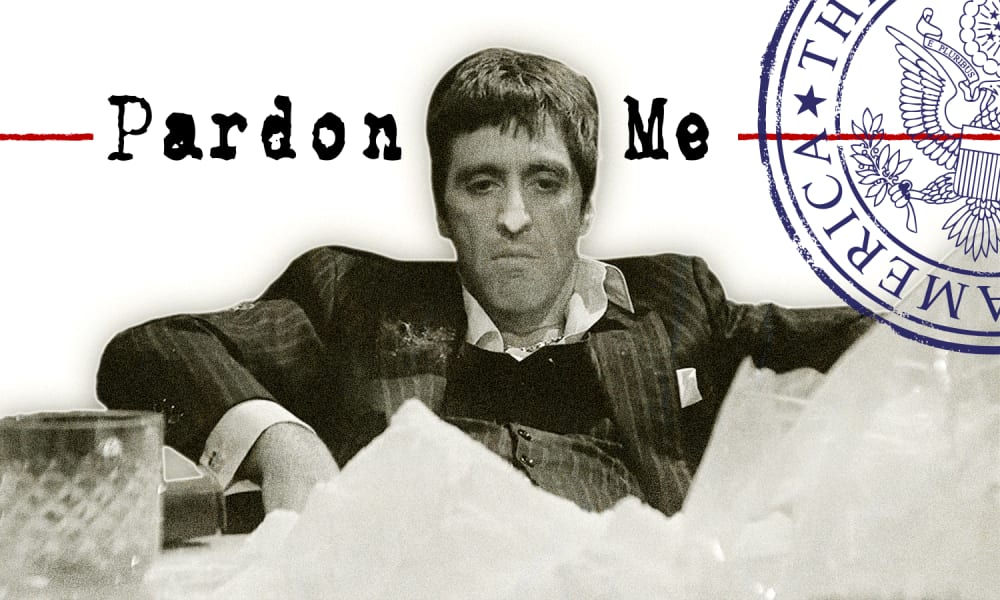
That’s how the Wall Street Journal editorial board described Donald Trump’s pardon of a drug trafficker who smuggled 400 tons of cocaine worth $10 billion into the United States, while Trump carries out what many legal experts are calling an illegal drug war against Venezuela.
The Journal writes:
Would Mr. Trump care to elaborate for a perplexed public, including Republicans on Capitol Hill? The Trump Administration is saying that illegal drugs are a threat serious enough to justify U.S. military strikes on alleged trafficking boats in the Caribbean, and it’s also trying to push out Venezuelan dictator Nicolás Maduro.
Those 400 tons of cocaine, transshipped via Honduras, were worth $10 billion in the U.S.
“In 2013, El Chapo Guzman, head of the Sinaloa Cartel, paid a $1 million bribe to Hernández and his campaign, delivered directly to Hernández’s brother,” the judge said. While the former Honduran leader wasn’t accused of a direct role in the conspiracy’s killings, “he knew and understood the violence that accompanies drug trafficking, and in facilitating trafficking, he knowingly facilitated the violence.”
“Why would we pardon this guy and then go after Maduro for running drugs into the United States?” Sen. Bill Cassidy wrote on social media. “Lock up every drug runner! Don’t understand why he is being pardoned.”
As the Journal reports, “Cocaine Juan” was sentenced to 45 years in prison after a federal jury in New York found him guilty of participating in a conspiracy to traffic 400 tons of cocaine to the United States.
The judge at trial described the pardoned drug lord as “a two-faced politician, hungry for power, who presented himself as a champion against gangs, murder, crime, and drug trafficking, but secretly protected a select group of drug traffickers.”
Americans, like editors at The Wall Street Journal, can be forgiven for failing to follow the logic of Republicans justifying alleged war crimes against Venezuelan drug boats while Donald Trump pardons one of the worst drug traffickers in American history.
Good luck explaining that one to voters, guys.
“Stuff the drugs right up the noses of the gringos.”
Quote prosecutors attribute to former Honduran president and notorious drug trafficker Juan Orlando Hernández, pardoned by President Donald Trump earlier this week
DAZED AND CONFUSED:
COCAINE JUAN AND DON’S STRANGE TRIP
Flattery will get you everywhere; that is, if Donald J. Trump is the target of your praise.
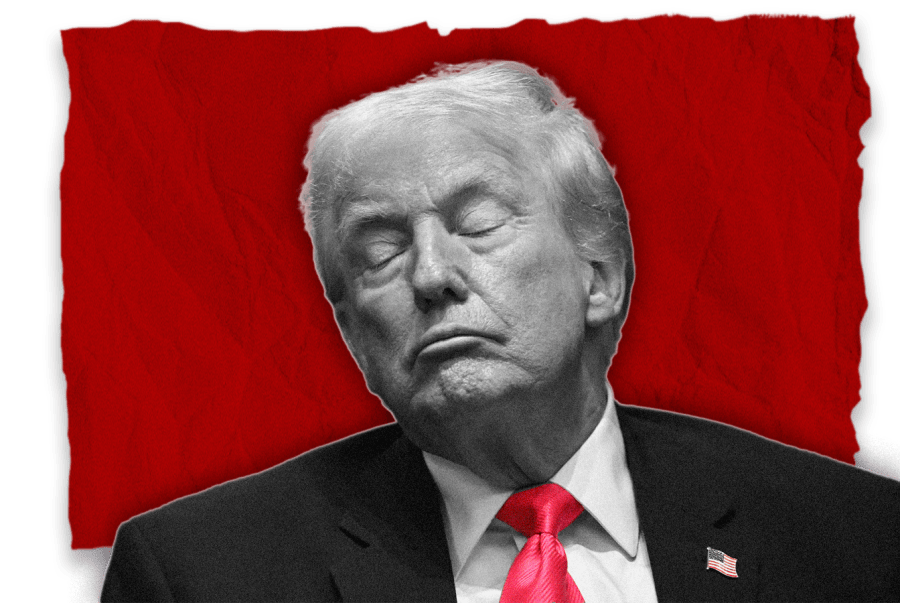
“Cocaine Juan” Hernández secured his freedom after sending the president a letter — obtained by The New York Times — claiming he faced the same kind of political persecution experienced by Trump. Convicted felon-turned-Trump pardon-winner Roger Stone made sure Cocaine Juan’s letter reached the Don.
Hernández, the former president of Honduras, was sentenced to 45 years for helping cartels pump 400 tons of cocaine into the United States — a stash worth up to $10 billion on the street.
Former Attorney General Merrick Garland called the former Honduras president a key player in “one of the largest and most violent drug trafficking conspiracies in the world.”
Trump justified the unjustifiable pardon by turning to his “Blame Biden” handbook. What followed was one of the most bizarre presidential pardons in U.S. history.
The Coke King may have called himself the victim of a “Biden-inspired witch hunt,” but even Republicans aren’t buying it.
Sen. Rand Paul blasted the move.
“I think it really puts in stark relief the craziness of this policy” when compared with the administration’s policies on Venezuela.
Sen. Thom Tillis of North Carolina was blunter: “I hate it.”
But count on Republicans giving little pushback to Trump, while the White House sends a dangerous message to drug cartels: Push your poison on Americans, get busted, flatter the president and then receive your own “get out of jail free” card.
That scam will leave Americans dealing with untold personal tragedies caused by the drug kingpin who is now walking free because of a dazed and confused pardon process.
AN INTERVIEW WITH JIM VANDEHEI
Breaking news! Big media is, well, still very big.
In his Axios columntoday, Jim VandeHei reports on the lasting power of the media institutions Donald Trump declared war on earlier this year.
VandeHei talks to The Tea about how these media giants are thriving in the age of Trump while MAGA outlets suddenly find themselves irrelevant because of infighting, unpopular White House policies and depressed presidential ratings.
JS: Jim, talk about how reports of big media’s death have been greatly exaggerated?
JV: If you start from the beginning of the year, the president tried to bully and intimidate the press, while blocking media outlets from access to the White House. MAGA media seemed ascendant, and X was the dominant social media platform for conversation. Ten months later, traditional media is as powerful as ever in terms of explaining news events in Trump’s world and shaping how the public views the White House.
JS: Are you surprised?
JV: I’m actually surprised that media is as powerful as it is today. I thought a lot of these things Trump was doing would weaken traditional outlets. But if anything, these attacks have somehow strengthened media institutions.
JS: Give some examples.
JV: You’re seeing the power of great journalism, whether it’s The Wall Street Journal reporting about business conflicts of administration officials negotiating with Russia, or The Washington Post reporting on [Defense Secretary Pete] Hegseth’s role in the second boat strike, or The New York Times reporting how David Sacks profited off of the same AI policies that he’s championing inside the White House. That’s media reporting making a real difference.
JS: If The New York Times is as irrelevant as its critics say, then why did the most powerful people in Silicon Valley feel compelled to respond to the Times profile of Sacks?
JV: It’s funny, right? We always hear the media doesn’t matter anymore, that it’s washed up and irrelevant.
But the Times is more profitable than ever. It’s in better financial health than it’s been at any point in its history. And if their reporting is not a big deal, then why do all Sacks’ associates feel the need to go on X to defend him? If the media were really irrelevant, they could just ignore that profile and move on.
But you see that time and time again. Trump himself says he hates the media and that it’s all fake news. But the president is a massive consumer of the media, he’s very reactive to what they say, and he cares a hell of a lot more about what happens on network TV than in MAGA media — which his base still doesn’t seem to fully understand.
JS: You’ve talked about the strength of the media at the end of Trump‘s first year in office. What about the divisions that seem to be breaking apart large swaths of the MAGA media sphere?
JV: MAGA media is so splintered and so divided that it’s almost to the point of irrelevance. And given its size, that’s kind of shocking.
The MAGA media ecosystem is huge. There are many people like Tucker Carlson and Ben Shapiro who have followings as large as some big media institutions. If they were organized and were collectively advocating for what Trump wants, they would be a massive media force in support of Trump. But look back over the last three to four months, and you see a media ecosystem that’s consumed with fighting with each other instead of Democrats.
JS: What’s at the center of this fight?
JV: They’re fighting for clout, they’re fighting for audience, they’re fighting over racism, they’re fighting over sexism, they’re fighting over nativism, and the battles have become petty and deeply personal. These fights have also made it harder to do what MAGA media actually set out to do.
When they’re together, they’re very cynical but also very effective. They’ve looked at the media world and realized that politics is downstream from information, and you have to think of media as information warfare. They’re actually right. It’s a very powerful political weapon, but Trump has not benefited from that weapon at all over the last several months.
JS: Final question, and for you, the most important. The Packers have a three-game run where they play the Bears twice. How’s that going to work out for Green Bay?
JV: I think we’re playing well. And I think the coolest thing about the NFL right now is I can name 15 teams who could legitimately win the Super Bowl. And that’s crazy.
This interview has been condensed and edited for brevity and clarity.
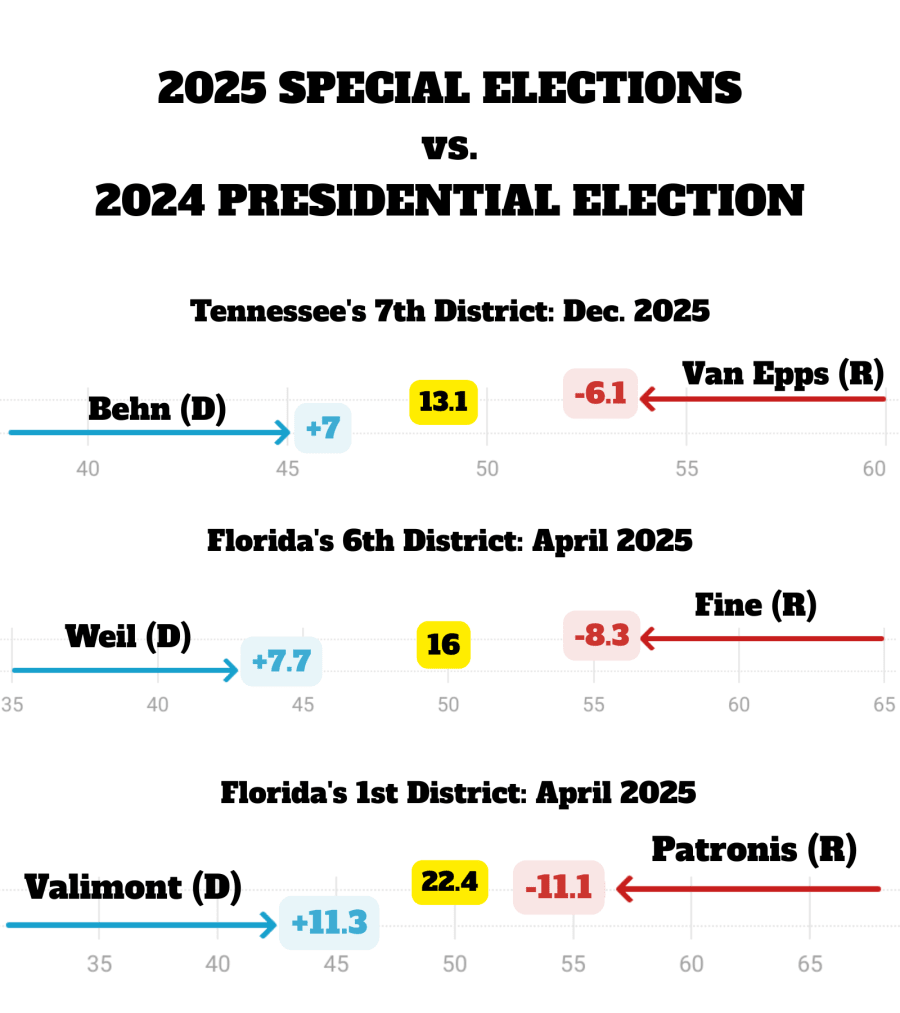
2025 SPECIAL ELECTIONS VS 2024 PRESIDENTIAL ELECTIONS
When I was in politics, I looked at trend lines more than polling outcomes. You can bet nervous Republican leaders are doing the same today, with yet another GOP candidate underperforming Donald Trump’s 2024 results by double-digits.
If that trend continues, expect Democrats to take back the US House and make some “safe” Republican senators nervous over the next year heading into the midterms.
WELCOME TO MATRIX U
Just when high school seniors thought the college-app grind couldn’t get more stressful, admissions offices said, “Hey, robot, hold my beer.”
More universities are beginning to rely on artificial intelligence to review the same college admissions essays that students are told to write without the aid of — you guessed it — AI.
It’s an academic plot twist worthy of its own Common App short answer.
According to the Associated Press, these new AI tools will analyze essays, scan transcripts and speed up the review process. Virginia Tech is rolling out its AI essay reader this fall, while the Caltech and Georgia Tech are planning their own AI experiments — turning admissions cycles into soulless tech trials for unsuspecting students.
So what if a bot can grind through 250,000 essays in less than an hour?
Efficiency, sure. But where do nuance, context and heart come into these schools’ admission equations?
It’s an academic showdown ripped from the pages of the script for “The Matrix.”
Mr. Smith keeps knocking Mr. Anderson to the ground, but the machine in him is incapable of comprehending why the human being keeps climbing to his feet after he keeps falling.
“Because I choose to,” Neo answers.
Here’s hoping teenagers and their parents choose schools with an admissions process run by human beings with hearts instead of AI programs controlled by algorithms straight out of a science fiction horror show.
EXTRA HOT TEA

DIE HARD DIPLOMACY
So much for the “special relationship.”
After surviving two world wars, the Suez Crisis and Donald Trump’s first term, America’s close ties with Great Britain may finally be on the rocks.
This diplomatic downturn will surely come soon because of the surprising number of Brits still refusing to admit the obvious during the upcoming holiday season: that “Die Hard” remains one of the greatest Christmas movies of all time.
According to a new poll, 44% of the British public insists that “Die Hard” shouldn’t even be in the Yuletide movie sweepstakes. Instead, the Brits crowned “Home Alone” their top Christmas movie with 20%, leaving “Love Actually” at a distant 9%.
Is this all the thanks Emma Thompson gets for Alan Rickman breaking her heart?
What a callous lot these Brits seem to be.
“It’s a Wonderful Life” followed with 8% and “Elf” slid in at 7%.
Fortunately, not every English person is ready to toss John McClane off their Christmas list.
Last December, Keira Knightley sat down with us on “Morning Joe” and delivered her verdict without hesitation: She’s firmly on Team “Die Hard” and believes its only proper place is in the holiday movie-watching canon.
In the immortal words of John McClane, yippee-ki-yay, “Morning Joe” fans. “Die Hard” is coming home for Christmas!
ONE MORE SHOT

CATCH UP ON MORNING JOE


SPILL IT!
Next week, Jim Belushi and Craig Brewer join us to discuss their new movie, “Song Sung Blue.” Want to ask a question? Send it over, and we will pick our favorite to ask on the show!

Former Rep. Joe Scarborough, R-Fla., is co-host of MS NOW's "Morning Joe" alongside Mika Brzezinski — a show that Time magazine calls "revolutionary." In addition to his career in television, Joe is a two-time New York Times best-selling author. His most recent book is "The Right Path: From Ike to Reagan, How Republicans Once Mastered Politics — and Can Again."