








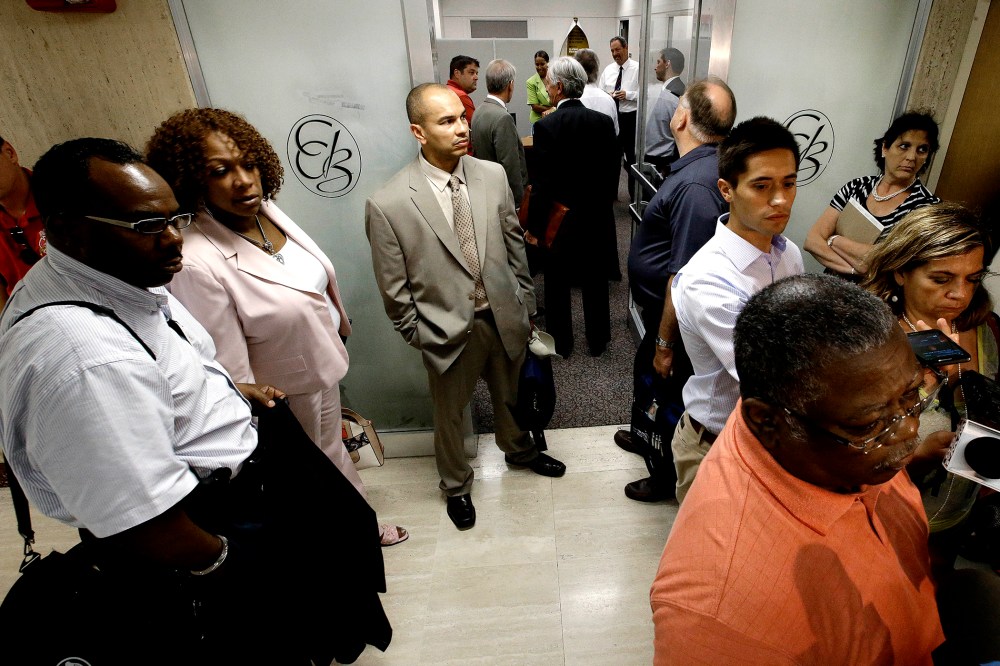
After nearly a year of legal wrangling, Detroit may have struck a deal with its creditors and retirees. On Monday, over 32,000 current and former city employees received a ballot in the mail so they could vote on the finalized proposal to restructure their retirement benefits. Within the next 60 days, a majority of the pension recipients and other creditors will have mailed in ballots approving or rejecting the city’s proposed bankruptcy deal.
City workers and pensioners are those with the most at stake. Last summer, shortly after he filed for Chapter 9 bankruptcy, Detroit Emergency Manager Kevyn Orr told msnbc that he believed public retirement systems would need to take a “haircut” in order to return the cash-strapped city to fiscal solvency. But for an ex-city employee living off an $800 pension, even a modest trim could bring financial ruin. As a result, unions and the public retirement systems themselves have both fiercely opposed Orr’s efforts to make pension cuts a part of the bankruptcy proceedings.
That fight is over. And while the outcome for retirees is less than ideal, it’s far from the worst case scenario, according to Demos senior fellow Wally Turbeville.
“It’s a better deal than they were expecting,” he said. “The question of whether it’s a good deal or the right deal is a different question.”
If the plan currently under consideration gets approved, members of the General Retirement System (GRS) will receive a 4.5% cut to their monthly retirement benefits. Those enrolled in the city’s other public retirement system, the Police and Fire Retirement System (PFRS) won’t receive a direct cut, but their annual cost-of-living adjustment will be smaller. GRS members lose their cost-of-living adjustment entirely.
The more significant cut will be in health care benefits. Both health care systems have inked a deal with Orr under which they will create separate entities to provide health care, scrapping the old benefits system for retirees.
“That’s another part of this,” said Turbeville. “Pensions would have to come out of pocket for health care that they weren’t expecting to.”
Eric Scorsone, an expert in government finance at Michigan State University, said he expects more retirees to take advantage of the new Obamacare state exchange in Michigan as a response to health care cuts.
“The timing of this is obviously very coincidental, but it’s probably very helpful,” he said.
While the deal as proposed may be a bitter pill for retirees to swallow, they might not have much of a choice. Without an approved debt restructuring plan in place, city workers could lose between 27% and 35% of total benefits, according to the city. If the deal is approved, the Michigan state legislature may release $195 million to the city as part of a plan to accelerate its emergence from bankruptcy. That money would come with additional strings, however, including the creation of a state oversight committee which would keep tabs on the city’s finances for no less than twenty years. Scorsone suggested the additional oversight might have been proposed as a way to tamp down the “moral hazard” associated with bailing out bankrupt cities and retirement systems. But he also said he suspected asserting greater control over city finances was something “the state has been wanting to do for a while.” “I think they want to say to other cities, okay, here’s the deal,” he said of the oversight board. Other Michigan cities such as Pontiac and Flint are currently locked in political tussles over whether to maintain retirement pension benefit levels, and the proposed legislation dealing with Detroit may be an attempt on the part of the state to set a precedent. But what happens in Detroit could set a precedent for cities well beyond the borders of Michigan. Thanks to hard economic times, state-level austerity changing demographics, and various other factors, public retirement systems across the country are now chronically underfunded. The response has been a nationwide push to restructure and often seriously curtail benefits; between 2010 and 2011 alone, 41 states “enacted significant revisions to at least one state retirement plan,” according to a report from the National Conference on State Legislatures. If what happened in Detroit is any indication, more cuts are on the way.
Ned Resnikoff is an urban policy analyst, researcher, writer, and editor. His byline has appeared in a variety of publications, including the New York Times, San Francisco Chronicle, Dissent, and The Nation. He writes the newsletter Public Comment, which can be found at publiccomment.blog. Recommended


